3 months ago
185
3 months ago
185
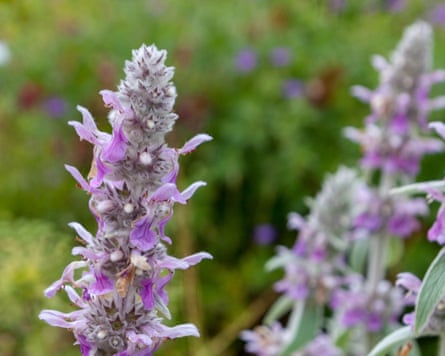
Some will want to touch the Stachys byzantina, an evergreen plant with leaves so velvety soft its common name is lamb’s ear. Others will want to smell the star jasmine, taste the plethora of herbs or listen to the “sensory soundscape” inspired by bioelectric signals of the surrounding plants.
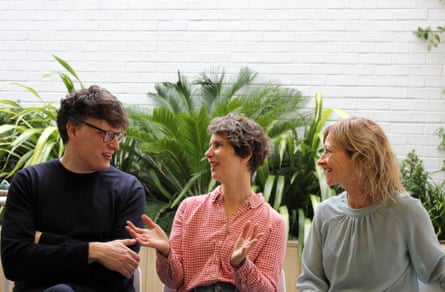
When the Sightsavers sensory garden opens at the Chelsea flower show this week, designers Peter Karn, Janice Molyneux and Sarah Fisher are hoping that visitors, with disabilities or without, will find it an accessible, inclusive space that engages all their senses.
“A garden can be more than just a nice space to look at. It can be an immersive sensory experience,” said Karn. “And the more sensory elements like texture, flavour and aroma we can work into a garden, the more accessible it is going to be for lots of different groups.”
The flower show in west London gets under way on Tuesday, with hundreds of thousands of people from around the world expected to flock to the banks of the Thames. But among the crowds and more typical “luxury” attractions, the creators of the sensory garden hope it will stand out because of its accessibility and use of humble, everyday materials.
Children, wheelchair users and those who have lost, or are losing, their sight or other senses will find many safe and stimulating ways to interact with the natural world in the Sightsavers 3-metre by 4-metre garden. Molyneux said: “We’ve designed the planting so there’s nothing harmful, so if you reach out and touch a plant, it’s not going to be a thorn – or if you put a leaf in your mouth, there’s nothing toxic there.”
Instead, visitors are invited to enjoy the sensory delights of fennel, dill, rosemary and thyme, as well as the edible, colourful flowers of nasturtium and chives.
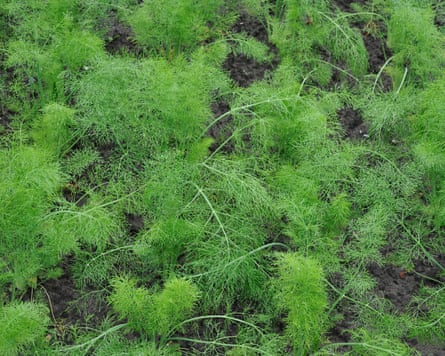
Many of these plants were chosen because, as well as being “lovely” to taste and smell, they are pleasant to brush past and touch, Molyneux said. “The dill has a fine, feathery texture, the rosemary is really tactile, and the thyme is quite bouncy … you want to touch its little leaves.”
To attract the sound of birdsong, there is also a small ornamental tree, Cornus kousa, with edible berries birds like to feed on, and the lamb’s ear, a perennial member of the mint family, which birds often use to line their nests. “It has grey silvery leaves, which have all these soft little hairs,” Molyneux said. “They feel like felt.”
The “pollinator-friendly” and drought-tolerant plants, which are all grown in low-level, tiered containers, offer interest at different heights and could be easily maintained by a wheelchair user or mobility-impaired gardener, Karn said.
The containers are curved, “so it’s quite easy to feel your way around the space and by having protruding leaves, you get this very gentle brushing of sensory plants as you move through the garden,” he added. “You experience the aroma of the garden as you explore it through touch … If you were to shut your eyes, you could feel and smell your way around the garden.”
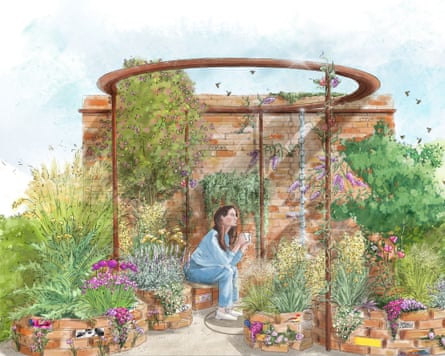
Visitors are invited to sit in the centre, underneath a steel halo structure that collects rainwater near a fragrant seven sons flower tree (Heptacodium miconioides), which has a textured, peeling golden bark. The water trickles down into a pond via a “rain chain” water feature, creating “a relaxing, natural sound”, Molyneux said.
The entire garden has been designed around a wheelchair-turning circle, and there is a light beige path that contrasts sharply with the red brick of the planters. “You need a contrast between vertical structures and the floor so that you can see where your boundaries are, if you’re visually impaired,” said Karn.
As some of the plants were growing in their nursery, composer Dr Helen Wilson recorded their bioelectric signals by hooking up their stems, leaves and roots to monitors, using crocodile clips and sensors. She then interpreted patterns of the plants’ “aliveness” that she saw in the numerical and graphical data she collected, and used these patterns to compose a sensory sound installation of rhythms and melodic phrases that will be played on hidden loudspeakers in the garden.
Excerpt of composition by Dr Helen Wilson
The Sightsavers garden
00:00:00
-1:-1:-1
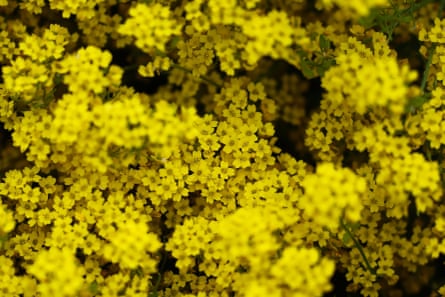
“I have a deep fascination for all things gold – and there’s this one plant in particular in the garden called Aurinia saxatilis, which also goes by the name ‘gold dust’,” she said. “So in the sound installation, all of the harmonies are built from biodata from this gold dust and my observations of its plant structure, because I like to look really closely at plants and think about how their shape could be interpreted in sound.”
From her bioelectric recordings of achillea “Moonshine”, a perennial yarrow with bright yellow flowers, she got “very strange, intricate, delicate patterns” which she decided to interpret as being “quite bubble-like and insect-like … So any visitors to the garden will hear these effervescent sounds in the higher registers, which feel a bit twinkly and curious.”
Listeners will also be able to hear the character of the fragrant star jasmine plant, which has been turned into a “supportive string drone sound” similar to an electronic double bass and a cello, throughout the 30-minute composition.
Wilson was excited about how the weather and sounds of wildlife in the garden would transform and enhance her music. “We’re hoping for some insects and birds to add another sonic layer to it,” she said.
The inclusive ethos of the garden is intended to reflect the breadth of Sightsavers’ charitable work across more than 30 low- and middle-income countries in Africa and Asia, from tackling avoidable blindness and neglected tropical diseases to promoting equality of opportunity for people with disabilities.
Molyneux hopes the garden will help people – particularly those living with sensory loss – to feel as though they belong in gardens and the natural world. “Connecting with nature has been proven to be so great for our wellbeing,” she said.
Karn was determined to show visitors how a well-designed garden should do more than just appeal to people visually: “Gardens should be universally accessible places for everyone.”