3 months ago
150
3 months ago
150
The curtain came down on the Ashes in Sydney with England again being outplayed in the basics of the game. But it is one thing to have a weak team, and another to have a talented one that just looks muddled.
I was very optimistic going into the series because England had a quality group of players, many of them in their 20s – in my opinion their peak years – who had played a lot of international cricket together, come through a tough series against India, and appeared to have matured their approach, adding nuance and adaptability, evolving from their old one-size-fits-all swagger. Well, high expectations can be dangerous because if things don’t work out the disappointment is all the more profound.
So I look at the wreckage of this series and all those high hopes and ask myself, did this management group – Rob Key, Brendon McCullum and Ben Stokes – give the England squad the best chance of success? They all seem to be bullish that they can carry on and of the three it is hard to argue that Stokes should not: he’s the obvious leader in the group and there are not many other candidates.
Certainly the new vice-captain, Harry Brook, hasn’t done anything since taking charge of the white-ball team – either on the pitch or off it – to suggest he is ready to step up. So if Stokes is fit and motivated he seems the right man. The problem is he’s tied himself to McCullum, and the case for both the head coach and for Key, the man who appointed him, is nowhere near as clear.
You can distil their jobs to this: they can’t go on the field, they can’t lead by example, their remit is getting the planning and preparation 100% right so those who do can perform to the best of their abilities. Everyone knows that didn’t happen. Most coaches I’ve known are highly organised. They like to plan and take great pride in being thorough in their preparation. They do that so they can look back on matches, tournaments and series, regardless of how results go and how their team plays, with no regrets. The team may get outplayed, it can happen, and they can live with it so long as they’ve ticked that box. Well, England badly needed someone to do that job, and there was no one.
They have just finished a major series but they are also on the eve of a big tournament, with their T20 World Cup campaign starting in Mumbai in less than a month. I think McCullum should do that tournament and then, in the nearly three months between its conclusion and the first Test of the summer, rethink his approach to the job and maybe his suitability for it. By the end of the Ashes series that process already seemed to have started.
The refrain since he took over has been: we’re playing this brand, we’ll pick players who suit it. That was a big change for cricket: in my experience most teams, even the best ones, have a mix of players with their own approaches. So the last time England won in Australia we had Alastair Cook with his rock-solid defence, batting periods of time, but we also had Kevin Pietersen trying to take the attack to the bowlers and score more quickly.
But McCullum’s rhetoric has been: play this way or you won’t play at all. Actually what has been really damning about this trip is that England’s best performances – Joe Root’s two centuries, Jacob Bethell in Sydney, even Stokes himself with his 83 in Adelaide – have not followed that method at all. Root backs his defence, shows good concentration, knocks balls into gaps. Not for him the macho, crash-bang-wallop, knock-the-bowler-off-his-length, run-towards-the-danger rubbish that led so many others to give their wickets away.
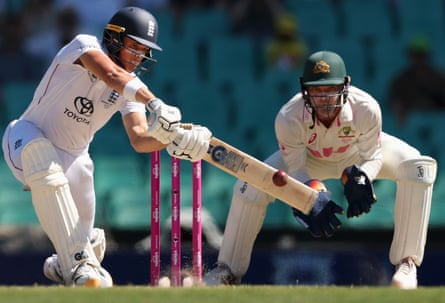
Bethell played with really good basics, respected the good ball, cashed in on the bad ball, didn’t overhit it, played good cricket shots, and maybe he hasn’t been in the environment long enough to be infected by the rhetoric.
Then the bowling was going to be all about high pace but it turned out that what we needed was high skill. The big success was Josh Tongue, who isn’t so fast, doesn’t bowl lots of bouncers, but aims at the top of off-stump and picks up his rewards. England’s best performers have turned their backs on the style the management wants, and that reflects really badly.
When the whole cricket world is saying England just haven’t done the basics well, they haven’t nailed any of the core skills, they’ve batted poorly, bowled poorly and dropped catches, and when the team’s best performers have shone despite the coach’s directives not because of them, how can he stay in the job? This series has trashed his credibility.
Now McCullum says he is willing to make “a couple of tweaks”. He’s not a hugely experienced coach and perhaps he’s evolving, but his responsibilities include the culture of the group, player behaviour on and off the field, the planning of the tour and improving players. Has he succeeded in those, and if not should there be some accountability? For all their recent failings this group includes some excellent Test players and others who should grow to become one, and are we sure he is the right person to help them evolve?
McCullum and Key have selected some players with very moderate records in first-class cricket, at times based on nothing more than hunches, and then they have overseen a gradual erosion of the specialist coaches there to support them. We have seen a lack of technical proficiency in some players, seemingly the direct result of the abandonment of technical models in coaching.
Have we appointed the right people to coach not just the senior side but the Lions and at all levels, people with the drive and the experience necessary to improve players? Because I see people getting promoted who have just come from playing careers, people who have the right mates rather than the right qualifications.
It’s tempting to make kneejerk reactions after a series like this, but I’ve got my own view of what I think is an ideal environment and I don’t think England have found it. So let’s think about who does have the right experience and qualifications. We want to produce good cricketers and to win good games of cricket. We want to be aggressive when the opportunity arises, to be on the front foot, and we want a professional, elite team with good behaviours and a good culture.
To me the most obvious candidate to produce that with England is someone who has been doing it for years at Surrey. So after the dust settles, the very first thing I would do is get on the phone to Alec Stewart.