3 months ago
103
3 months ago
103
Politicians tend to hate being boring but Rachel Reeves will be delighted if Tuesday’s spring forecast is judged by voters and financial markets to be reassuringly dull.
After Labour’s catastrophic Gorton and Denton byelection result, the chancellor’s future, along with that of the prime minister, is on the line, as backbench MPs fret about the party’s electoral prospects.
As Mujtaba Rahman of the consultancy Eurasia Group put it on Friday: “Like [Keir] Starmer, the chancellor is also fighting for her political life” – whether because the prime minister himself falls, or chooses to move his chancellor in a reset reshuffle.
Against that backdrop, Reeves hopes to project calm and competence next week, after a tumultuous 18 months.
She and the prime minister entered government in July 2024 determined to restore a sense of stability, after a string of chaotic Conservative administrations. They hoped that a secure parliamentary majority and pragmatism would reassure investors and kindle an economic renaissance.
Yet each of Reeves’s moments in the spotlight since then has instead sparked drama and controversy. Within weeks of coming to power, she cut the winter fuel allowance for UK pensioners. Then there was the £25bn national insurance rise in her first budget; botched welfare cuts in last year’s spring statement – and a second stonking round of tax rises last November.
Many of these key decisions, made in the Treasury, have subsequently had to be reversed.
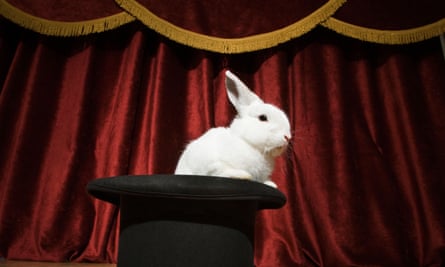
Next week, by contrast, is widely expected – and intended by Reeves’s team – to be a non-event. There will be, they repeatedly insist, “no policy announcements”, and she will resist the temptation, beloved by her predecessors, to pull a last-minute policy rabbit out of the hat. “The era of rabbits is over,” a Treasury source said.
The chancellor plans to be at the dispatch box in the House of Commons for less than half an hour. She will welcome the latest forecasts from the independent Office for Budget Responsibility (OBR), highlight progress on the cost of living, including cuts to household energy bills from April, and insist that Labour has “the right plan” for fixing the economy.
Last autumn’s budget set Reeves on track to meet her self-imposed tax and spending rules with a chunky £22bn margin for error, known as her “headroom”.
In the three months since, little has changed to throw those forecasts off track. Economic growth was slightly weaker than expected in the final quarter of 2025; but the yield on government bonds, or gilts – effectively the interest rate – has fallen, as markets price in more interest rate cuts from the Bank of England, making it cheaper for the Treasury to finance the nation’s debt.
As Andrew Wishart, the senior UK economist at Berenberg, puts it: “Given the moves in interest rates lately and the monthly borrowing numbers coming in on track, I think there will be plenty of headroom, as much as there was previously, and they will be able to keep it boring.”
The latest public finances data showed a higher-than-expected surplus in January, as tax receipts rolled in. As Wishart points out, that is partly the result of Reeves’s hefty tax rises, including the increase in employer national insurance contributions, which has been blamed for exacerbating the recent rise in unemployment.
“We’ve all slated the national insurance tax hike but actually it’s doing the business of bringing in more revenue and closing the deficit,” Wishart says. “It was a curse, now it’s a blessing.”
The OBR will have to factor in the additional £3.5bn the Treasury recently promised to the department for education, to support children with special educational needs. It will also need to account for the costs of post-budget policy reversals on inheritance tax for farmers, and business rates.
And the watchdog must reckon with the fact that net migration looks set to come in significantly lower than it forecast in November, potentially denting the public finances.

But there has been no formal update since then of the Office for National Statistics data on which it bases its projections. And the OBR may be reluctant to make a judgment call on this knotty forecasting issue while it is without a permanent director, after Richard Hughes resigned, following the inadvertent early release of its budget forecasts.
“The biggest decision the OBR have got to make is probably on migration,” says Ruth Curtice, the chief executive of the Resolution Foundation thinktank. “My central expectation is they don’t move it, and wait for the autumn.”
Reeves announced in November that the watchdog would not formally assess her against her fiscal rules, leaving that task to the autumn budget – if she is still in post to announce it. But the big picture is little changed since November anyway.
With tax and spending plans on track for now, Reeves and her team also believe there is modest cause for optimism about the UK’s economic outlook.
The global backdrop remains fraught, with the supreme court ruling against Donald Trump’s tariffs being the latest cause of instability. But the knock-on effects on global demand have so far been more modest than expected – offset in part by the AI investment boom.
At home, the Bank of England cut interest rates in December and is poised to do so again; recent business surveys have been relatively upbeat; retail sales jumped in January and inflation is coming down.
The hope is that lower borrowing costs and the prospect of a period of policy stability help to revive what John Maynard Keynes called the economy’s “animal spirits”, tempting businesses and consumers to spend, and boosting economic growth.
Ben Zaranko, an associate director of the Institute for Fiscal Studies, says that would help to defuse the fiscal timebomb Reeves has set herself, by promising eye-wateringly tight spending plans at the end of the parliament.
“If interest rates come down this year, as they hope, inflation comes back to target, tax receipts keep surprising on the upside, it’s not going to make all the problems go away but it could definitely take the edge off,” he says.
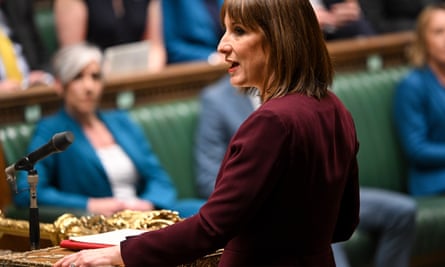
Reeves’s tone on Tuesday will be, say her team: “Confident, but not complacent.” They are busy working on a major “growth speech” that she intends to give later in March, in which Reeves will underscore Labour’s growth strategy, and what she calls “securonomics”.
This approach includes the change the chancellor made to the fiscal rules, to allow significantly more public investment, more state intervention in key industrial sectors such as steel, and stronger workers’ rights.
In that speech, she is also expected to promise action on the rise in youth unemployment, highlight changes to the planning regime, and play up the potential of AI to boost productivity and create jobs.
Reeves and her team believe that after a turbulent period strewn with U-turns, some of the decisions she has made are now slowly beginning to bear fruit, setting the economy on a more stable path. They will also argue – as they did when Andy Burnham set out his pitch ahead of last year’s Labour conference – that ditching Reeves’s caution would unleash chaos in the gilt markets, and cost the government dear.
But as Labour MPs and No 10 strategists digest the results of Thursday’s byelection, it is unclear whether next week’s deliberately dull spring forecast will mark the beginning of the end of Reeves’s time in No 11, even if the nascent economic upturn continues.