2 hours ago
7
2 hours ago
7
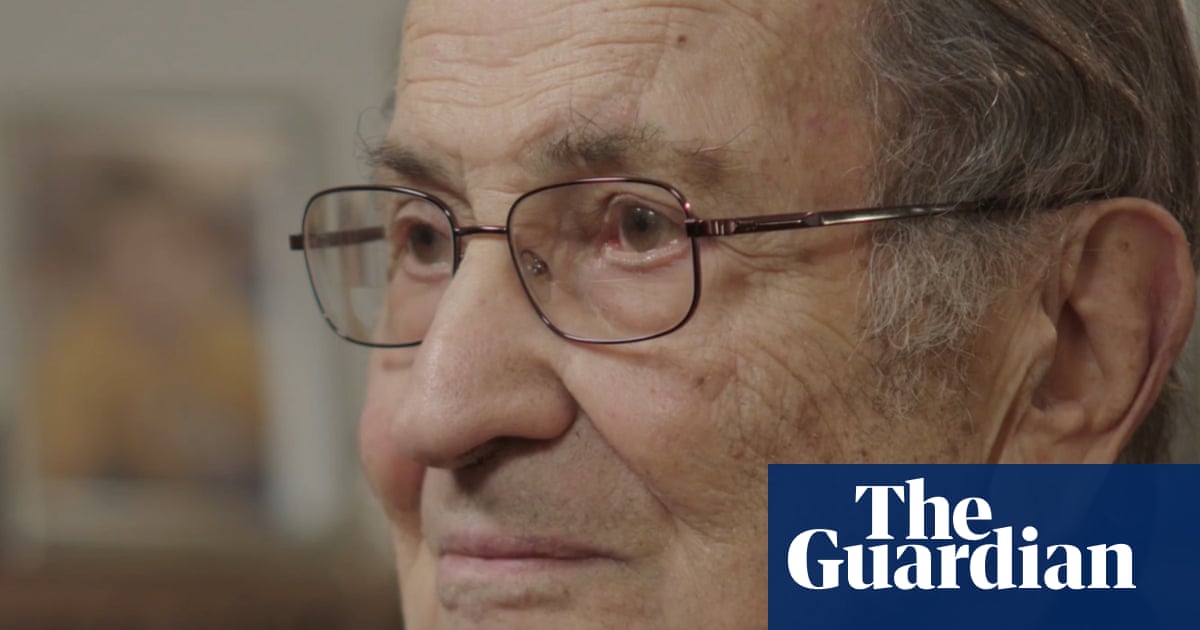
You may scoff at celebrity-fronted documentaries, but there’s no need to moan about Buried With Michael Sheen, an investigation into how toxic “forever chemicals” were dumped in Welsh quarries in the middle of the 20th century. Much of our knowledge of the subject comes from a filmed interview given nearly 10 years ago by the environmental campaigner Douglas Gowan, who, after decades of trying to raise awareness, had only weeks to live and wanted to divulge all he had learned. The person behind the camera and asking the questions? Sheen.
The actor and director is a little coy about how or why he came to spend two days – two days! – grilling a stranger to create the most valuable document we have about an underappreciated injustice. He says something about stumbling across Gowan online during a career lull and wanting to know more. But however it happened, the fact is that the best qualified person to present this two-parter is the award-winning Hollywood star, so here he is.
And very good he is, too: passionate about the outrage, but sober in his pursuit of truth. It proves to be a story that keeps throwing up moments and characters for which a scriptwriter would congratulate themselves. Sheen fits right in.
We’re talking about the now defunct American agrochemicals giant Monsanto, which after the second world war cornered the market in, shall we say, controversial chemical innovations. Agent Orange, DDT and Roundup were all made by Monsanto, as were polychlorinated biphenyls (PCBs) – indestructible compounds that were hailed as miracle chemicals until they were discovered to be toxic and carcinogenic. From the 1940s to the late 1970s, PCBs were made at the Monsanto plant in Newport, the city where Sheen spent some of his childhood.
The question is what was done with the factory’s waste. Gowan deduced that it was buried in landfills across south Wales – in a way that he thought allowed PCBs to leech into the surrounding water and soil.
Sheen travels first to the village of Ynysddu, where the two councillors who have spoken out most on this issue are both called Jan and are thus known as “the two Jans”. One of the Jans relays testimony from villagers who remember lorries arriving at night at the nearby quarry – now an eerie patch of unloved grass, ringed by trees – and leaving behind a jelly-like substance on the roads that children would play with the next morning. At a meeting inside Ynysddu Progressive Workingmans Club, residents describe the phenomenon that has convinced them that, decades later, something is still wrong: dogs that are walked in the woods keep dying of cancer.
As is customary with these scandals, the narrative repeatedly turns up horrible localised problems that those affected are sure they know the cause of, even if proof of direct causation is hard to find. Next, Sheen jets to Anniston, Alabama, formerly the site of Monsanto’s main PCB factory in the US. A paediatrician working there today says she has seen an unusual amount of birth defects, including children born without eyes or with their intestines on the outside of their bodies.
Sheen meets the attorney Donald Stewart, who in 1993 sued Monsanto on behalf of the town, securing a $300m settlement. Stewart shares internal Monsanto memos from as long ago as 1949 that suggest the firm knew how dangerous PCBs were. How did Monsanto think it could get away with endangering the Anniston public, Sheen asks? This inquiry produces a breathtaking moment. “If you look at this area, they’re working people,” Stewart replies. Suddenly, this courtroom bruiser is choking back tears. “They wouldn’t be able to fight back.”
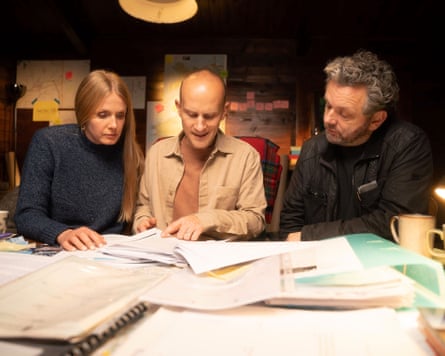
Back at home, Sheen pores over parliament’s Hansard transcripts with Dan Ashby and Lucy Taylor, the married investigative duo who present the BBC Radio 4 podcast series Buried. They reveal that, in 1973, shortly after the production of PCBs in Anniston was stopped, a government minister in Westminster was traducing Gowan from the dispatch box, insinuating that he had doctored his evidence. The parliamentary debate followed a Sunday Times expose by the journalist Peter Pringle, who used Gowan as a source.
From there, Sheen dons wellies and embarks on a project to test the soil near the landfills, accompanied by an environmental scientist and – because although this tale is enragingly serious, it keeps turning up delightful quirks – a vicar. The Gowan of today is the Rev Paul Cawthorne, whose interest was sparked by a deathbed confession from a parishioner who used to drive trucks filled with barrels of seething crud.
The PCBs affair has been rumbling on for years without many firm answers being obtained, but that may change in next week’s concluding episode: you wouldn’t bet against the actor, the vicar, the podcasting spouses and the two Jans cracking the case.