3 months ago
138
3 months ago
138
On the evening of 6 July 1972, thousands of young people across the UK had their lives changed when the sight of David Bowie performing Starman on Top of the Pops was beamed into their living rooms. Come the end of 2027, Bowie fans will be able to walk the very floorboards where the young David Jones grew up, when his childhood home in south London, is opened to the public for the first time.
Ahead of the 10th anniversary of Bowie’s death this weekend (he would have turned 79 on Thursday), the Heritage of London Trust has announced that it has acquired the two-up, two-down house at 4 Plaistow Grove, Bromley, where Bowie lived from 1955 to 1968.
Bowie’s tiny teenage bedroom, about 9ft x 10ft, will offer an immersive experience for visitors. In 1990, he recalled: “I spent so much time in my bedroom. It really was my entire world. I had books up there, my music up there, my record player. Going from my world upstairs out on to the street, I had to pass through this no-man’s-land of the living room.”
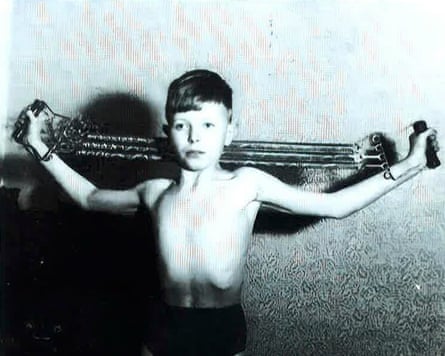
Standing in the room today felt extraordinary, said Geoffrey Marsh, who co-curated the V&A’s David Bowie Is exhibition in 2013 and will curate the restoration. “You think, someone who didn’t have any big advantages, who came from an ordinary family, went to an ordinary school – what was it that went on there which created this driving ambition to succeed, to want to be a star, and which took him right through to it?”
The house experience will include never-before-seen archival items, including Bowie’s copies of the Observer’s books on music and architecture. “In one of them, he’s written his exam results in the back,” said Marsh. “He’s also written his name in as David Jones Jr because he went through this phase of loving Americana, so he gave himself the Jr title to show his allegiance. That’s very magical.”
One artefact originally shown at the V&A was a photograph of Bowie’s hero, Little Richard, which he cut out when he was around 10 or 11 and stuck on his bedroom wall. It followed him throughout his life, and the restoration will return it to its original spot.
“He always had that on the wall in his flat, until he died,” said Marsh. “What’s remarkable is that it’s an instant connection back to the late 50s and Little Richard as this extraordinary star.” Bowie’s Elvis Presley singles – some brought home by his father, who worked for Dr Barnardo’s – will also feature.
Living friends, including the artist and musician George Underwood, who punched Bowie at school and left him with his mismatched irises, and the actor Dana Gillespie, have helped provide memories of visiting the house.
“Dana remembers going there and being served tuna sandwiches,” said Marsh. “She came from kind of a posh upbringing, so I think she had quite a shock.”
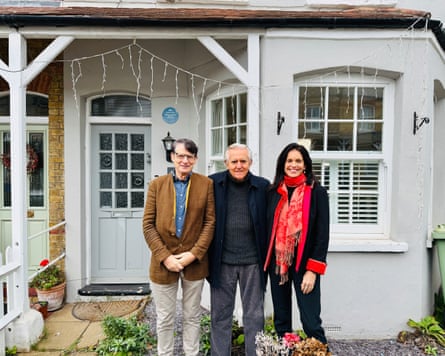
Funding for the project has started with a £500,000 grant from the Jones Day Foundation, an arm of the law firm Jones Day, and a public fundraising campaign will begin this month.
Marsh, the trust and the conservation architects Julian Harrap, who previously worked on Sir John Soane’s Museum and Pitzhanger Manor and Gallery in Ealing, will restore the house to exactly how it looked around 1963, when Bowie was 16.
“One’s got to be really careful because there may be evidence of things like the wallpaper and paint colours buried under the modern decorations,” said Marsh. “Before any stripping out starts, there’s going to be an investigation looking at all that.”
The house will host creative and skills workshops for young people, inspired by Bowie’s Beckenham branch of the Arts Lab movement and run by the trust’s Proud Places scheme, which has involved more than 10,000 young Londoners in local heritage projects. “It’s not just aimed at being a memorial to David’s extraordinary creativity,” said Marsh.
“The music business can be particularly baffling if you’re a teenager, so part of the project is to work with young people and show them the drivers that helped David succeed, and which can hopefully help them succeed. It’s a platform for the future.”
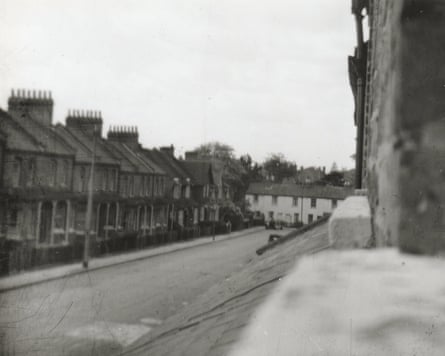
A public consultation will have to take place on the proposed changes. Marsh is hoping for strong local support: “They’ve already got one famous house there: [that of] Charles Darwin. I think David will be a good contrast.”
There will also be detailed planning applications on change of use and newer works will have to be undone: when Bowie’s older brother Terry was kicked out, the two upstairs bedrooms were knocked into one; a 1970s extension will also be taken down. “And of course,” said Marsh, “in the 1960s it wouldn’t have had an internal lavatory or bathroom, so all that’s got to be removed.”
The house serves as a lesson in London real estate history. It was acquired from owners who lived in the house from 1970 until recently – the “incredibly steep staircase” was no longer tenable, said Marsh – who offered it directly to the trust. Marsh didn’t know how much they originally bought it for, but the property website Zoopla shows that a neighbouring one-bedroom house sold in August for £520,000, having previously been sold for £80,000 in 1997.
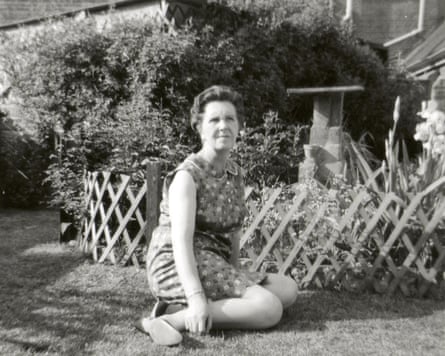
Was Bowie happy at Plaistow Grove? “That’s a very tricky question,” said Marsh. While Bowie’s father, Haywood, was supportive – having had some experience running a club in Soho in the 1930s – he had different challenges with his mother, Margaret. “He used to say he would retreat to his bedroom to get away from the living room. And I think that’s part of why he got this huge ambition – sitting in his bedroom, often alone. His school friends would often ask him out and he’d say: ‘No, I’m going to stay at home and think, and work.’”
Seeing photographs of Bowie aged 16, said Marsh, spoke to his unusual sense of direction. “He’s looking straight through the camera lens at you. It’s just incredible for a 16-year-old, in an age before boybands and all the rest of it, stylists and fashion people. He created his own hairstyle, sets, made all the decisions about clothes. He thought everything through from his early teens.”
Marsh encouraged members of the public to scrutinise photos of the young Bowie at home: anyone with matching rolls of wallpaper languishing in the attic was invited to come forward to help recreate the look of the house. “The other thing is that Mrs Jones gave away and sold items in 1970 when she left the house. So if anyone in Bromley, or indeed anywhere else, has got anything they know from the house, we’d be very interested.”