6 hours ago
11
6 hours ago
11
On 20 December 1989, Kylie Minogue first harnessed the power of fashion. Attending the Australian premiere of her film The Delinquents, she wore a custom sequined noughts-and-crosses minidress by Australian designers Morrissey Edmiston and a cropped blond wig. She also arrived with a new accessory: a rock star boyfriend in the shape of Michael Hutchence from INXS.
Before then, there’d been her Neighbours character Charlene’s peak-80s silk taffeta and lace wedding dress, and Kylie the pop star on the cover of her first album, in 1988, wearing a topless hat showing off cascading curls. But that had been fashion forced on her, at a time when she had no say in her image.
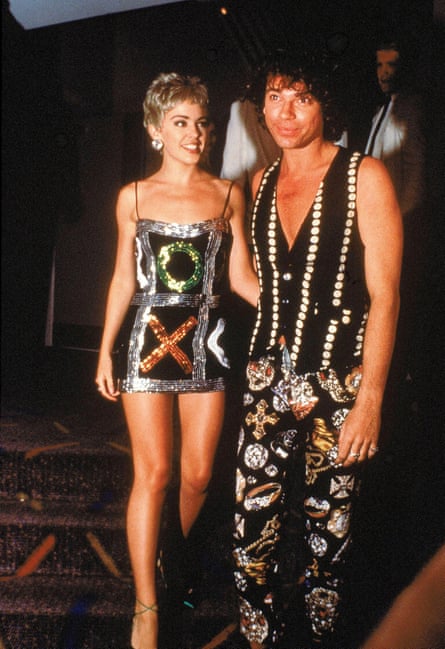
From that moment, Kylie, or the public-facing version at least, took control. She used fashion as a reflection of her desire and need to evolve. Forever the pop chameleon, she anchored each new era via deliberate fashion choices that communicated where she was at in her life and career. As Jean Paul Gaultier wrote in the foreword to her 2012 photo-book Kylie/Fashion: “You change, you transform yourself, you adapt with the evolution of times, fashions, desires … and still stay yourself.”
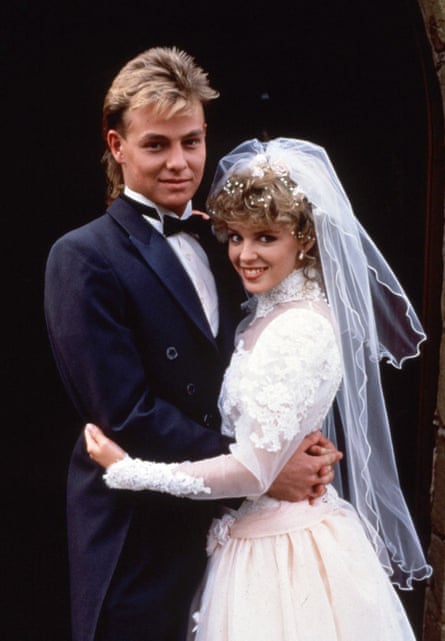
While shapeshifting and defining distinct eras via fashion is a classic pop star move, Kylie’s early evolutions had to be more extreme. Madonna – the queen of reinvention, whose influence can be traced to Lady Gaga and Addison Rae – arrived fresh from the streets of New York and a friendship group that included Keith Haring and Jean-Michel Basquiat. Her 80s look of fishnets, gloves and copious amounts of bangles felt cool. The wide-eyed Kylie, meanwhile, had to take bigger risks; she had to shake off Neighbours, Jason Donovan and the sense of playing dress-up in a box marked “cringe”.
This need manifested itself in her 1991 Let’s Get to It tour. The singer, keen to bury her Smiley Kylie persona, turned to the then relatively unknown John Galliano. “I just love dressing up and anyone who enjoys dressing up,” said Galliano at the time. The looks included corsets, stockings and suspenders and, most controversially, revealing underwear that showed off her buttocks. It created a tabloid scandal. NME accused Kylie of sending out a “dangerous message” to her young fans, which was sort of the point. She was using fashion to signal a move away from the old version of herself. “Those outfits weren’t a mistake,” she told Big! magazine that year. “I didn’t employ John Galliano to make me neck-to-toe cover-ups.”
By the early 90s, Kylie had become a mainstay on the covers of style magazines such as the Face and i-D. For the latter she worked with fashion alchemist Judy Blame, whose outfits for Neneh Cherry helped define the look of the 80s, before teaming up with Katie Grand, considered one of the most powerful stylists in fashion. Grand would work on the cover shoot for 1994’s album, Kylie Minogue – her first for dance label Deconstruction. The choice of a black-and-white shot of a bare-footed and bespectacled Kylie in a Paul Smith suit was a more androgynous and interesting look for a pop star famed for pearly white teeth and vibrant colour. The image would help set the template for the new Cool Kylie era, anchored by songs such as Confide in Me.
This more daring and intuitive approach to fashion would bleed into the next phase, Indie Kylie. Via her new stylist and so-called “gay husband” William Baker, Kylie would be introduced to new, edgier designers such as Owen Gaster, Antonio Berardi and Véronique Leroy. The feel was more stripped back, almost grunge-adjacent, but with a flash of the pop star peaking through.
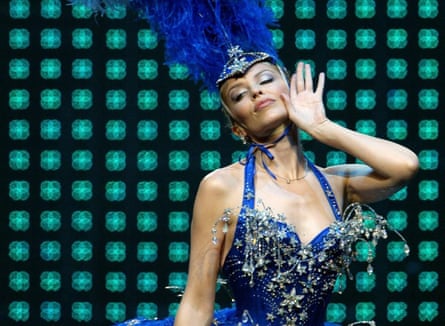
The new millennium, however, would see Kylie ditch any indie overtones, chiefly thanks to a pair of now incredibly famous 50p gold hot pants found in a charity shop. They weren’t bought specifically for the Spinning Around video – Kylie had previously worn them in 1996 for a “nerds, tarts and tourists” party hosted by a friend – but they quickly became the video’s star. They perfectly encapsulated her return to pop and, via the tanned and carefree video, the optimism of a new millennium. The hot pants, alongside the majority of Kylie’s most stunning outfits, were donated by the lady herself to the Arts Centre Melbourne, occasionally being put on display in glass cabinets like the work of art that they’ve become.
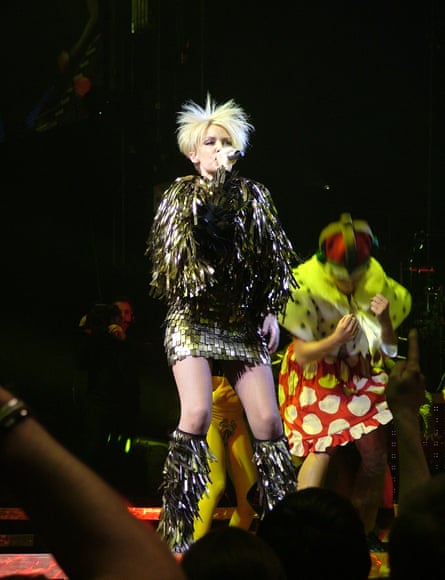
Another striking fashion moment would arrive a year later via Can’t Get You Out of My Head’s white hooded jumpsuit, complete with navel-scraping neckline. Designed by Mrs Jones, AKA the London designer Fee Doran, and with a nod to Grace Jones, it was a sign of Kylie’s style becoming more ambitious and future-facing – the perfect accompaniment to that era’s sleek Fever album.
Kylie’s ability to signal personal and professional changes via her clothes is what anchors her as one of pop’s best chameleons. It’s there in the body-hugging, less obviously suggestive sexiness of the blue Balenciaga dress from 2003’s sultry Slow video, or the armour of English designer Gareth Pugh’s futuristic designs, which captured the resilience of 2007’s X era after Kylie returned to pop after being diagnosed with cancer. She is able to wear the gothic beauty of the Vampire’s Wife one minute and Dolce & Gabbana’s silver and gold miniskirts on stage the next. She even made a cameo appearance in Chanel’s recent handbag campaign, with the advert a homage to Kylie’s Michel Gondry-directed Come Into My World video from 2002.
Kylie is not just one thing. Via her various musical eras throughout a near four-decade career, she’s moved across fashion with a nimbleness that only people with taste can. No one designer has ever “owned” her, and no stylist has locked her into a specific style. Kylie uses fashion like she uses her musical collaborators: to help colour in the various aspects of who she is.