3 months ago
109
3 months ago
109
G7 energy ministers say they support in principle use of strategic oil reserves
News just in: the G7 group of nations said today that they supported, in principle, the implementation of proactive measures to address oil supply issues and market volatility, including the use of strategic oil reserves.
Energy ministers from the group held a virtual meeting with the International Energy Agency on Tuesday to discuss the impact of the Iran war on energy markets and supply.
G7 energy ministers said in a statement emailed to Bloomberg:
Working alongside the IEA, we are vigilantly monitoring energy market trends and are coordinating within the G7 and with our international partners, IEA member countries, and beyond.
They said they “warmly welcome today’s meeting of the IEA governing board, which provides a crucial opportunity for member countries to assess the current security of supply and market conditions”.
The G7 ministers added:
In principle, we support the implementation of proactive measures to address the situation, including the use of strategic reserves. G7 members will carefully consider the recomendations.
Key events Show key events only Please turn on JavaScript to use this feature
Susannah Streeter, chief investment strategist at the Wealth Club, has looked at the moves in markets.
Erratic energy prices are keeping investors on edge as the war in Iran rages with no clear end in sight. Brent crude is still largely holding onto its dramatic decline, but it’s staying highly volatile. In the past 24 hours it’s dipped as low as $83 a barrel before heading to $94 and retreating back to around $90. There’s fresh concern about chaos in the market given how seriously production is being disrupted. The FTSE 100 has fallen back in early trade as investors remain highly jittery about the knock-on effect for the global economy.
Saudi Aramco has sounded the latest warning bell about an energy shock, with CEO Amin Nasser saying on an earnings call that it was the biggest crisis oil and gas producers have faced. He said there would be catastrophic consequences for the industry, and the consequences for the world economy would be more drastic the longer the conflict continues. Supplies are seizing up, with the key Strait of Hormuz remaining impassable, and storage facilities quickly filling up across the region. Iran’s Revolutionary Guard has again vowed to destroy ships using the passage and President Trump’s pledge to escort ships for now seems unworkable on a mass scale. The US military has destroyed a fleet of mine-laying ships, but as attacks on US allies continue, shipping companies look likely to give the channel a wide berth until there’s a resolution to the conflict.
Turning to inflation and the interest rate outlook, Streeter said:
Amid the uncertainty and worry about the war, the repercussions on a vast array of goods and services are being assessed given the warnings that prices are set to increase for fuel, energy, freight, airfares and food. Inflation fears are back front and centre and it looks like policymakers will stay extremely wary when they meet next week to decide on interest rate policy. There’s a raft of central bank meetings taking place, and high caution will be the name of the game.
For the Bank of England, there’s likely to be a real change of heart among policymakers. A rate cut was largely expected given the sluggish economy and worsening jobs picture. Now they are grappling with a stagflation scenario, making decisions about the path ahead highly tricky. UK borrowing costs have been heading higher, with gilt yields climbing, amid expectations that interest rates will be here to stay higher for longer.
UK and eurozone government bond yields rise as rate expectations shift
UK and eurozone government bond yields have also risen again in light of growing inflationary pressures and shifting interest rate expectations.
The yield, or interest rate, on the benchmark 10-year gilt (the name of UK government bonds) is up 9 basis points (bps) to 4.64%, while the two-year bond yield is 11bps higher to 3.97%.
Germany’s bond yields have also gone up, with the two-year Bund yield rising 7bps to 2.34%, as the odds of an interest rate increase from the European Central Bank have increased.
Markets have now fully priced in the chance of a rate hike by September, and see an 80% chance of an increase in July.
The 10-year German yield is up 4bps while the Italian 10-year yield has jumped 10bps.
UK mortgage rates rise above 5%, highest since last summer
Mortgage rates in the UK have risen to levels not seen since last summer, as the odds of an interest rate cut from the Bank of England this year further receded.
Markets only see a 6% chance of a rate cut at the Bank’s next meeting on 19 March, down from 80% before the US and Israeli started attacking Iran, driving oil and gas prices sharply higher, which threatens to raise overall inflation. The probability of a rate reduction this year has fallen to 20%, from 50% on Tuesday.
This is now reflected in higher mortgage rates – and nearly 500 mortgage deals (472) have been pulled from the market in the past couple of days, in the biggest fall since the aftermath of the 2022 mini-budget, according to the financial information provider Moneyfacts.
It says the average two-year fixed homeowner mortgage rate is 5.01% – up from 4.84% on Friday and the highest level since it was also 5.01% on 6 August last year.
The average five-year fixed homeowner mortgage rate was 5.09%, up from 4.96% on Friday and the highest since late June.
The overall average Moneyfacts mortgage rate opened this morning at 5.04% – up from 4.91% on Friday and the highest level since early August.
Adam French, head of consumer finance at Moneyfacts, said:
Recent days have been some of the most turbulent in the UK mortgage market since the aftermath of the September 2022 mini-budget.
In the last 48 hours, almost 500 residential mortgage products have been withdrawn as lenders reacted to rapidly rising swap rates. However, the scale is nowhere near the shock seen in late September 2022 when 935 products, which accounted for more than a quarter of the market at the time, disappeared in a single day.
Many of these deals are likely to return within the next few days and weeks as lenders adjust their pricing to higher rate expectations.
It’s unwelcome news for borrowers, as the prospect of falling mortgage rates has quickly given way to rate rises. How far they could go is now heavily dependent on how global markets and inflation expectations evolve as conflict in the Middle East unfolds.
One G7 source told Reuters that while no country currently faces a physical shortage of oil, prices are rising sharply and that leaving the situation as it is is not an option. They suggested that countries like China and India, which are not members of the International Energy Agency, could also be approached.
However, any actual release of reserves cannot happen immediately because decisions on total volume, country allocations and timing require further discussion. The source said:
The IEA secretariat is expected to propose scenarios, based on expected market impact, and outreach may extend to non-IEA members like China and India.
Oil prices rise to $90 a barrel despite G7 statement
Oil prices are trading higher again, returning to $90 a barrel, as markets doubted whether the International Energy Agency’s reported plan for a record release of oil reserves could offset potential supply shocks from the Iran war.
Brent crude has see-sawed this morning, dipping earlier but has now risen 2.5% to $90.05 a barrel.
This is despite energy ministers from the G7 group of nations releasing a statement after a meeting with the IEA on Tuesday that they support, in principle, proactive measures to address oil supply and market volatility, including the use of strategic oil reserves.
G7 energy ministers say they support in principle use of strategic oil reserves
News just in: the G7 group of nations said today that they supported, in principle, the implementation of proactive measures to address oil supply issues and market volatility, including the use of strategic oil reserves.
Energy ministers from the group held a virtual meeting with the International Energy Agency on Tuesday to discuss the impact of the Iran war on energy markets and supply.
G7 energy ministers said in a statement emailed to Bloomberg:
Working alongside the IEA, we are vigilantly monitoring energy market trends and are coordinating within the G7 and with our international partners, IEA member countries, and beyond.
They said they “warmly welcome today’s meeting of the IEA governing board, which provides a crucial opportunity for member countries to assess the current security of supply and market conditions”.
The G7 ministers added:
In principle, we support the implementation of proactive measures to address the situation, including the use of strategic reserves. G7 members will carefully consider the recomendations.
Introduction: Oil prices retreat, Asian shares rise after report of planned IEA oil reserve release
Good morning, and welcome to our rolling coverage of business, the financial markets and the world economy.
Oil prices have pulled back and Asian shares rose after the Wall Street Journal reported that the International Energy Agency has proposed the largest release of oil reserves in its history to bring down crude prices.
The release would exceed the 182m barrels of oil that IEA member nations released to the market in two batches in 2022 after Russia launched its full-scale invasion of Ukraine, according to the newspaper. The IEA called an extraordinary meeting of members on Tuesday, with a decision expected today.
Brent crude dipped 0.27% to $87.56 a barrel in early trade.
Kerstin Hottner, Vontobel Assset Management’s head of commodities, told Reuters:
Several major questions loom over the oil market’s trajectory. Chief among them is the timing of safe passage for vessels through the Strait of Hormuz, a critical chokepoint for global oil supply.
Another concern is the possibility of infrastructure damage... Even if major hostilities subside, the prospect of ongoing low-level Iranian drone attacks on energy infrastructure could prolong market instability into next year.
In Asian stock markets, Japan’s Nikkei and South Korea’s Kospi both climbed 1.4% while the Shenzhen exchange gained 0.78% and Hong Kong’s Hang Seng dipped 0.16%.
Gas prices have risen slightly, with UK natural gas up 1.8% to 122.82 per therm, while European gas is 2.8% ahead at 48.72 per megawatt hour.
Gold edged higher as investors sought out safe-haven assets again. Spot gold rose 0.1% to $5,924 an ounce.
Nikos Kavalis, Singapore managing director of Metals Focus, told Reuters:
I think it’s very likely that we’ll see gold get to over $6,000 an ounce by the third or fourth quarter this year.
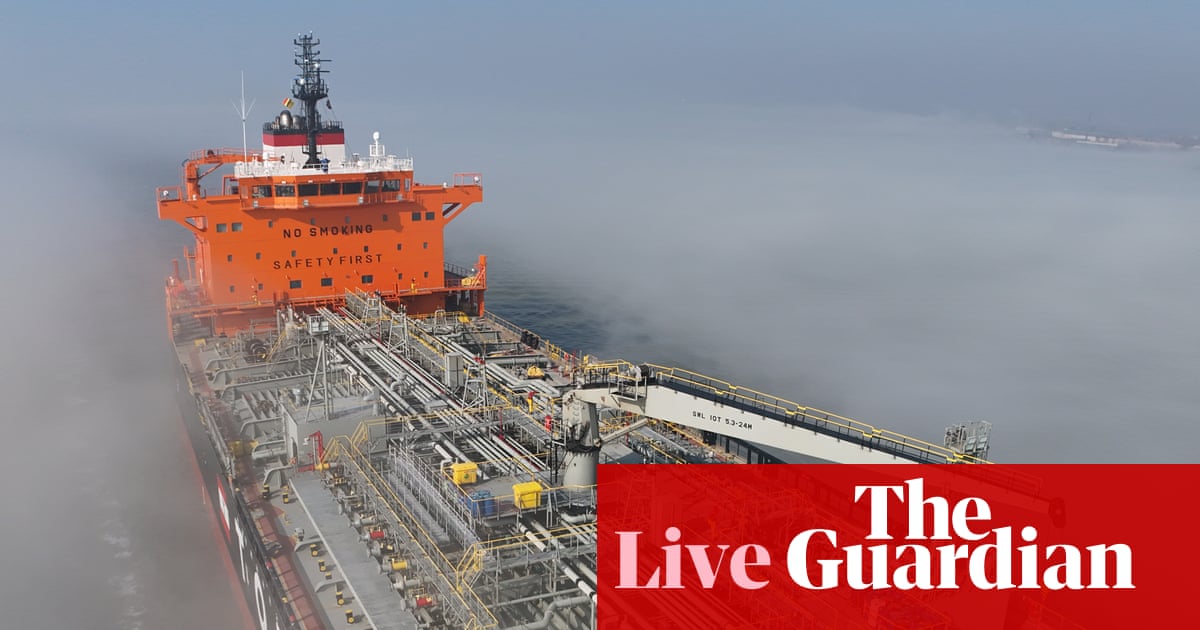
Iran has effectively shut the Strait of Hormuz, through which a fifth of world oil and seaborne gas shipments pass. Hundreds of tankers are stranded there.
The US military said it attacked and destroyed 16 Iranian mine-laying vessels near the strait of Hormuz, amid reports that Iran has begun laying explosive devices in the strategically vital waterway.
Markets are waiting for US inflation figures, which are expected to show that the headline rate stayed at 2.4% last month.
The Agenda
-
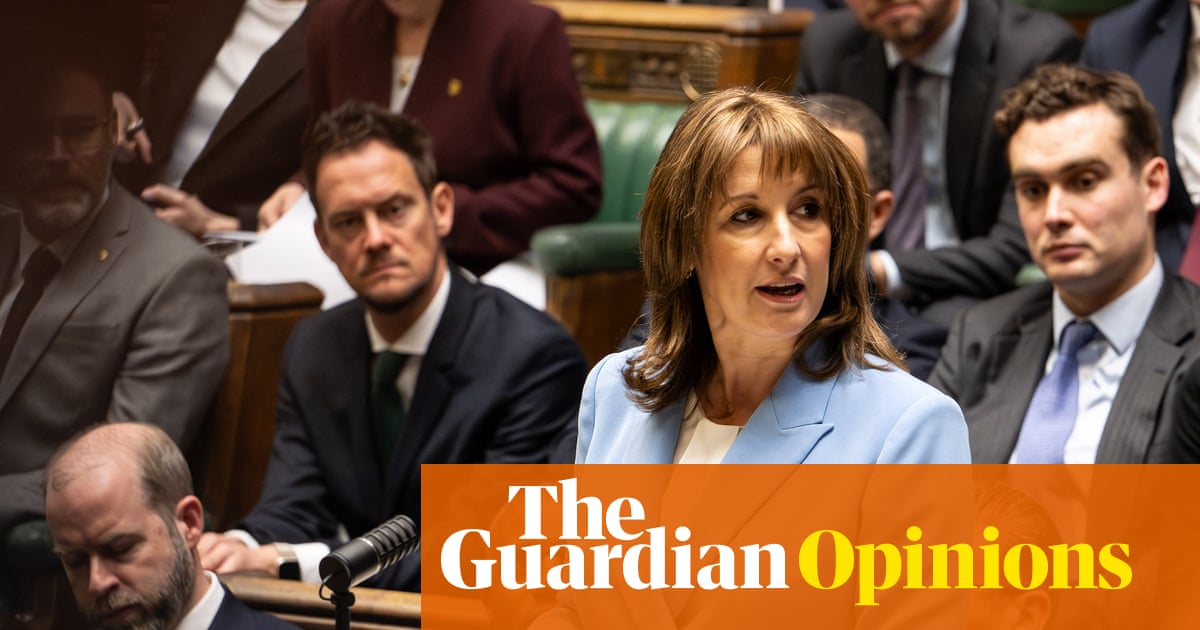
9.45am GMT: Treasury Committee to quiz Rachel Reeves about spring forecast
-
12.30pm GMT: US inflation for February (previous: 2.4%, forecast: 2.4%)