3 months ago
197
3 months ago
197
I attended the Bafta awards on Sunday. And I arrived early enough to hear the Tourette syndrome (TS) campaigner John Davidson, on whom the biographical film I Swear is based, be introduced. He stood up to wave and take in the applause, and we were told that due to his TS, we might expect to hear involuntary vocal outbursts, known as tics, and that we should understand that the Baftas are an inclusive space in which all people are welcome.
Perhaps half the people were listening, others would have been on their phones or engaged in mild chatter. But the tics were instantly audible. When the host, Alan Cumming, was on stage we heard “boring” and there was laughter. When the outgoing chair of Bafta, Sara Putt, was speaking, we heard “shut the fuck up” and there was a mix of knowing silence and confusion. But, as you all now know, it was when Sinners actors Michael B Jordan and Delroy Lindo presented an award that the tics transmuted from things that would be read as benignly antisocial to more outright offensive, as we heard the N-word. There were gasps and whispers of “did he just say … ?”
Many will wonder how it felt to be a black person in the room in that moment, hearing that incendiary word, which carries with it generational histories of pain and brutality. And I suppose you would expect that I was immediately upset or angered by it. In truth, the most I felt was a degree of awkwardness. It was right that Davidson was invited into this space (any suggestion that he should’ve been confined to a separate room or contained in a soundproof box is, plainly, discrimination) and also that the possibility of tics was mitigated with a disclaimer.
But, God, isn’t this the worst possible outcome you could imagine? I even started laughing, thinking of everything that came together here at once. I also felt immensely sad for Jordan and Lindo, seeing their faces drop as they stood on stage only to hear that word. There is no amount of warning that could truly prepare you for how the word can send shockwaves through your body. And so I empathised with their mental strength and magnanimity to simply go on and continue with their duties.
Any condemnation of Davidson is not only futile but actively unhelpful. I have seen much online commentary suggesting that his tics were akin to a Freudian slip, an impulsive communication of internally held thoughts. But this is a misunderstanding of TS. Coprolalia, the specific tic disorder leading to utterances of obscene and socially taboo language, is not a communication of subconscious thoughts or desires.
This is not a situation akin to a white person becoming angry at a black person and yelling a slur. This is more akin to saying “fuck the queen” while collecting an MBE from her, as Davidson in fact did. It is something that you do not want to do, but that has come out of you without you even thinking about it – and it is inherently related to the social context presented in front of you.
In 2011, the BBC released the documentary Tourettes: I Swear I Can Sing featuring Ruth Ojadi, a black woman with the condition. The disruption to her life that she described was unimaginable. As for her expletives? “No race, no denomination, no gender, no sexuality, no religion is safe,” she said. Such a condition should only be met with deep empathy and understanding.
After releasing a statement saying that he was “deeply mortified if anyone considers my involuntary tics to be intentional or to carry any meaning”, Davidson said that he has reached out to Warner Bros, the studio behind Sinners, to directly apologise to Jordan and Lindo. Hopefully there is a private resolution, but I think mounting pressure to apologise publicly downplays the reality of the condition: that this will not be the last time Davidson says the N-word, which is no fault of his own, and that he cannot reasonably be expected to spend his life apologising.
Some have also framed this as a test of competing rights: of disabled people to be in a public space, and of black people not to be met with racially offensive language. That feels divorced from reality. In that space on Sunday, Davidson’s presence alone did not impinge on my rights or those of any other black person. It is an uncomfortable truth that inclusion will be jarring and emotionally complicated for a host of reasons. That this has concerned such a slur has been deeply unfortunate. But a TS tic is not the same as racial abuse with intent.
What I cannot countenance is the BBC’s decision not to edit out the N-word tic, despite there being a delay in broadcast. Producers have claimed that they “didn’t hear” the slur as they were working from trucks. Even if this was the case, Davidson has said he was told by Bafta that any swearing would be edited out of broadcast (he has also raised the issue of being sat in front of a mic) and Warner Bros reportedly raised the issue with Bafta and was assured that the word would be removed before broadcast. It also doesn’t wash considering that the decision was made to edit “Free Palestine” out of Akinola Davies Jr’s winning speech. And why did nobody speak to Jordan and Lindo after the incident?
In the past few years in the UK, we have had race riots and far-right demonstrations, while public discourse around race has degraded – and race and religious hate crimes have increased in England and Wales. In that context, an N-word outburst at two black actors can look and feel like a culmination of broader societal breakdown. In that way, everyone has been failed – Davidson made to look like an avatar for British racism, black people left to feel confused and angry while instructed to remain graceful and tolerant.
I left the room with a sense of understanding, even if I was a little unsettled by the incident. But I have been left much sadder by the broadcaster’s negligence. This episode could have been the right opportunity for awareness and education. Yet our institutions seemingly remain completely unfit to meet the moment.
-
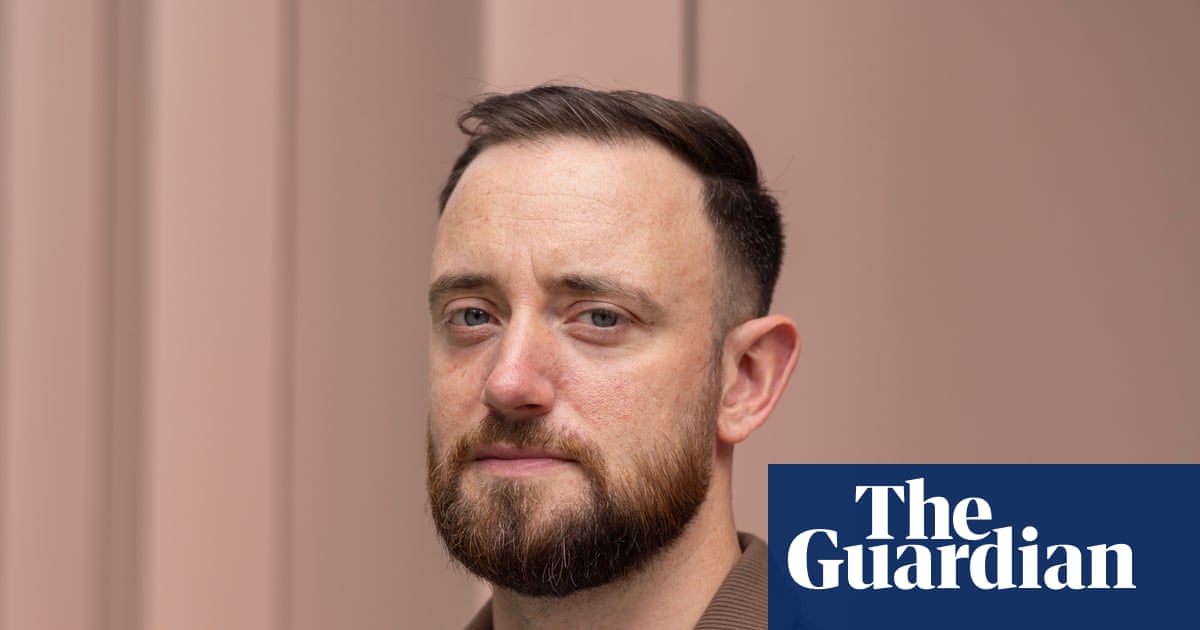
Jason Okundaye is an assistant Opinion editor at the Guardian
-
Do you have an opinion on the issues raised in this article? If you would like to submit a response of up to 300 words by email to be considered for publication in our letters section, please click here.