3 hours ago
8
3 hours ago
8
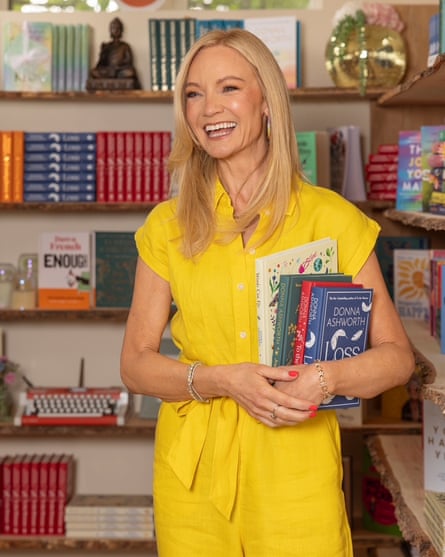
The death of poetry – much anticipated, much prematurely mourned – has been put off again, this time by the Odyssey. Thanks to Christopher Nolan’s film, sales of Homer’s epic rose 1,400% in the weeks around release – and it’s not alone. Poetry collections are once again sailing up the charts: Lucas Jones, Donna Ashworth and Nikita Gill, among others, have all burst forth on to the bestseller lists.
The word bestseller, it must be said, conjures up certain images: a TV tie-in cookbook; a sexy thriller. It does not, generally speaking, imply poetry. Poetry is a genre more often relegated to the adolescent, the academic, or the words inside sentimental birthday cards: either over-emotional or elitist, depending on which poet and which perspective. What it certainly is not is a money-spinner: nobody gets into poetry to make the big bucks. Nobody gets into poetry – not these days, anyway, not since Byron’s day – for the fame or the fortune.
Poetry is the underdog of publishing and yet this year, according to a recent Guardian article, it is “expected to exceed £15m in annual sales for the first time since records began”; it might even, if the Greek epics continue to pull in readers (as they have for almost 3,000 years), climb to an astounding £17m. Even without the bolstering influence of Homer, poetry has been steadily climbing for the last three years, each one the best on record.
In fact, reports of poetry’s surprising rise have been kicking around for more than a decade: Rupi Kaur’s million-dollar debut, Milk and Honey, set new records in 2014, and continues to sell. US magazine The New Republic named Kaur the “writer of the decade”. And yet she came to stand not so much for great art, as for a kind of synecdoche for what was wrong with art: Kaur became the mockable face of “the new poetry”, Instagrammable and Instagrammed, and accessed primarily – of course – by the young.
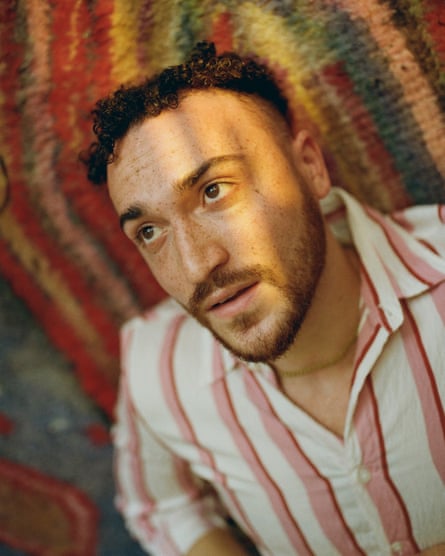
A new audience is finding poetry, particularly (though not exclusively) through social media: a new generation of poets, particularly but not exclusively performance poets, have come to prominence through Instagram, TikTok, and other short-form video formats. These writers, while we can quote them on the page, lose something by being written down.
“At my funeral I’d like there to be sunflowers, a truly inconvenient amount / For I too will have spent a lifetime searching for the light,” runs a couplet from Harry Baker’s Sunflowers, but the poet’s charismatic presence somehow conveys something more of the full power of his meaning.
Many of these poems, beginning on social media and ending in huge sold-out tours, rely on a connection between speaker and listener: a pause, a stillness, a sustained thread in the chaos of the internet, of singular attention to one poem through to the end.
This is poetry for the social media age, for sure. But then, what is the Odyssey except social media? The Odyssey is meant to be read out loud; to be told; to be spread; to be shared. What we know as a single written text is, in fact, only the most static, frozen form of the original viral myth.
It is tempting to think of these bestsellers as a new kind of poetry, but it is in fact a very old one. It is unafraid of emotion, of sentimentality, of faith and love; it is concerned less with the establishment of a brand new voice than with the need to give voice to a collective thought. It is not about originality. (Hence, perhaps, the accusations of self-help; banality; and even plagiarism that have been flung at some of these newly popular poets.) These are poems designed to resonate rather than to disturb. In times of division, these poems are made to connect.
All writing is about connection, even when it’s not. But the immediacy of the connection between author and reader is somehow easiest in poetry: when it works, there’s a direct shot to the heart, a human-to-human hot-wiring together that compresses time and space to get to the point.
What social media offers these poets is a new way to gather people round the fire – and, for some, a way to get to be the one speaking at last. If poets can reach their audiences directly, then different poets may be, perhaps, given a chance not just to speak but to be heard: working-class poets, queer poets, poets who don’t fit the “male, pale and stale” classical canon.
This is how poetry thrives. Poetry needs the new so that it can keep on telling the oldest stories we have: love, despair, grief, hope, joy, community, companionship. Long may it live – as thrilling as every other bestseller on the charts.
Five bestselling poets you should know about
Lucas Jones: actor, TikTok star, bestselling poet
Writes about: masculinity, faith, life, death and love
From I Saw God on the Train, from the new collection I Still Believe In Miracles:
You want white clouds and endless skies? Err, yeah. Look around. You don’t have to die […]
I know it probably brings you some pain
to think of the dead as just dust in a grave […] Life is the cloud, and death is the rain.
Hollie McNish: winner of the Ted Hughes prize, author of Slug, Lobster, Virgin, Plum and Nobody Told Me
Writes about: sex, motherhood, longing, politics, power and love
From call me:
call me
even if you’re in the wrong place at the wrong time
with a full moon and a lone wolf whimpering bloody-pawed from your insides
[...]
i do not care what you have done … i am no god i am no judge
i am your mother – call me and i will come
Nikita Gill: permanently on the bestseller chart, 850,000 Instagram followers
Writes about: feminist-flavoured myths, magic, legends and love
93% Stardust:
We have calcium in our bones,
iron in our veins,
carbon in our souls,
and nitrogen in our brains.
93 percent stardust,
with souls made of flames,
we are all just stars
that have people names.
Lemn Sissay: Sunday Times bestseller, OBE, books include Let the Light Pour In
Writes about: family, adoption, the fabric of society, race, home, hope, and love
From Let the Light Pour In:
If the phone won’t ring make the call
If the mountain won’t move shift it
If the birds won’t sing, sing to them all,
And if the sun won’t rise, lift it
Len Pennie: British book award winner, Scots language poet also writing in English
Writes about: language, linguistics, shame, stigma, suffering, surviving, the patriarchy, overthrowing the patriarchy and love
From The Vow, from Poyums Annaw:
To be loved through each compromise, question or qualm
To be sheltered from storm and
enshrined in the calm
To be held, not like glass, but the end of a deal …