3 months ago
110
3 months ago
110
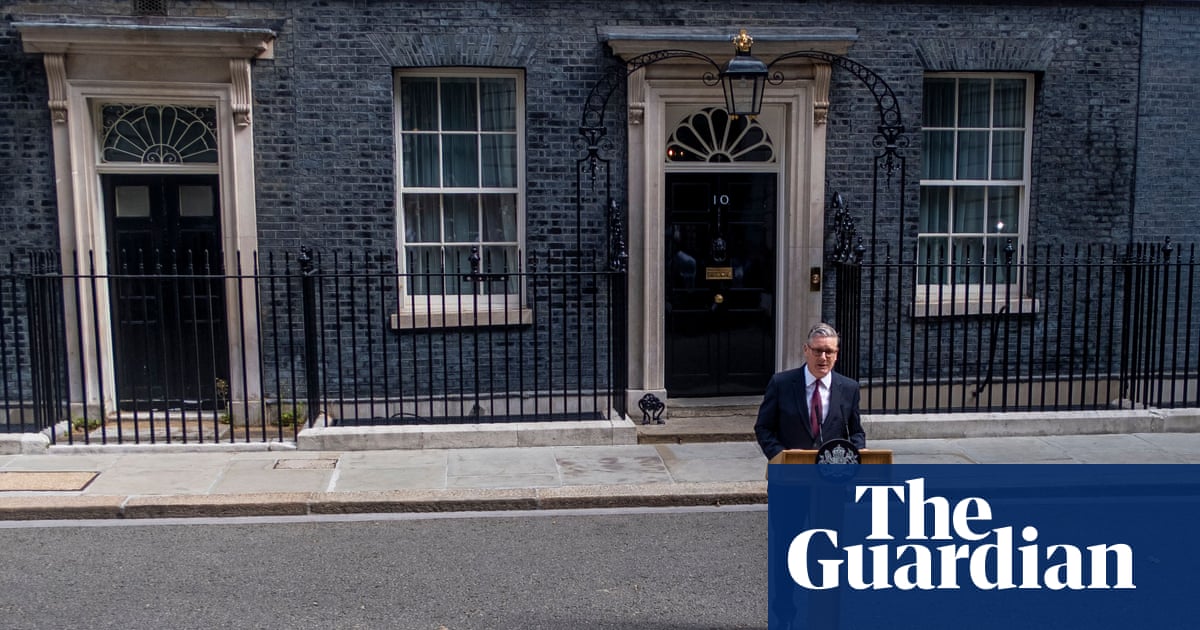
The Metropolitan police have been accused of insulting black people and mocking the pain it has caused them after revealing it wants to absorb its anti-racism strategy into a broader anti-discrimination scheme.
The Met said the scheme, also including gender and sexual orientation, would increase its chance of success in better serving groups it had failed in the past.
But Dr Shereen Daniels, the academic whose report last year on race for the Met found it caused harm to black people, said the organisation lacked the will to stamp out prejudice and warned it was going backwards.
Daniels and others said the new plan risked diluting the force’s commitment to anti-racism, which was already under fire for being too little and too late.
Speaking at the London policing board, the Met commissioner, Sir Mark Rowley, denied the new plan was about moving away from a focus on race, which has been a decades-long problem for the Met.
He said: “One of those key areas for action will be in relation to black communities. Another will definitely be in respect of LGBT communities, another in respect of gender.
“So I think all of those issues are important but doing it systemically, recognising intersectionality and the complexity … of the area of work is going to be critical.
“But it is not about becoming nonspecific and nontargeted, quite the opposite. It’s about being really deliberate. Where do we do cross-cutting action and where do we do specific actions?”
Rowley also said DEI, that is diversity, equality and inclusion policies, “were increasingly challenged nationally and internationally” and subject to “volatile and polarised public debate”. In the US the president, Donald Trump, has attacked them, as has Reform UK in Britain.
The commissioner added: “You can’t do policing by consent if you’re not an inclusive organisation, particularly in a city with the complexity and global connectivity of London.”
Daniels said: “Dropping race for inclusion is embarrassing and insulting for those who have been harmed.
“Rebranding to inclusion means the Met gets to avoid confronting its organisational design. This is insulting and makes a mockery of the experiences black Londoners, police officers, staff and volunteers have had to put up with for decades.”
Daniels’ report, called 30 Patterns of Harm, was published in November and was commissioned by the Met. It came shortly after an undercover BBC report filmed at a London police station found officers being racist and misogynist.
Daniels’ report found that the “racial harm” the Met inflicted on black people was “institutionally defended” and its leadership and culture protect the force from real change. It concluded the force’s design “made it inevitable” that racial harm kept recurring.
She said since the report was published she had not met the commissioner and had decided she could no longer work with the Met, which asked for her continued help.
Daniels said: “People tell me he cares. I beg to differ. This is not a commissioner taking racial discrimination and racial harm seriously.
“They seems to be kicking the ball into the long grass. These are delaying tactics.”
Rowley denied the Met was institutionally prejudiced after a 2023 report by Louise Casey found it biased against ethnic minorities, and women, as well as institutionally homophobic.
Daniels said: “We’ve gone back five years; they might as well not have bothered.”
She said the Met was engaged in “reshaping the truth”, and claims from police chiefs that more research was needed, such as into why black people were more likely to be stopped and searched, was a delaying tactic. She said: “They already know, They’ve been told by my report, [by] Casey, all the way back to Macpherson [the 1999 report on the murder of Stephen Lawrence that said the Met was institutionally racist] and Scarman [into the Brixton riots] in the 1980s.
“They have 50 years’ worth of reports.”
A Met document for the London policing board said the plan could bring benefits. But it added that moving its race action plan “into a wider strategy may run the risk of losing the focus on anti-Black racism, which has been the most intransigent issue for the MPS [Metropolitan Police Service] for decades, and it is important to understand how the MPS will mitigate this risk.”
The Met said it would now consult on the change and said since Rowley’s commissionership had begun there had been gains in trust from black communities.