6 hours ago
13
6 hours ago
13
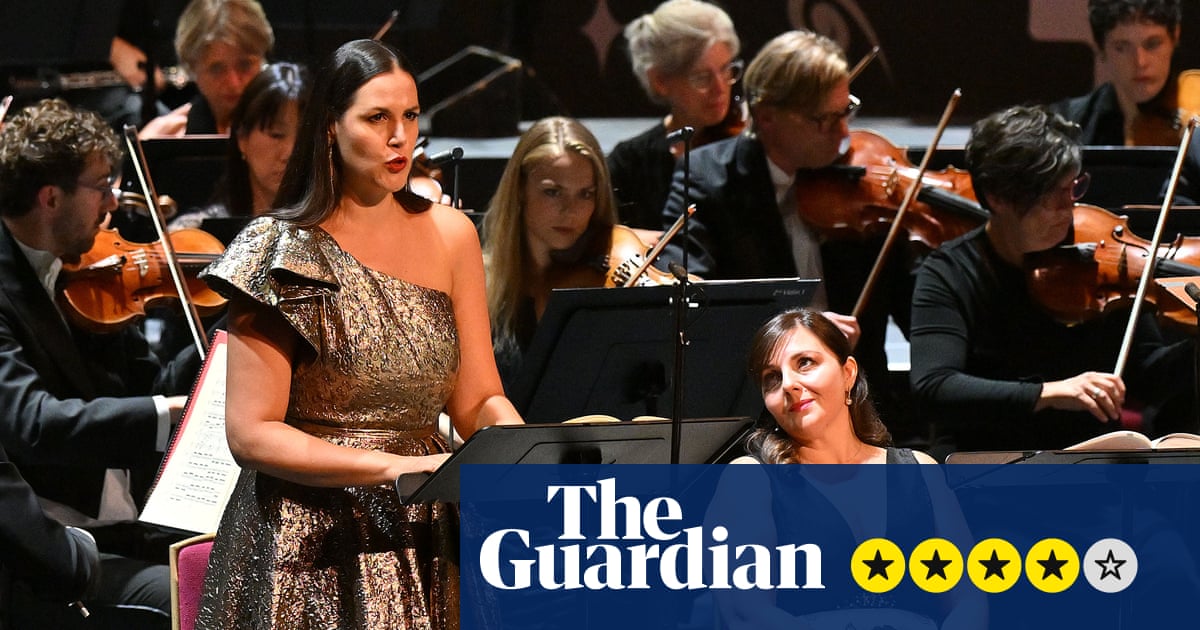
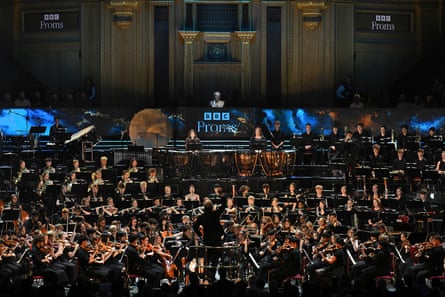
Three big pieces on the programme. 160 teenage musicians almost all on stage throughout. No choreography, no body percussion and not a kazoo in sight. By National Youth Orchestra standards, this Proms appearance – the all-guns-blazing finale of the cohort’s year together – was positively straight-laced.
Yes, there were still whoops when friends and family members greeted individual musicians as they all poured on to the stage. And this remains the only orchestra on the annual Proms roster where 10 horns come as standard and piccolo-playing is a team sport.
There weren’t quite 76 trombones, but the supersized eight-strong section here revelled in the brassiest moments of Berlioz’s Symphonie fantastique, lending familiar music a deliciously outlandish squelchiness. The second movement boasted stereo harps (two on each side of the stage), the third louring, thunderous timpani echoing between stage and gallery. And you really haven’t lived until you’ve heard the Dies Irae motif savagely intoned on four tubas and the catastrophic ending topped by a line of percussionists simultaneously thwacking cymbals.
Negotiating quieter passages with an orchestra of this size is the musical equivalent of driving a pantechnicon through a housing estate. But these musicians were instantly responsive to conductor Thomas Adès, who crouched, lunged and chopped his way to textures of remarkable lucidity. The ensemble in the opener – Liszt’s Mephisto Waltz No 1 – took a moment to cohere but then boasted conspiratorial woodwind and quiet elegance from the strings. Throughout, Adès was quick to cede control during solos, which were delivered with frankly astonishing assurance.
The Purgatorio movement from Adès’s Dante emerged from gusts of air blown through brass and wind instruments to reach magnificent symphonic tintinnabulations in its final bars. In between was the recorded voice of a Jewish cantor and congregation, woven amid grungy basslines and keening trumpets, a rhapsodic clarinet solo and a millpond-smooth string chorale.
It was a shame that individuals and sections were made to stand for their every moment in the spotlight, which had unfortunate school-concert vibes. Playing this polished certainly shows there is no need for gimmickry – even if the results seemed less exuberantly joyful than usual.