2 months ago
66
2 months ago
66
No 10 dismisses claim OBR revelations show Reeves misled public about need for tax rises in budget
Downing Street has brushed off claims that Rachel Reeves misled voters ahead of the budget about the state of the public finances.
At the No 10 lobby briefing, the PM’s spokesperson was asked why, in her speech on 4 November, and again in a Radio 5 Live interview a few days later, she said that the downgrade in the productivity growth forecast meant meeting her fiscal rules would be very difficult.
Reeves told R5L on 10 November: “It would, of course, be possible to stick with the manifesto commitments [not to raise the main taxes]. But that would require things like deep cuts in capital spending.”
Asked today if these warnings meant Reeves misled the public in the run-up to the budget about the state of the public finances, the PM’s spokesperson said: “I don’t accept that,”
Asked why Reeves was claiming that there was a black hole in the public finances, when the OBR today is saying there wasn’t (see 12.31pm), the spokesperson said the chancellor set out the country’s financial situation in her budget speech. He said the government has made “fair and necessary” choices to deliver investment in public services, and to take 500,000 children out of poverty.
Asked if Reeves was telling the truth when she told R5L the government would only be meet its fiscal rules with deep cuts to capital spending, the spokesperson replied:
The chancellor set out the challenges facing the country … She set out the context the country is facing and she set out at the budget that we are delivering on the manifesto to keep taxes low for working people.
Asked why Reeves needed to give a speech about the difficult choices when she had been told she was not on course to miss her targets, the spokesperson said Reeves used the speech to set out the challenges that the country was facing.
Asked if the speech was “disingenous”, the spokesperson said the chancellor was setting out the challenges she faced.
Asked why Reeves was talking about a productivity challenge that, according to the OBR, no longer existed, the spokesperson said Reeves had explained why she wanted to increase the amount of “headroom” in the budget (the surplus built into future spending plans).
Key events Show key events only Please turn on JavaScript to use this feature
Badenoch claims Reeves 'lied to public' to justify tax rises in budget
Kemi Badenoch has claimed that the OBR revelations today (see 12.31pm) show that Rachel Reeves “lied to the public” to justify tax rises in the budget. In a post on social media she said:
Yet more evidence, as if we needed it, that the Chancellor must be sacked. For months Reeves has lied to the public to justify record tax hikes to pay for more welfare.
Her Budget wasn’t about stability. It was about politics: bribing Labour MPs to save her own skin. Shameful.
At the Downing Street lobby briefing this morning No 10 rejected the claim that Reeves misled people about the state of the public finances. (See 1.09am.)
Economists 'baffled' as to why Reeves talked up case for big tax rises when OBR was implying they weren't needed
Economists and economic commentators are baffled by the OBR revelations this morning.
This is from Helen Miller, director of the Institute for Fiscal Studies.
Interesting new info from @OBR_UK
On Oct 31 Rachel Reeves knew that - before any policy action - she still had a forecast SURPLUS. She was not handed a big fiscal repair job & forecast hadn’t moved much pre-measures. Why then that odd breakfast tv speech?
This is from a post by Ed Conway, Sky News’s economics editor.
When @RachelReevesMP gave “that” press conference in Downing St earlier this month she put the @OBR_UK and its forecasts front and centre as the explanation for why “difficult decisions” (eg tax rises) were necessary.
Yet today we learn, from the chronology sent by the head of the OBR to Meg Hillier of the Treasury Committee, that not only was the OBR forecast NOT going to wipe out her headroom against her fiscal rule, but it had been telling HMT that for weeks …
On the one hand the chronology shows that maybe the decision to hold the Budget so late was a masterstroke since it did indeed provide time for the OBR forecast to improve
On the other hand, the tone and content of her press conference seems all the more strange knowing what we know now.
This is from Ben Zaranko, an IFS economist.
At no point in the process did the OBR have the government missing its fiscal rules by a large margin. Leaves me baffled by the months of speculation and briefing. Was the plan to lead everyone to expect a big income tax rise, then surprise them on the day by not doing it..?
And this is from Robert Peston, ITV’s political editor.
The OBR has - of course - in effect confirmed that Rachel Reeves’s decision not to increase the basic rate of income tax had zilch to do with any late-arriving new information about higher tax revenues - which was what was briefed to the media at the time of the u-turn as the justification. It was all politics. And as I understand it, she was forced to drop the manifesto-breaching rise in the basic rate by 10 Downing Street
No 10 dismisses claim OBR revelations show Reeves misled public about need for tax rises in budget
Downing Street has brushed off claims that Rachel Reeves misled voters ahead of the budget about the state of the public finances.
At the No 10 lobby briefing, the PM’s spokesperson was asked why, in her speech on 4 November, and again in a Radio 5 Live interview a few days later, she said that the downgrade in the productivity growth forecast meant meeting her fiscal rules would be very difficult.
Reeves told R5L on 10 November: “It would, of course, be possible to stick with the manifesto commitments [not to raise the main taxes]. But that would require things like deep cuts in capital spending.”
Asked today if these warnings meant Reeves misled the public in the run-up to the budget about the state of the public finances, the PM’s spokesperson said: “I don’t accept that,”
Asked why Reeves was claiming that there was a black hole in the public finances, when the OBR today is saying there wasn’t (see 12.31pm), the spokesperson said the chancellor set out the country’s financial situation in her budget speech. He said the government has made “fair and necessary” choices to deliver investment in public services, and to take 500,000 children out of poverty.
Asked if Reeves was telling the truth when she told R5L the government would only be meet its fiscal rules with deep cuts to capital spending, the spokesperson replied:
The chancellor set out the challenges facing the country … She set out the context the country is facing and she set out at the budget that we are delivering on the manifesto to keep taxes low for working people.
Asked why Reeves needed to give a speech about the difficult choices when she had been told she was not on course to miss her targets, the spokesperson said Reeves used the speech to set out the challenges that the country was facing.
Asked if the speech was “disingenous”, the spokesperson said the chancellor was setting out the challenges she faced.
Asked why Reeves was talking about a productivity challenge that, according to the OBR, no longer existed, the spokesperson said Reeves had explained why she wanted to increase the amount of “headroom” in the budget (the surplus built into future spending plans).
UK rules out joining EU's €150bn defence loans fund, Safe, after talks break down over joining cost
Talks on the UK joining the European Union’s flagship £130bn defence fund have failed, PA Media reports. PA says:
Negotiations foundered over how much the UK should pay to participate in the EU’s Security Action for Europe (Safe) rearmament fund.
Reports suggested the UK rejected French demands to pay up to £5bn to participate in the scheme.
Minister for European Union relations Nick Thomas-Symonds said it was “disappointing” but the UK was focused on obtaining “value for money”.
The Safe scheme will provide up to €150bn in “competitively priced, long-maturity loans” to EU member states requesting financial assistance for investments in defence capabilities, with the UK hoping to be one of the partner countries that could participate in joint procurement exercises, potentially benefiting British firms.
But a Times report earlier this month suggested France had demanded £5bn to join while the UK was prepared to offer less than £1bn.
In his statement, Thomas-Symonds said:
From leading the Coalition of the Willing for Ukraine to strengthening our relationships with allies, the UK is stepping up on European security in the face of rising threats and remains committed to collaborating with our allies and partners.
In the last year alone, we have struck defence agreements across Europe and we will continue this close cooperation.
While it is disappointing that we have not been able to conclude discussions on UK participation in the first round of Safe, the UK defence industry will still be able to participate in projects through Safe on third country terms.
Negotiations were carried out in good faith, but our position was always clear: we will only sign agreements that are in the national interest and provide value for money.
We continue to make strong progress on the historic UK-EU May agreement that supports jobs, bills, and borders.
In the last fortnight, we have launched negotiations on a food and drink deal and energy deal that will bring down bills and slash red tape for business.
OBR says Reeves was told well before budget that productivity downgrade didn't mean fiscal rules would be broken
The Office for Budget Responsibility has said that Rachel Reeves, the chancellor, was not at risk of breaking her fiscal rules because of its productivity forecast downgrade.
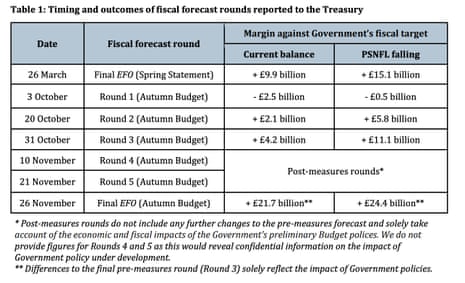
In a highly unusual move, Richard Hughes, chair of the OBR, has sent a letter to the Commons Treasury committee, giving details of the five assessments it sent to the Treasury ahead of the budget estimating whether or not the fiscal rules would be met.
Over the summer it was widely reported that Reeves faced a £20bn black hole in her plans because the OBR had concluded that its long-term forecasts for productivity growth were over-optimistic, meaning that Treasury revenues in the future would be lower than assumed when previous plans were drawn up.
But the letter reveals that only the first assessment – sent on 3 October – said Reeves was going to break her fiscal rules. And that said she would miss the current balance target by £2.5bn – a slim margin.
The other four assessments – sent between 20 October and 21 November – all had Reeves on course to meet her fiscal rules – although only with a relatively tiny amount of “headroom”.
The OBR did downgrade the productivity growth forecasts, by 0.3 percentage points, and this did have a significant impact. But it also told Reeves that the impact of this would be offset by the impact of inflation, and by increases in wages.
The revelation has triggered questions as to whether Reeves was being misleading when she told the public, in a speech on 4 November, that “the productivity performance is weaker than previously thought” and that taxes might have to rise as a result.
The Institute for Fiscal Studies alluded to this in its post-budget analysis yesterday. It’s director, Helen Miller, said:
Before any policy measures, Rachel Reeves was forecast to be running a small current budget surplus in her key year of 2029–30 and therefore meeting her fiscal rules. No fiscal repair job needed. Even after accounting for the U-turns on winter fuel payments and disability benefits since the spring, she was running only a very small deficit.
The OBR letter confirms this, and sets out exactly what Reeves was told about its assessments.
Budget has preserved Starmer’s job until at least May elections, say Labour MPs
Labour MPs have said they believe Keir Starmer’s leadership is safe until at least the May elections, after a budget that avoided any major damaging measures but which few MPs believe will revive the party’s fortunes, Jessica Elgot and Pippa Crerar report.
Richard Burgon, a leftwing Labour MP, has said that he is worried the U-turn on the employment rights bill could lead to the business lobby demanding further concessions. In a statement on social media, he said:
The removal of day one rights on unfair dismissal is bad enough in itself – and a clear breach of the manifesto commitment.
But big business and the powerful anti-workers’ rights brigade will have scented blood and they’ll now be pushing to dilute this legislation further.
With multiple consultations still underway on how this legislation will be implemented, the entire labour movement will need to stay absolutely vigilant to stop any further backsliding.
'She started it' - Badeneoch defends vicious budget speech attack on Reeves
On Wednesday Kemi Badenoch had to respond to Rachel Reeves’s speech because, by convention, with budgets that’s a job for the leader of the opposition, not the shadow chancellor. And normally no one takes much interest, because what’s in the budget is more interesting.
But Badenoch’s speech has attracted a lot of attention, for two reasons. First, even by Badenoch’s standards, it was unusually personal, and brutal. The full text is here, but it’s best to watch it to get a full sense of what it was like. As an example of precision, parliamentary viciousness, it was like Norman Tebbit in the 1970s. Some people were appalled, but Tories have said it was easily her best Commons peformance to date and that view is shared by others too. Even Alastair Campbell and Rory Stewart, the gods of centrist punditry, judged it to be highly effective.
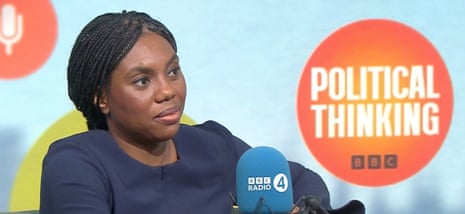
Badenoch has been speaking about her tone in an interview with Nick Robinson for his Political Thinking podcast. Asked if she had second thoughts about attacking Reeves in the way she did, Badenoch claimed that she was only resonding in kind. She said:
When I walked in for prime minister’s questions, I thought, ‘Oh my goodness, she looks absolutely broken, this OBR leak must be very upsetting for her, I’ll pull my punches.’
And then she launched into the most extraordinary tirade against the Conservatives in her own speech. So she started it … And I thought, ‘Well, I’m not pulling any punches now.’
(In fact, Reeves attacked the Conservatives vigorously in her speech for their record, but not in anything like the personal terms used by Badenoch.)
Asked if she could understand why some people thought the personal attacks went too far, Badenoch replied:
Well, you can’t please everybody.
But I also have to deal with a barrage of abuse every single week at prime minister’s questions. The prime minister can get very personal. Labour MPs shouting – there’s only 120 Conservatives. There’s well over 400 Labour MPs.
But I don’t complain about it. I don’t say it’s misogyny or racism or anything like that.
I took on a tough job and I’ve got to do it the way anybody else has to.
And what I find unbelievably frustrating is that Rachel Reeves is the second most powerful person in the country, and she keeps acting like she’s still at school and people are being mean to her.
In their London Playbook briefing for Politico, Andrew McDonald and Bethany Dawson have some insight into how the employment rights bill U-turn was negotiated. They say:
We will never surrender … or maybe we will: This led to crunch meetings in the Churchill Room at DBT on Monday and Tuesday, chaired by Employment Minister Kate Dearden, with all the unions and business groups you’d expect in attendance. Over tea and sandwiches, a compromise position emerged which the two groups agreed to take back to their people for consideration: ditching the Day 1 idea in favor of a six-month qualifying period before an employee can claim unfair dismissal, reducing the current period from two years.
White smoke on Whitehall: On Thursday morning the deal was struck. Government officials insist the compromise position means it can now get the bill through the Lords and deliver the rest of the package (which still includes other rights from Day 1, such as sick pay). Most of the affiliated unions and the TUC are fairly content with where things have ended up, and one union insider told Playbook the final deal was “stronger” than the other option on the table, a statutory nine-month probation period that would leave workers without lots of protections.
Phillipson says schools budget won't be raided to fill £6bn funding black hole in cost of Send provision
Bridget Phillipson, the education secretary, has said that school budgets will not be raided to pay for a budget black hole created by the soaring cost of special educational needs and disabilities (Send) provision in England.
The budget, and the Office for Budget Responsibility’s report, highlighted the fact that by 2028 Send costs are likely to be £6bn higher than the funding allocation. At this point central government will take over full responsibility for the costs from local government.
In addition, councils have also been allowed to build up deficits worth £14bn by spending on Send.
On Wednesday Rachel Reeves, the chancellor, was not clear where the £6bn funding would come from, and this led to speculation that the schools budget might be raided to pay for it.
In her interview on the Today programme this morning, Phillipson said this would not happen. She said:
What we’ve been clear about is that this won’t be dealt with within the Department for Education through our core schools budget. This will be dealt with across government.
So it is not government policy to absorb this from schools, to expect schools to make those cuts. That is not our position.
Next year ministers are due to publish plans to reform Send provision in England, and they believe these have the potential to produce substantial savings.
Bridget Phillipson rejects interviewer's jibe about Labour manifesto being 'fiction' after workers' rights bill U-turn
In interviews this morning, Bridget Phillipson, the education secretary, also rejected claims that the employment rights bill U-turn contradicted Labour’s manifesto. (See 9.30am.) She told Sky News:
In the manifesto, what we said was that we would work with trade unions, with business, with civil society, in consulting on those protections that we’d be bringing forward.
So, there are both parts to that, within the manifesto, the important rights and the consultation.
She also said that, without the U-turn, there was a “very real prospect” that the whole bill would be delayed. She said:
The employment rights bill is the biggest upgrade to workers’ rights in a generation … The risk here was that if we didn’t make progress, those important rights wouldn’t come into force from April next year.
In an interview on LBC, asked if the Labour manifesto was “fact or fiction”, Phillipson replied:
I am really proud that we have delivered already so many of the manifesto commitments that we made, whether that’s in education or around employment rights and much, much more besides.
From April next year, millions of workers and lots and lots of your listeners will have access to sick pay that they wouldn’t otherwise have. That is a really big, important step.
What Labour's manifesto said about day one protection from unfair dismissal
This is what Labour’s manifesto said about the employment rights bill, and day one protection from unfair dismissal.
Labour will stop the chaos and turn the page to create a partnership between business and trade unions, by implementing ‘Labour’s Plan to Make Work Pay: Delivering a New Deal for Working People’ in full – introducing legislation within 100 days. We will consult fully with businesses, workers, and civil society on how to put our plans into practice before legislation is passed. This will include banning exploitative zero hours contracts; ending fire and rehire; and introducing basic rights from day one to parental leave, sick pay, and protection from unfair dismissal.
The Labour Plan to Make Work Pay said: “Our New Deal will include basic individual rights from day one for all workers, ending the current arbitrary system that leaves workers waiting up to two years to access basic rights of protection against unfair dismissal, parental leave and sick pay.”
Any normal person reading the Labour manifesto would conclude that the party was making a firm promise to introduce day one protection from unfair dismissal. Peter Kyle’s argument that it does not say this (see 8.51am) is based on the claim that the commitment to consultating somehow over-rides the more specific unfair dismissal point. This is quite a tenuous claim. But it does highlight the fact that whoever drafted the manifesto used language that created some potential ambiguity about what was being promised – perhaps mindful that compromises would have to be made at some point in the future.
Badenoch says 'humiliating U-turn' on workers' rights bill shows Labour causing too much 'uncertainty' for business
Kemi Badenoch, the Conservative leader, has issued an ‘I told you so’ comment about what she calls Labour’s “humiliating U-turn” on the employment rights bill. She said:
On Monday, I told a conference of Britain’s biggest businesses that Labour’s day one employment rights policy would destroy jobs and drag our country backwards. Four days later, and in the aftermath of their disastrous budget, Starmer and Reeves have finally woken up to just how bad these policies actually are.
This is yet another humiliating u-turn. Labour talk about stability but govern in chaos. No company can plan, invest or hire with this level of uncertainty hanging over them.
Referring to the plan for day one protection from unfair dismissal, Badenoch told the CBI on Monday.
Under this bill, a new hire can turn up at nine in the morning and lodge a claim with an employment tribunal, before they’ve even worked out where the toilets are!
Business secretary Peter Kyle claims workers' rights bill U-turn doesn't breach Labour's manifesto
Good morning. Keir Starmer and Rachel Reeves spent yesterday denying that Labour broke a manifesto promise with its tax-raising budget. Given that Reeves had been expected to freeze income tax thresholds for weeks, it was a rather stale argument that did not go anywhere new. Then, late yesterday afternoon, the government opened up another broken manifesto argument with a surprise announcement about a U-turn on the employment rights bill.
Here is our overnight story by Jessica Elgot and Richard Partington.
It is not hard to see why ministers agreed to the concession. Day one protection from unfair dismissal was very unpopular with employers, who said it would deter firms from hiring new workers. With unemployment rising, and the hospitality sector in particular alarmed about the implication of some of the measures in the budget, this is a concession that will significantly ease business concerns about the legislation. And most unions seem willing to accept the climbdown as the price for getting the bill into law quickly.
But it still came as a surprise. On Monday No 10 was telling journalists “we will overturn all attempts to scupper [the employment rights bill plans] including watering down day one protection from unfair dismissal”. Governments regularly make concessions when legislation is going through the House of Lords, but this bill is at the “ping-pong’” stage and MPs have already overturned the Lords amendments blocking day one protection from unfair dismissal twice. This is a Labour manifesto commitment; by convention, the Lords was obliged to back down. But there is evidence it is becoming increasingly belligerent (on other bills too), and ministers decided a compromise and swift passage to royal assent would be better than a prolonged battle.
The news has already provoked a Labour backlash. But we may have to wait for the most significant Labour reaction – which will come from Angela Rayner, the former deputy PM. Rayner was overseeing the bill until she resigned and, in a speech earlier this month, she strongly defended day one protection from unfair dismissal. She said:
The last Conservative government shamefully doubled the qualification period against unfair dismissal to two years and stripped workers of protections at the stroke of a pen, and now they are at it again. Government members believe that workers deserve fairness, dignity and respect at work, and they deserve it from day one on the job. Opposition members say that these rights against unfair dismissal will slow down hiring, so let me be clear that employers can absolutely still have probation periods for their new staff; they just will not be able to fire them unfairly at will, for no good reason.
Rayner is still seen as a strong candidate to replace Starmer before the next election, and she will have to decide if she wants to use this issue to further her potential leadership ambitions. As our story says, she is planning to take soundings from MPs before speaking in public about her reaction to the U-turn.
Here are some of the key develepments in this story this morning.
-
Peter Kyle, the business secretary, has claimed that the U-turn does not breach Labour’s manifesto. If you read what the manifesto said, it is hard to argue that this decision does not contradict it. But, in a clip for broadcasters last night, Kyle gave it a go. He argued:
We also promised in the manifesto that we would bring people together, that this would not be legislation that pits one side against another …
The manifesto committed to day one rights. We are committing to day one rights. The manifesto committed us to finding compromise … and we are delivering on that.
-
Sharon Graham, leader of Unite, one of the two biggest unions in Britain and a major donor to Labour, has denounced the U-turn. She said:
The employment rights bill is a shell of its former self.
With fire and rehire and zero hours contracts not being banned, the Bill is already unrecognisable.
These constant row backs will only damage workers’ confidence that the protections promised will be worth the wait. Labour needs to keep its promises.
She has been hinting for months that her union could disaffiliate from Labour (which would also lead to it withdrawing financial support), and this U-turn must make that a bit more likely.
-
Some Labour MPs have condemned the U-turn, with one calling it a “sellout”. This is from Andy McDonald, a former shadow cabinet minister.
We can all read the manifesto ourselves and, and it says that we’ll deliver day one rights and that includes unfair dismissal.
We’re no longer doing it, so we’re doing something completely inconsistent what was in the manifesto.
And this is from Justin Madders, who was employment rights minister until he was sacked in the mini-reshuffle following Rayner’s resignation.
It might be a compromise
It might even be necessary to get the Bill passed asap
But it most definitely is a manifesto breach
And this is from John McDonnell, shadow chancellor when Jeremy Corbyn was Labour leader.
Is this a sellout? Yes it certainly is. If it’s unfair to sack someone, it’s unfair whenever it occurs whether it’s day one or after 6 months. The principle is fairness.
-
Bridget Phillipson, the education secretary, has rejected claims this is a U-turn. She has been doing the interview round this morning, and, in an interview with BBC Breakfast, when it was put to her that this was a U-turn, she replied:
I don’t accept that characterisation, I’m afraid. The employment rights bill represents the biggest upgrade to workers’ rights in a generation.
We will have a lot more on this as the day goes on.
There is not a lot on the agenda, but we are getting a No 10 lobby briefing at 11.30am.
If you want to contact me, please post a message below the line when comments are open (normally between 10am and 3pm at the moment), or message me on social media. I can’t read all the messages BTL, but if you put “Andrew” in a message aimed at me, I am more likely to see it because I search for posts containing that word.
If you want to flag something up urgently, it is best to use social media. You can reach me on Bluesky at @andrewsparrowgdn.bsky.social. The Guardian has given up posting from its official accounts on X, but individual Guardian journalists are there, I still have my account, and if you message me there at @AndrewSparrow, I will see it and respond if necessary.
I find it very helpful when readers point out mistakes, even minor typos. No error is too small to correct. And I find your questions very interesting too. I can’t promise to reply to them all, but I will try to reply to as many as I can, either BTL or sometimes in the blog.