3 hours ago
11
3 hours ago
11
“Jason has to take responsibility for what he did. But when a white person makes mistakes, it’s just a story about them as an individual. When a Black person makes a mistake, it’s treated as collective – and used to undermine the very principle that Black people should be in these spaces,” one Black academic said this week, describing the impact of Jason Arday’s case on his peers.
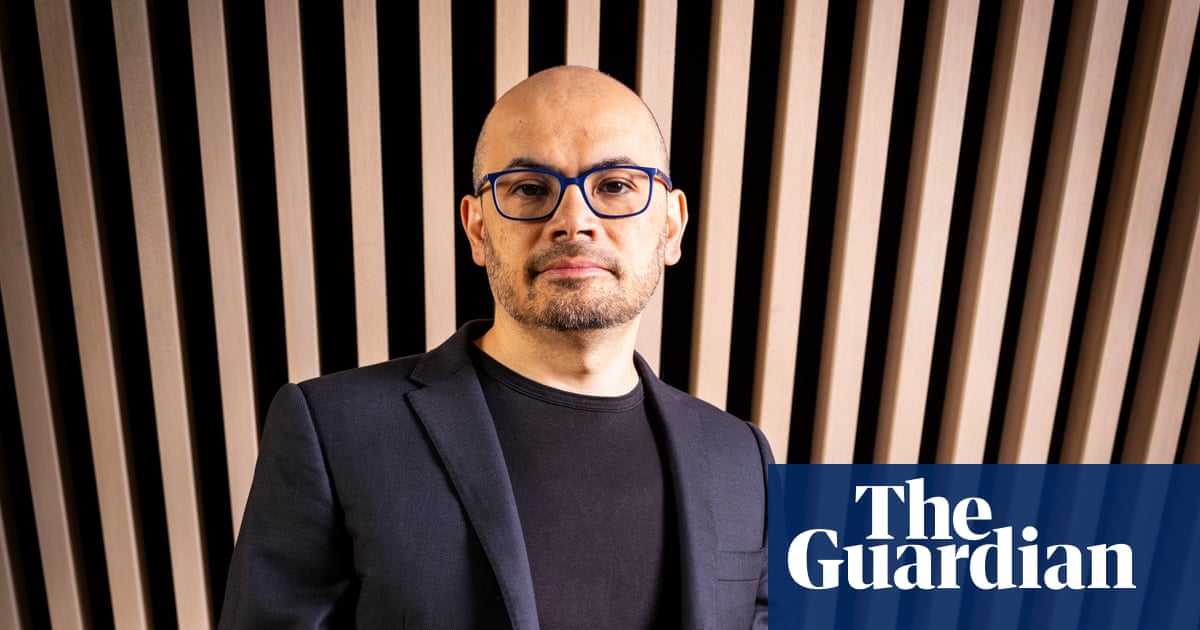
Arday, who was the University of Cambridge’s youngest Black professor when appointed in 2023, stepped down this week amid allegations of plagiarism and embellishing his CV.
As well as allegations about his academic credentials, there have been questions raised about his claimed sporting achievements, his charity work and some of the abuse he says he received. Arday, 41, has admitted “mistakes”, but says he has been falsely framed as “this kind of liar and fantasist”.
Whatever the truth of the claims, days of reporting describing sociologist Arday as a “diversity poster boy” have had a chilling effect on the UK’s Black academics, already demoralised by the impact of cuts on Black scholarship. Many compared the response to the academic criticism with accusations against white academics that have passed with little fanfare.
While views among Arday’s peers vary on the gravity of the accusations about his academic work – no formal investigation to date has found him guilty of plagiarism – opinion is united that Arday’s story has provoked a rightwing backlash against Black progress in academia and public life.
“I think there’s a real question about whether these spaces are safe for us and whether we just have to start doing this outside universities,” says Kehinde Andrews, who was the first Black Studies professor in the UK but was recently made redundant from Birmingham City University.
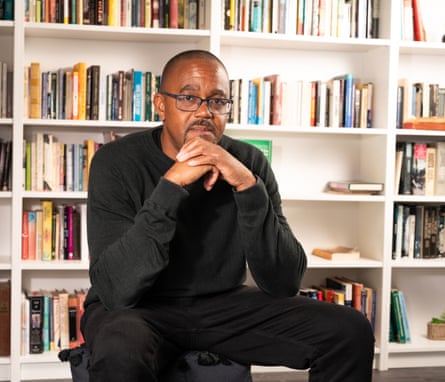
Andrews added: “No matter how many cracks have appeared in [Arday’s] CV, it doesn’t change the fact that this is a dedicated, coordinated smear campaign from the right, based on the premise that Black people should not be at Cambridge. There’s so many other things that happen in higher education that are never discussed.”
Andrews believes there were “problems with some of [Arday’s] scholarship,” but that they stopped short of plagiarism.
For the eminent sociologist Paul Gilroy, responsibility for the row lies with the “culture warriors” who appointed Arday, as well as “racist critics” – and comes at a critical time for the sector.
“Reckoning with Jason Arday and his impact-chasing enablers should not be allowed to obscure the vicious, irrational cuts to humanities that are wrecking UK universities,” Gilroy added.
“The unthinking culture warriors who have supported [Arday] unconditionally share responsibility with his racist critics for making life harder for Black academics and dragging UK higher education deeper into the mire.”
Few black academics are happy to speak about Arday’s case publicly. One academic said: “I can’t say anything on the record or I’ll be the right’s next target. The [right] have set their sights on pushing Black people out from all these institutions.
“There’s a white Cambridge academic who was accused of plagiarising a student’s work, kept his job and didn’t receive the same amount of media attention.”
The row erupted this month after another academic – self-defined “race realist” Nathan Cofnas, who was sacked from his Cambridge role in 2024 – alleged he had found plagiarism in Arday’s work. Cofnas had previously suggested in a blogpost that, in a meritocracy, there would be “close to zero” Black professors at Harvard.
“It’s not just about Black people – any minoritised group, our success is generally seen as not being genuine,” said one academic, speaking anonymously.
“[The row] will make the small number of Black people in the field feel much more vulnerable. It will give licence for a while to people who don’t want Black people in the academic space and it may give pause to people who want to redress the massive [racial] imbalance in academia.
“But it’s a mistake to think of any of this as a meritocracy – there’s lots of people in academia who don’t deserve to be where they are, and there’s lots of people who should be more advanced in their careers than they are.”
Andrews said he was setting up an independent Black Studies centre, describing the university sector as “toxic”.
“Academia is set up so that there’s these few places and we’re all fighting over scraps to get into these places,” he said. “It might just be time to say, let’s do it ourselves and let’s not keep relying on these institutions.”
But while Arday’s case – and cuts to the humanities – negatively affect morale, many academics emphasised the proud history of Black scholarship, insisting the Arday affair must not be allowed to tarnish it.
“Black British academics – like Stuart Hall, Paul Gilroy, Hazel Carby and Isaac Julien – punch way above their weight globally. The idea that this one incident in some way reflects Black British academia in general is bonkers,” one academic said.
“There’s a bunch of people out there who think Black people are less intelligent than white people, and that the only way they can get anywhere is by being forced into situations that they are unqualified for. For those people, being Black is the definition of being unqualified. It’s an old racist wine in a new bottle.”