3 months ago
146
3 months ago
146
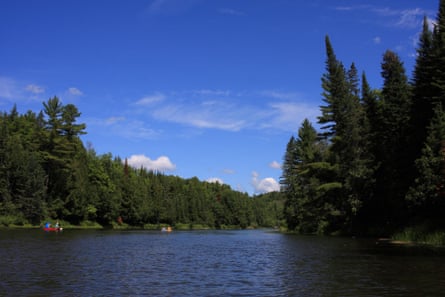
The Outaouais region on the western edge of Quebec is home to thousands of lakes, vast forests and extensive wetlands. It is also the setting of a swathe of wooded land known as La Petite-Nation, which, although not far from the cities of Montreal and Ottawa, remains relatively untouched.
That, however, is to change with the arrival of a controversial graphite mine with financing from the Pentagon.
Lomiko Metals, a company based in British Columbia, is planning to build an open-air graphite mine in La Petite-Nation. Once operational, the mine will produce 100,000 tonnes of graphite for 15 years.
Since the mine was first announced eight years ago, many residents have opposed the project over environmental concerns and fears it will threaten the growing eco-tourism economy. Open-air graphite mines produce dust emissions that can pollute the air and water.
The opposition only became more pronounced once the United States became involved.
“At first, the project was sold to us as a green one, for energy transition,” said Louis St-Hilaire, the president of the La Petite-Nation Lakes Protection Group, a coalition of 10 lake protection associations in the region that oppose the mine. While there was apprehension towards the project, residents also understood the importance of needing graphite to produce lithium-ion batteries.
Then, in 2024, the Pentagon announced it would invest $8.3m in the project through the Defense Production Act investment programme, which aims to ensure the availability of resources needed for national defence.
That came alongside a $20m grant to build a cobalt refinery in Ontario – the first large investment since the second world war – and $6.4m to build a bismuth and cobalt project in the Northwest Territories. “Suddenly, the main big investor is the American army, who need a lot of graphite,” said St-Hilaire. “People want that even less.”
David Pharand, the mayor of Duhamel, one of the towns near the mine, said: “It’s like David taking on Goliath. We thought it was going to be a lost cause, but the army’s involvement really got residents to care even more about stopping the mine.”
In August 2025, a referendum showed that 95% of the people in the communities surrounding the mine opposed the project.
The US involvement in the project comes as Washington seeks to end its dependence on China for critical minerals, said Ben Steinberg, the spokesperson for the Battery Materials & Technology Coalition, a trade group. The military needs graphite not just to produce batteries, but for use in military components that need extreme heat resistance and durability. Most graphite, both natural and synthetic, is produced in China.
“China has the ability to suppress and manipulate the graphite market,” said Steinberg. “[So] we have all the interest in the world to be working, between the United States and Canada, to exploit this resource and utilise it for all these important things.”
The relationship between Canada and the United States, however, has become more fraught than it was when the funding was first announced by the Biden administration. Canadians have not forgotten about Donald Trump’s threats to turn the country into the 51st state. To Jean-François Desmarais, who leads one of the groups opposing the mine, allowing the American military to exploit Canadian resources feels ironic. “They’re coming in to get minerals to put in their weapons, to annex us?”
It remains unclear how the ongoing trade disputes between Canada and the United States will impact mining collaborations. The Trump administration has also moved away from prioritising renewable energy, although Steinberg said he did not believe that would impact Pentagon funding. “When it comes to critical minerals, the majority of the projects that were done in the Biden administration will continue if the projects are viable,” he said.
And despite local opposition, the mine project is still moving ahead. While the provincial government has stated that it will not fund the project given the lack of social acceptance to the mine, the federal government has shown no signs of pulling its funding. Lomiko Metals has already started processing samples from the site.
But local communities are still working on alternative projects that focus on sustainable development. “We have a wildlife reserve and a provincial park right here, and they are getting more and more visitors every year,” said Pharland. “I think people don’t understand why we would hurt this growth in favour of a mine that will run out of resources in 15 years.”
Lomiko Metals did not respond to requests for comment.