1 hour ago
10
1 hour ago
10
For one last time, António Guterres tried to fix the world’s gaze upon the dangerously escalating climate crisis. But the departing UN secretary general found world leaders still largely focused on other issues, even after a painful summer of stunning climate-driven disasters.
Speaking to assembled dignitaries at the UN on Tuesday, Guterres railed against big oil for treating “the atmosphere as an open sewer” and warned again of the catastrophic effects of the climate crisis.
Guterres said: “Three years ago, in the mountains of Nepal, I sounded the alarm on accelerating glacier melt, warning that the rooftops of the world are caving in. Some dismissed it all as overstating dangers.
“But as tragic events have shown, impacts are arriving sooner, hitting harder, and spreading further than many anticipated.”
The UN chief said: “Those who polluted the most – and profited the most – must do far more to repair the damage they caused. Polluters must pay. And to the leaders, cities, civil society and citizens working to hold them accountable – you are on the right side of history. Keep going.”
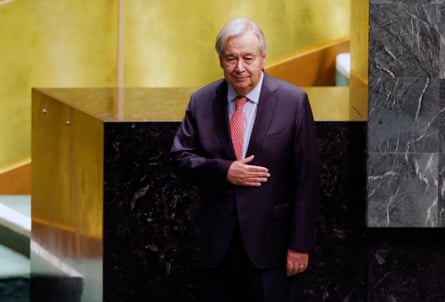
Guterres has been an unflinching advocate for climate action in his nine years as UN secretary-general, and his departure from the role is set to leave a void in a geopolitical landscape consumed by wars, inflation fears and other economic concerns rather than our rapidly heating planet.
“António Guterres has been the most climate-forward secretary-general in UN history; and this speech shows why,” said Alden Meyer, a veteran climate policy expert at E3G. “He clearly laid out the stakes on the climate emergency – the horrific consequences of inaction and the tremendous opportunities in deploying the available solutions.”
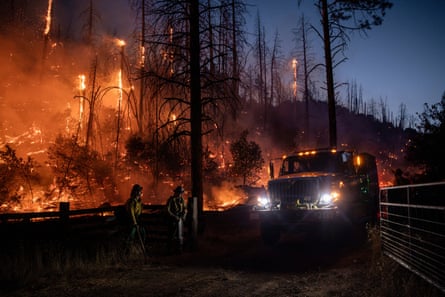
This summer has been roiled by record heatwaves and wildfires across the US and Europe, as well as a catastrophic glacier collapse and landslide on the Nepal-Tibet border. A mounting El Nino event, perhaps the largest in modern human history, is meanwhile set to push global temperatures to new record highs and spur a spike in food insecurity.
Yet the climate crisis has slipped from the agenda to the extent it has been little surprise that this week’s UN general assembly is not expected to bear any major new commitments to slash planet-heating emissions or to accelerate the rollout of a clean energy sector that is, while growing, still not on pace to avert further dangerous temperature rises.
Even Climate Week, an array of events across New York that overlaps with the UN gathering, is not expected to deliver any major announcements. While a record number of people – more than 100,000 – are set to attend Climate Week events, organizers have lamented an outbreak of “climate hushing” among political and business leaders who have determined the public has tuned out of the planetary emergency.
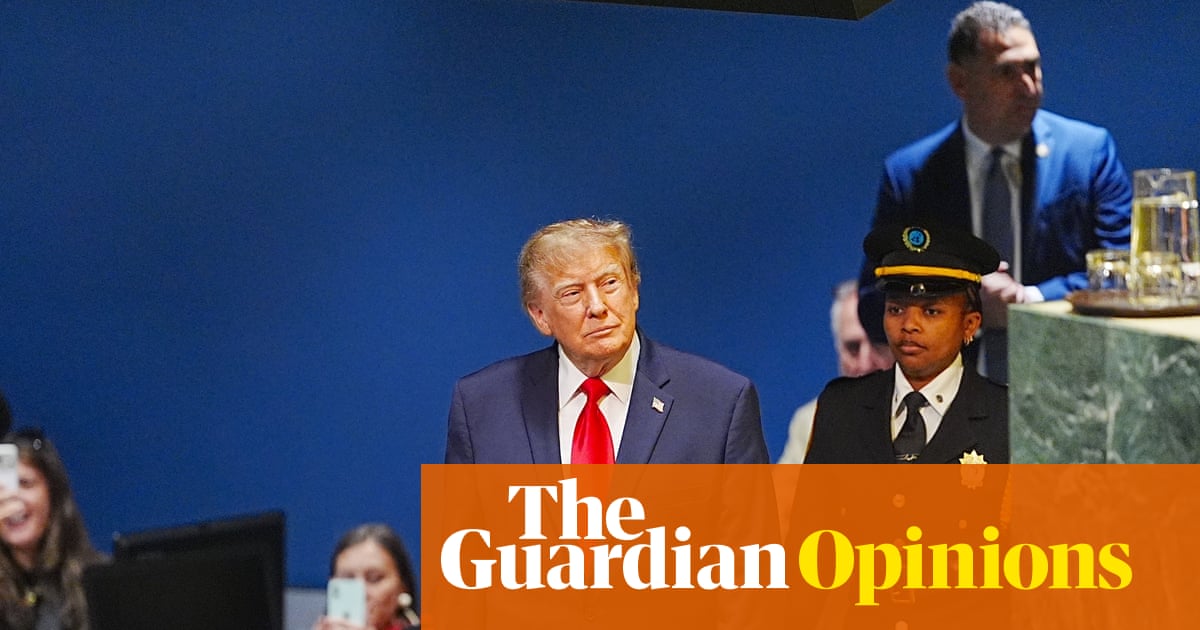
Donald Trump, who has dismantled environmental policies in the US and repeatedly called climate science a “hoax”, has been a major factor in this, even though his UN speech this year dwelled less on the topic than last year’s incendiary version.
But those who advocate for action said there was broader blame to be cast upon the complacency of other leaders who have failed to ensure the world does not blow past previously agreed temperature thresholds. There is still widespread public alarm about the climate crisis, polling shows, despite the disconnect by political leaders.
“We are in a terrible spot. That is the truth, because hypocrisy has won over concrete action,” said Juan Carlos Navarro, environment minister of Panama, who is pushing for a universal declaration of the rights of nature at the UN this week.
“As to the international arena, it’s a terrible situation. Look at the signs. A war in Iran … the other sign that we have is this forthcoming El Nino. So do we need more signs? No, it’s terrible. But what are people doing? Nothing.”
While Panama has acted strongly to cut its own emissions, other countries are failing, Navarro argued. “The war in Iran, the El Nino – has it had any impact in terms of countries or political leaders stepping up with bold commitments for real change? Zero,” he said.
“All I see around me is hypocrisy, BS, beautiful speeches, zero action. Let’s start telling the truth and start telling the truth to our own citizens. We’re facing climate change and it will have an impact and we’re not doing enough to alter it.”
The rays of optimism at Climate Week so far have centered on relief over the fact Trump is set to become a lame-duck president and also the continuing growth of renewables such as solar and wind. “Climate” may have become a taboo term for some, but investment in clean energy, particularly in China, is booming.
“The economy is built on batteries and the sun in California, which we know is cheaper,” said Gavin Newsom, the governor of California and potential Democratic candidate for the next presidential election.
“You can bottle the sun, you can catch the wind, you don’t have to worry about the sun getting blockaded in the strait of Hormuz. It gets cheaper and cheaper, in the abundance.”
Much of this progress is still being overshadowed, Newsom conceded, by Trump. “He’s trying to take us back to the 19th century,” Newsom said of the president. “He’s doubling down on stupid.”