3 months ago
141
3 months ago
141
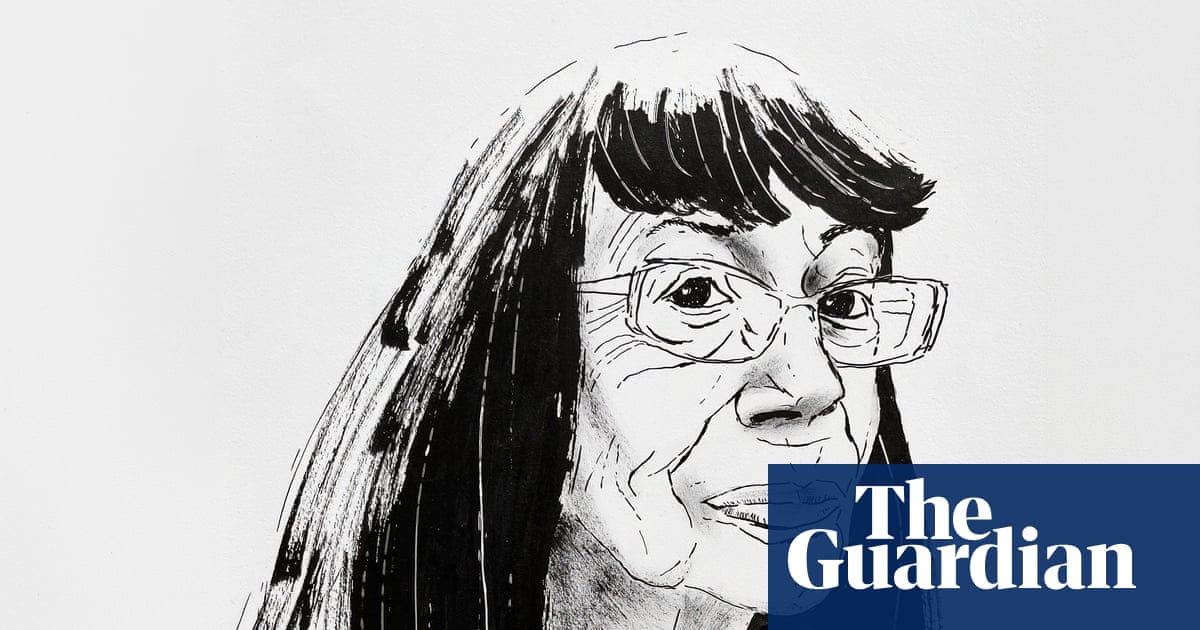
When Stefania “Alos” Pedretti woke from a two-week coma on 9 January 2022, her doctor presented her with bad news. She was suffering from severe encephalitis, an inflammation of the brain possibly caused by her body’s autoimmune response to the breast cancer she had been diagnosed with a few months earlier.
For the guitarist and singer Pedretti, however, what came next was even worse. After being intubated in her comatose state, her vocal cords were unable to close and produce sound, meaning that for months she was unable to speak.
The therapeutic treatment her doctor recommended was unusual: to return to the rehearsal room with her cult noise duo OvO.
Formed with Bruno Dorella in Ravenna, Italy in 2000, the band have built a international following for their uncompromising rhythmic noise and extreme metal, accompanied by Pedretti’s scream-at-the-top-of-your-voice vocals. Roaring, her doctor hoped, might help Pedretti regain her voice.
The intubation had not damaged or injured her vocal cords. Rather, her speech therapist Chiara Pavese explains, the cause of her voice impairment was “psychogenic”, stemming from severe mental or emotional stress. “It is a psychological block which, however, has physical repercussions.”
The disorder that Pedretti was suffering from, dysphonia, can be cured by relaxing the muscles of the larynx through massages. But in some cases, a psychological approach is recommended. Her doctors hoped that returning to the rehearsal studio would change her perspective and help her regain some sort of normality after months in hospital.
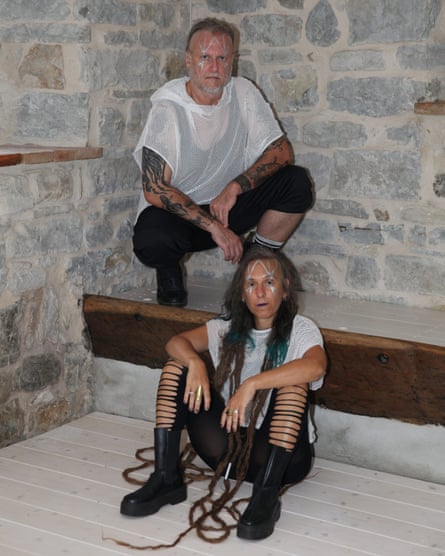
The first attempts were dispiriting. “I couldn’t even hold the guitar, it was an enormous effort for me,” Pedretti recalls. But when she and Dorella started holding simple rehearsals at his home, they had a breakthrough. “We tried to play our song Queer Fight,” she says. “In my memory, I remembered perfectly how the piece should sound. We played and I screamed, and my voice came out.”
The consequences were surprising. “Afterwards, when I spoke normally again, I had volume. I could speak and people could hear me at last.”
From a medical point of view, “for those who sing or use their voice for work, it is as if there were two separate channels”, explains Pavese, who works at Ravenna hospital where she trained under the guidance of Franco Fussi, a renowned phoniatrist and surgeon who has treated singers including Laura Pausini, Eros Ramazzotti and Björk. Pavese specialises in clinical vocology and teaches at the University of Bologna.
“When Pedretti performs,” Pavese says, “she goes into automatic mode, unconsciously eliminating all the tensions that were present when she was speaking. It’s a muscle memory, but in some people it’s like it’s split in two, as if when singing, that memory kicks in automatically and they perform perfectly”. In these cases, “once the patient’s voice comes out and they hear it, it does not go away, because they understand that there is not an organic problem”.
Once her voice was “unlocked”, several months of exercises followed, to re-learn how to speak correctly with various techniques useful for both singing and speaking.
“That musical part is entirely the result of my instinct: it is the real me”, Pedretti reflects. “And that’s why it came naturally, since I no longer remembered how to speak. Even now, I still don’t remember what my normal voice sounded like when I speak”.
Her new, transformed voice, was showcased on OvO’s latest album, Gemma, released in 2025, on which growls alternate with clean vocals, and more melodic sung parts. With electronics grafted on to heavy noise, the duo’s sound is more joyful than in the past, as if to signal a new beginning after years of turbulence.
Gaining a greater awareness of her own voice has made Pedretti want to share her newfound knowledge with others. She took inspiration from Azdora, a project by Swedish artist Markus Öhrn, who formed a black-metal band with 15 old ladies from the small Italian town of Santarcangelo, teaching them how to play guitars and sing in growl. “With Azdora, the point was to teach instinct, to unleash the animal side,” says Pedretti.
In 2023, she started holding workshops for children, teenagers, but also adults of all ages. These workshops explore the relationship between voice, psyche and body, with the aim of returning to our deepest and most natural form of expression.
“I realise that there are social barriers to shouting and screaming,” Pedretti reflects. “But, for me, that’s our real voice. That has been silenced because it’s not acceptable in society, as it is seen as something bad, ugly, rude, aggressive. And this is even more true for women, or for little girls who can’t scream because they think it’s a bad thing to do. It is very sad. While in some musical styles this is well accepted. It is our right to scream, if we want to.” It can become an unexpected tool for healing.