4 hours ago
10
4 hours ago
10
When Jasmine, a once active member of China’s MeToo movement, organises feminist activities in Beijing, she often does so under the guise of an art or cultural event. She avoids publicising them on social media, instead sharing details privately in her personal circle.
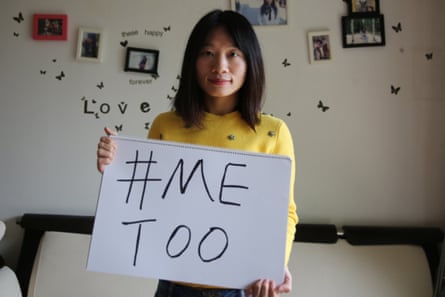
It’s very difficult to imagine what happened during the MeToo period, she says, “when one survivor could speak publicly about her experience and trigger a broader discussion about sexual harassment.”
On Friday Sophia Huang Xueqin the imprisoned journalist who helped to ignite China’s MeToo movement, was released from prison, five years after her arrest. She will return to see a feminist movement that has dramatically changed in the years she has been detained.
In China feminism has become an increasingly private affair. Activists speak of a generational rupture. A movement once inspired by the global hashtag campaign against sexual abuse and harassment has retreated to a less public space.
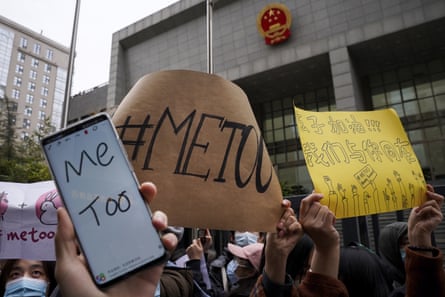
Across Chinese social media survivors post about sexual harassment and successful court cases online. But activists say hashtag campaigns like MeToo and its Chinese language equivalents have largely been scrubbed from the Chinese internet.
“A lot of younger, digital-native feminists today don’t know much about those earlier feminist struggles not too long ago, thanks to the state’s intentional annihilation of them,” says Eva Liu, a researcher on Chinese feminism and digital media at Ohio University.
Today, Chinese feminists employ creative ways to avoid censorship. They use new expressions to avoid posts being blocked. “It’s really a cat-and-mouse game,” says Liu.
She describes an “encyclopaedia” of feminist words banned by Chinese censors. “There are staff specifically tasked with tracking new terms coined by feminists online and adding them to the keyword lists used for automated censorship,” she says. “Even some terms that are not yet popular among feminist users are already part of this automatic censorship list.”
Li Sipan, a Chinese investigative journalist and feminist scholar, says: “The Chinese Communist party regards all mobilisation of the public and movements demanding changes from the government as threats. The feminist movement clearly has these characteristics.”
Jasmine in Beijing says: “If you want to organise a public event, anything explicitly related to feminism or LGBT issues is basically not possible, at least in Beijing. If you advertise it that way, there’s a risk the event will be shut down.
“So usually we frame the event in a more neutral way, without directly presenting it as being about gender or social issues. But once the event is taking place, we may still discuss those topics.”
‘The online environment now is very different’
Huang’s reporting of survivors’ stories helped to propel the MeToo movement into public consciousness in China. She was arrested in 2021 in the city of Guangzhou a day before she was set to leave China to study a masters degree at Sussex University on a UK government-funded scholarship.
In 2024 she was convicted alongside labour activist Wang Jianbing of “inciting subversion of state power”.
Huang’s friends say they received little information about her from the authorities while she was in detention, amid reports of dramatic weight loss and intense interrogation, resulting in little sleep. Information travelled slowly out of the prison. They sometimes waited months for updates, relying on messages from other inmates who had been released.
At the time of her conviction, Huang was also sentenced to four years “deprivation of political rights”. Human right groups say it could prevent her from continuing to work as a journalist or travelling abroad.
In a statement released on Saturday, activists pushing for Huang’s release said “though she is released from prison, none of us [her friends] were able to reach her or receive any information from her.
“Her whereabouts is also unknown. We are nervous and worried about her current conditions due to the potential severe surveillance she faces.”
The Chinese government says the country has made “historic” progress in women’s rights. In a speech last year, president Xi Jinping listed improvements in health, employment and economic participation. China says it will further strengthen gender equality and protect against sexual harassment and sexual violence.
Despite the shrinking space for debate, activists say the movement has had a lasting impact on Chinese society. Metoo made sexual harassment a mainstream topic. It led to policy change in universities, although activists say progress stopped at the courts.
“I believe the achievements of China’s MeToo are things that many other authoritarian or even democratic countries failed to achieve,” says Lu Pin, a Chinese feminist activist, based in New York. “Under very harsh conditions, MeToo greatly raised women’s awareness of their rights, especially among young women.”
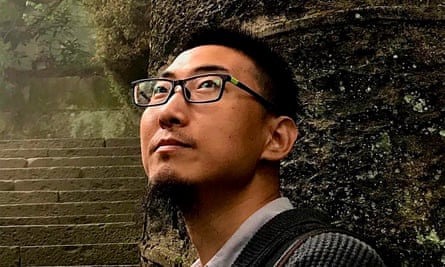
In Beijing, Jasmine hopes to meet Huang one day but is unsure if it will be possible. She says she is still in contact with survivors of sexual harassment and believes it’s possible to support them with publicity and legal support.
She believes there are other individuals and groups offering similar help, but they must choose carefully how to effect change. “The online environment now is very different from when MeToo first emerged,” she says.
Lu Pin agrees. “People used to have naive imaginations and expectations about the internet, but later realised it wasn’t like that, especially for women and feminism.”