2 months ago
98
2 months ago
98
‘I love them!” Minutes after I jump into a taxi at Belfast International airport, the driver is beaming about Derry Girls. So many tourists he picks up want to talk about the hit comedy and, as a fan himself, he’s happy to oblige.
We’re stuck in traffic, which is odd for this small city on a wet Tuesday morning. “It’s because all the media are here,” he jokes. But there is some truth to it. I’m visiting for the world premiere of How to Get to Heaven from Belfast, the new series from Derry Girls mastermind Lisa McGee, and to see how the capital became home to the best TV.
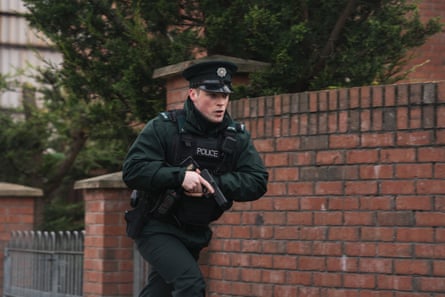
It’s a big week: as well as McGee’s event, Michael Flatley is in court securing an injunction to ensure the Lord of the Dance 30th anniversary show goes ahead. There’s also a huge buzz around another award-winning locally made show. “Blue Lights has just started filming down the road!” says Melanie Harrison, owner of the Harrison hotel where I’m staying and, like most people I meet on this trip, a true raconteur. Michael Smiley, who stars in the beloved cop drama, regularly stays at the hotel, but he’s now shooting a film with Brad Pitt in Ireland. “If Brad needs accommodation for the night, I’d be happy to have him,” she laughs. He’d be in great company – Zadie Smith recently stayed, as did Siobhán McSweeney and Bronagh Gallagher. Adrian Dunbar was also heard crooning in the bar during the wee hours.
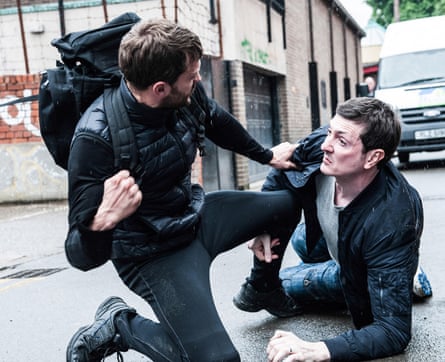
Harrison knows everything about the area’s arts scene; she puts on live operas, poetry readings and art exhibitions in the hotel’s rooms, which are themed on icons linked to the city, from CS Lewis to Angela Lansbury (“Her mum lived around the corner!”). She has seen the rise of homegrown telly first-hand, with local lad Jamie Dornan having filmed The Fall near her doorstep over a decade ago – and she has even become a part of it. Oscar-winner Christoph Waltz shot the opening scene for his film Old Guy in one of her hotel’s rooms, and a dead body was found in one of the suite’s roll-top baths in Channel 5’s drama Murder Most Puzzling. Blue Lights even asked to film a club scene in the back bar, but guests were booked in. “People would have laughed at the idea of TV jobs in Belfast a few years ago,” says Harrison.
That’s not the case now. McGee’s Bafta-winning sitcom put Derry on the global culture map, but parts were filmed in Belfast and its surrounding areas, helping the capital to become the heart of Northern Ireland’s TV renaissance. In the past few years it has boasted: Channel 4’s love-across-the-Troubles drama Trespasses; Sky’s spiky romcom The Lovers; the BBC’s adaptation of Sally Rooney’s Conversations with Friends; ITV’s medical thriller Malpractice; and HBO’s epic Game of Thrones prequel A Knight of the Seven Kingdoms. Line of Duty will also be produced here again when it returns after a hiatus. The brilliant Say Nothing, about Provisional IRA volunteer Dolours Price, was partly made in Belfast but it was mostly produced in Liverpool.
I board a culture bus tour of the city. A stop at the Seamus Heaney Centre proves the calibre of the city’s domestic TV storytellers: McGee, the Blue Lights creators Declan Lawn and Adam Patterson, and Trespasses writer Louise Kennedy have all been fellows. Catherine Grimes, a music supervisor who has worked with all three names, joins the tour. She left rural Northern Ireland at the height of the Troubles in the 1980s and worked on shows such as Absolutely Fabulous and The Royle Family in London. After lockdown, Grimes was offered Blue Lights and she moved to Belfast. She is now responsible for the needle-drops in How to Get to Heaven from Belfast, calling McGee an “all-round gorgeous person” who is also a “very enthusiastic and knowledgable music fan”. The work just keeps coming.
“I’d always been connected to the storytelling in the songs and literature of Northern Ireland,” she later tells me. “But to now be immersed on a daily basis in a reinvigorated, vibrant, exciting community which has universal stories to tell, influenced by its unique history, is a really full circle moment. I have a laugh literally every day. Northern Irish people have a quick wit and humour that can’t be beaten, despite our devastating past.”
This boom in TV has been a long time coming.
During the Troubles, many of the screen stories that focused on the conflict were regulated and censored. Take Play for Today: Carson Country in 1972, which was made in London and explored the roots of the Troubles. “Its transmission was delayed for several months on the grounds that it would be perceived as politically biased and might enflame the situation in Northern Ireland,” reported media expert Prof John Hill in 2020. For another play in the same series two years later, titled The Dandelion Clock, reluctant staff and security risks meant production was pushed back to London. Yet as the landscape slowly developed, TV plays made in Belfast would help to show working-class life there: in the 80s, Graham Reid’s “Billy trilogy”, which launched the career of a young Kenneth Branagh, was watched by millions across the UK.
Around the time of the 1998 Good Friday agreement, government-backed agency Northern Ireland Screen was set up to attract international film and TV producers. More nuanced tellings of Northern Ireland started to emerge, along with that cracking humour – but sitcoms such as the satirical Give My Head Peace, which has been running for more than 30 years, never took off outside the country. “People weren’t interested,” recalls Grimes. “And people didn’t really understand the language.” Derry Girls, she says, was massive for changing that – even if some fans still need to watch it with subtitles on.
It was Game of Thrones that took Belfast to new TV heights. From 2010, the Emmy-winning fantasy was largely filmed at the newly renovated shipyard Titanic Studios and nearby Linen Mill Studios in Banbridge, with proximity to the coast and countryside making it cheap and easy to film Westeros’s varied landscapes on location. As I stop at the city’s pubs on a food tour, my guide, Barry, says the Harp and the Duke of York were once packed with stars like Kit Harington and Emilia Clarke. But, he says, they were treated no differently to the next person enjoying a Guinness or a Harp: “Belfast people don’t let people get above their station, no matter who they are.”
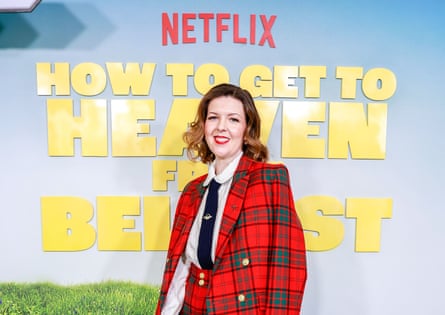
Night falls and the city’s independent cinema, Queen’s Film theatre, opens its doors for the screening of How to Get to Heaven from Belfast. McGee arrives dressed in a tartan power suit and, with James Nesbitt in the audience, introduces the first episode. It is decidedly different to Derry Girls: a “mystery and comedy with horror elements” about three women in their late 30s – Dara, Saoirse, Robyn – who go on a road trip to find their dead friend. True to its title, the show is filmed and set in and around Belfast, with the area’s history naturally baked in.
McGee, now a Belfast resident via Derry and London, has loved showing her city to Netflix’s international audience, and local residents will recognise sights such as the yellow Harland and Wolff cranes, Lyric theatre, Grand Central hotel and Limelight nightclub. “I went to uni at Queen’s so I’ve done a few 70s nights at the Limelight,” she says with a smile. “But everywhere has their own [version of] Limelight, you know what I mean? Those specifics are what makes the story universal.”
For Belfast-born Roisin Gallagher, who stars as Saoirse, it was the dialogue and fast-talking that made How to Get to Heaven from Belfast feel true to life: “I knew it. I understood it. To read something that you identify with because it’s in your DNA, it’s in your bones. There’s such an integrity in being allowed to speak as fast as Saoirse would speak. Not to streamline it for a wider audience, but just be really true to the nature of the place that you’re from.”
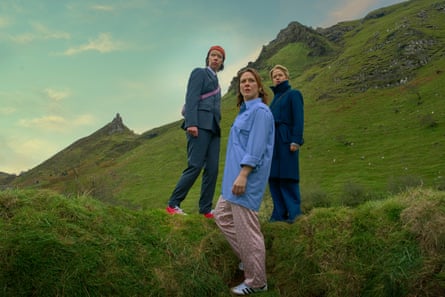
A 40-minute drive out of Belfast the next morning, I check into the Harbourview hotel in Carnlough, on the wet and wild Antrim coast. This whiskey hotel, renamed the Knockdara in the script, is the starting point of the show’s road trip, where the friends stay before the funeral (weirdly, there is a wake happening when I arrive). The hotel has since had a revamp, but I immediately recognise the reception desk that Ardal O’Hanlon’s hotel manager pops up at, with a flashing dicky-bow. The hotel’s co-owner, Adrian McLaughlin, is embracing the Netflix effect: “We’re going to have a screening party and watch it on the big screen!” There’s already a themed cocktail menu with one called the Wake, laced with Irish whiskey.
It isn’t the first time a TV show has brought visitors to this quaint harbour. Two minutes from the hotel are the steps emerging from the sea which Arya climbed up after being stabbed by the Waif in Game of Thrones. A jeweller who provided items for the show is based just down the road, a couple tells us over dinner later, the woman flashing her ring. Screen tourism has boosted Northern Ireland’s economy significantly: Blue Lights and Hope Street created more than 280 jobs, with the BBC investing £112m in the country in 2023/34; Game of Thrones injected £251m into the area. Endless studio and bus tours followed, and fans love embarking on their own location adventures.
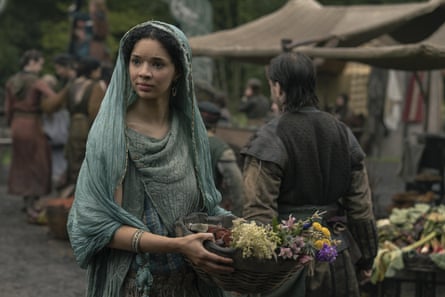
Glenarm Castle estate, a short drive away from the Harbourview, should probably ready itself for some screen tourism, too. As George the butler hosts a tour of the residence, I ask whether A Knight of the Seven Kingdoms – which has a second series planned for 2027 – was filmed here. He points out of the window at the open grounds and says a set was erected there for a few months, constantly covered with a mysterious mist: “It looked like a medieval village.” Staff didn’t have a clue what was taking place but they tried to guess the storyline with the sigils they spotted.
There’s plenty more top telly cooking in Belfast, from the third season of Jimmy McGovern’s Bafta-winning Time to psychological thriller Close to Me and that long-awaited Line of Duty comeback. Bill Murray has also been spotted filming a golf drama, and Blue Lights, now in its fourth season, is surely here to stay – although Grimes is tight-lipped about the return of popular (and last seen dead in season one) copper Gerry.
“I do think we are special,” she says of her industry. “We are supportive of each other – we now have the opportunity to shine on screen. People like working here. It’s friendly and the locals are sincere about wanting everyone who visits to have a good experience and a laugh.
“We were bereft of visitors for many years, so now we like to show the world all the good bits.”