6 hours ago
9
6 hours ago
9
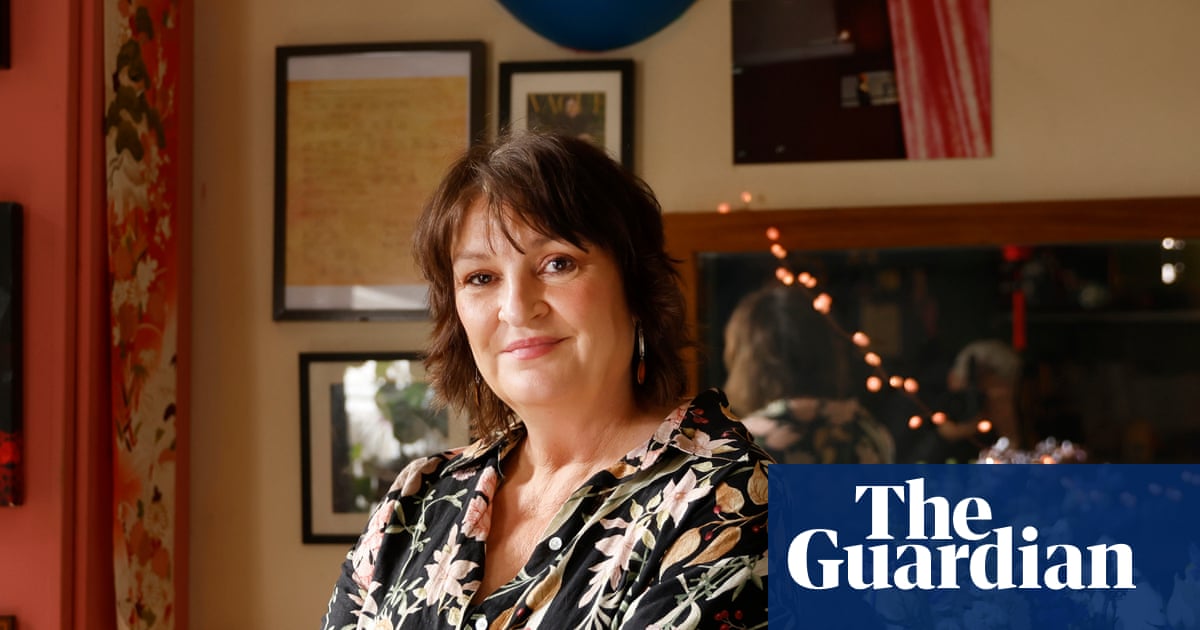
Out for dinner in London with her husband and two-month-old son, Gizzelle Cade noticed another woman coming into the restaurant with a pram. “It had all these little trinkets and toys,” says Cade. “I was like, wow, she put some cute little decor there.” The woman reached into the pram to get, Cade assumed, her baby – instead she pulled out a dog. Then she put an absorbent pad, the kind you use for puppy training, on the floor and placed the dachshund on it.
“I was completely taken aback,” says Cade. “To see pretty much an open bathroom where I was dining with my newborn – it was insulting.”
Cade can’t confirm whether the dog actually used it, and a spokesperson for the restaurant, Gordon Ramsay’s Street Pizza, has said it reviewed CCTV footage and found no evidence the dog urinated or defecated in the restaurant. At the time, Cade says she complained to two waiters and the manager, who didn’t do anything. Then she confronted the woman. “The owner started to compare her dog to my son. She said: ‘Well, your baby shits and pisses. My dog needs to shit and piss too.’ She kept on comparing her dog to my newborn baby.”
It escalated. Cade, an influencer from the US who is now living in the UK, posted a video on TikTok, outside the restaurant. Naturally, it went viral (it has since had more than 20m views).
Allow TikTok content?
This article includes content provided by TikTok. We ask for your permission before anything is loaded, as they may be using cookies and other technologies. To view this content, click 'Allow and continue'.
Cade, who is Black, says she started receiving horrendous abuse online, much of it obscenely racist. “But the overall opinion and the feedback that I have received has been positive,” she says. “It resonated with people. People were already thinking about this privately, about dogs and public spaces and boundaries and hygiene.”
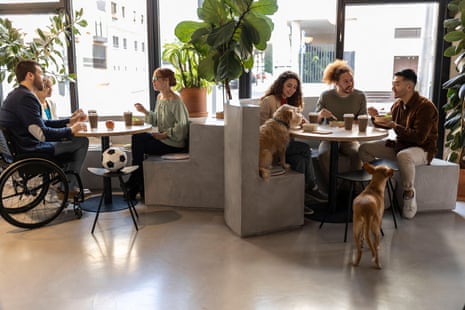
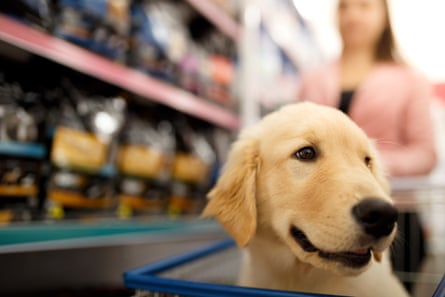
If you live in the UK, it probably hasn’t escaped your notice that dogs are everywhere. There are more dogs around now – about 13m by some estimates, up from around 9m before the pandemic. They’re on the bus, and at the cafe. If a petition to parliament proves successful you might find yourself sitting next to one on a flight back to the UK. You may have seen one riding in a supermarket trolley. If they’re not yet in your office, they’re definitely at every co-working space across the country. There may be one by your feet right now as you read this. Maybe you noticed the mess?
The organisation Keep Britain Tidy estimates half a million dog owners leave their pooch’s poo where it lands, an estimated 35 tonnes of faeces. One study found high levels of pesticides, banned for agricultural use but used in flea and tick treatment for dogs, in ponds in London’s Hampstead Heath. Dogs swimming in the ponds (there are designated canine swim areas) can contaminate the water as the chemicals, which are harmful to invertebrate wildlife, wash off their fur.
I have a dog in this fight. My golden retriever Roo, who turned two last week, is with me most of the time. She’s my work pal (she encourages me to get up from my desk to get us both regular snacks), and my walking buddy. She has been on boats, trains and buses; in shops, cafes and restaurants. But do dogs even enjoy all of this?
“I would say more yes than no,” says Clive Wynne, director of the Canine Science Collaboratory at Arizona State University. “I think going out and about and seeing things and smelling things is very positive for dogs, and they enjoy being out in the world.”
But dogs are individuals and highly variable, says Wynne, so it’s up to owners to ensure their pets aren’t overwhelmed. “The main thing that people easily forget is that dogs need to sleep a lot more than humans do. Again, it varies greatly by individual and breed and so on, but we think dogs need to sleep about 14 hours a day. So if they’re being taken out all day with no opportunity to rest, that would become stressful.”
Obviously I know Roo is the best dog in the world, but I also don’t expect you to agree, or necessarily want to be around her when you’re eating – I don’t always either (I know where she’s been). This is the dog who, I’m sure, still dreams fondly about the day she wrestled the corpse of a fetid fermenting badger and it exploded all over her. She is well trained, having passed her gold Kennel Club good citizenship award, but on the day of writing, she slipped her lead and ran through my son’s primary school. Not every child will have been thrilled.
The world is going to the dogs, according to some people. Others think this is a great thing. “If I can, I’m taking her absolutely everywhere,” says Nikki Beatnik, a DJ and record producer who has Minnie, a miniature pinscher cross. Her previous dog, Purdy, went everywhere with her, too. Both were rescues. “My dogs have been street dogs and they’ve had really hard lives, so I feel an extra responsibility to make their lives amazing,” says Beatnik.
With that aim, she likes to take Minnie into central London, into shops and on public transport. She feels there are more dog-friendly places now. “It feels like it’s getting more like LA, where you can take your dog everywhere.”
So far, she hasn’t had any confrontations with people who don’t want her dog around. “In fact, I find more people talk to you when you’ve got a dog – people from all walks of life will come up. There are people with their kids who will keep them away from the dog. I try to be as patient as possible, because not everyone is a dog person. I’m quite understanding of it.”
Owen Sharp, CEO of the Dogs Trust, has had dogs for the last couple of decades and has seen the change in the UK. The organisation is running a survey on the nation’s canines. “Not that long ago, you had to plan quite carefully where you were going with your dog, whereas these days, you can pretty much assume that you will find places.” A few weeks ago, he was in Ireland, he says, “and they are not as far along that journey, and actually it’s quite hard to go to [dog-friendly] places. It suddenly seemed unusual.”
Things were changing before 2020, but Sharp thinks Covid was an accelerant. There was a boom in pandemic puppies and the shift toward flexible working means “people are spending more time with their dogs, and there is that kind of hybrid existence, where the lines between the workplace and home have blurred.” According to Sharp, businesses such as cafes, hotels and restaurants, as well as offices, changed to accommodate all the new dog owners. “If you want to bring customers back, we need to make it a dog-friendly environment.”
For some people, that now means human-unfriendly. Cade says she has received hundreds of messages from people who are tired of dogs being everywhere, including those with allergies. Cade stresses that she loves dogs – she used to have her own, a shih-tzu. “But I do value hygiene, and every place is not a place that is or should be dog-friendly. I’ve gone to cafes and watched baristas pet dogs and then continue making coffee. People have allergies. Some people just don’t like dogs. I think what has happened is there’s been this overtaking, where there’s no respect for hygiene, no respect for people’s personal boundaries.” (Cade stresses she does not mean assistance dogs.)

There may also be a growing impact on trained service dogs and the people who rely on them, such as to alert them to an oncoming medical event or as a visual or hearing aid. “Other people who are allowing their dogs to freely approach or misbehave around them – they’re going to distract that dog,” says Vicky Worthington, executive director of Assistance Dogs UK. “It’s not going to be able to do its job properly. I think that there’s an element of making sure that we have more responsible dog ownership in general, because that helps everybody, but it also certainly helps assistance dogs being able to do their job uninterrupted.”
People seem to be increasingly misrepresenting their pet as an assistance dog, most commonly as an “emotional support animal” – which is, says, Worthington, “really a pet dog that brings comfort by being present. An assistance dog has been trained to mitigate a disability. Someone might well have a psychiatric assistance dog; that’s a different thing to emotional support dogs. Emotional support dogs aren’t referenced in legislation, but trained assistance dogs are.” Assistance Dogs UK is exploring options to have genuine assistance dogs recognised, and clearer legal definitions.
We may think dogs are everywhere, but this is not a new thing, says Wynne, whose book on the history of the dog-human relationship is coming out next year. In medieval England, he says, an edict was issued to monasteries and nunneries banning them from having any more pets, especially dogs, “because they were overrunning the place. In Shakespeare’s works, a couple of hundred years later, the dogs are almost always a nuisance. Presumably because if you lived in London in those days, there were dogs everywhere, barking at everything and biting people.”
A visitor from centuries ago, he says, would come to our modern cities, look at the dogs and wonder: where are the children? In previous generations, larger families were the norm. That people are increasingly choosing not to have children, or to have just one or two, “is unprecedented. That surely has made a difference.”
It’s not just that dogs have become a replacement for children – undoubtedly true for some, known as dinkwads, or dual income, no kids, with a dog – but that in a society where there are fewer children around, people seem to be more accommodating of dogs. “Dogs are a risk to small children, so when there were more kids everywhere, parents were more concerned about there being dogs everywhere,” says Wynne. Earlier this year, research by the Times found 34% of postcode areas in England had more dogs than children. “You get competition in city councils between people who want to see areas of a park made into a kids’ playground, compared with people who want to see it made into a dog area.”
Letting our dogs live inside our houses, sleep on our beds and cuddle on the sofa is all quite modern, he says. “If you were to wind back the clock one century, most people would find that very strange. But there would be a subset of society who would be totally with you on that: the upper classes. They have always allowed themselves to be very indulgent with dogs.”
Wynne has devoted his career to studying dogs – and has had dogs himself – but even he is annoyed by the trend of taking them everywhere. He has seen people at the supermarket “with their dogs sticking their noses into foodstuffs that are close enough to the ground”.
Dogs are, he says, “by and large tremendously wonderful, gentle beings. But not always.” Especially, he says, in situations where there are children “who may behave unpredictably”.
According to police, there were more than 32,500 recorded dog attacks in the UK in 2024, (most of these happen at home). Might we be coming to a point where there is enough pushback from people who are tired of dogs in public? “I think it would only take one horrific news story of a child being harmed by a dog that’s somewhere it wasn’t supposed to be, like in a supermarket or inside a restaurant, for the pendulum to somewhat swing back.”
We may come to a point where we need measures to ensure the dog people and their pets can coexist peacefully with those who would rather avoid them. Councils regularly review their public space protection orders, which, among other things, specify where dogs can and can’t be. Others have called for a reinstatement of the dog licence, which could go towards the public cost of cleaning up canine mess. Many people, including those of us who have dogs and regularly witness appalling behaviour from other dogs and their humans, would like to see less entitlement and more education and training.
“My belief and my experience is that the vast majority of dog owners want to do the right thing,” says Sharp. He does have sympathy for people who don’t want to be around dogs. “I think it’s beholden on all of us who are dog owners to be mindful of that, knowing how to make sure your dog is safe and people are safe around dogs.”