3 months ago
176
3 months ago
176
From Radiohead playing in backroom pubs as On a Friday to Timothée Chalamet’s early days as an Xbox YouTuber, it’s always fascinating to see the faltering first steps of famous folk. So in this week’s newsletter we’re launching a new regular feature, Origin stories, where we’ll look at how the Guardian first covered some now very familiar pop culture figures or institutions. And you’ll find out who the tyke above is, from a 1973 photoshoot, at the end.
To the archives!
The Beatles
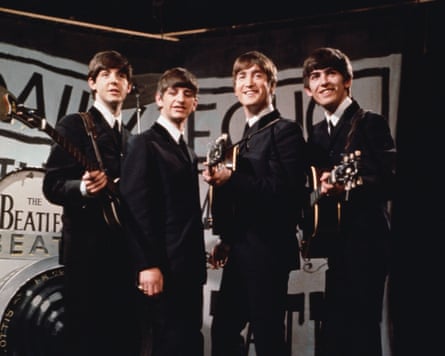
The Guardian, regrettably, wasn’t at the Cavern or the clubs of Hamburg for an on-the-ground report of the Fabs’ early years. Instead, the first appearance that we can find is in an article about the rise of “coffee dance clubs”, basement venues in Manchester where a “metropolitan mixture of artist, Continental girls who could be students, but may just be au pair, and young manual workers having a fairly inexpensive night on the town” would dance till they dropped (though apparently not drink much coffee). “Most of the clubs have twist or jazz groups, the Beatles for instance, or Bee Bumble and the Stingers, playing on some nights,” is all the mention that John, Paul, George and Ringo get. This was in January 1963, right as Please Please Me was climbing the charts: by the end of the year Beatlemania had truly hit.
Marilyn Monroe
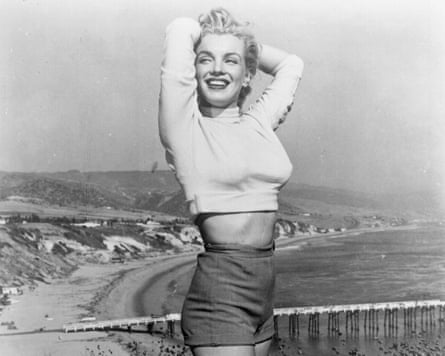
Norma Jeane’s first Guardian mention is just as inauspicious as the Beatles’, a brief mention in a short review of early 50s psychological thriller Don’t Bother to Knock. “The film makes a slow start and does not succeed in ending up as anything very special,” was the verdict of the critic. Things hardly improved with the review of her next leading role, in Niagara: “Miss Monroe has been compared with the late Jean Harlow: here she only proves that little roles suit her best.” The Guardian would eventually be convinced of Marilyn’s charms. By the time of Some Like it Hot in 1959, she was being described as “irresistible”.
EastEnders
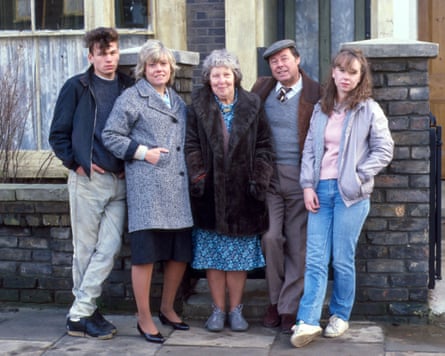
“Albert Square will soon be as familiar a national landmark as Coronation Street, and rather more up to date, the BBC hopes,” opened the Guardian article in October 1984 about the announcement of the Beeb’s new soap. Not a bad prediction! Four months later, EastEnders began on BBC One. Hugh Hebert’s opening night review for the paper was maybe a little sniffy (“It wasn’t exactly like First Looking into Chapman’s Homer or turning to page one of War and Peace”), but overall cautiously positive: “It’s pretty much as expected, Coronation Street with added abrasives and a cockney accent, and at that level it’s a good professional stab at the task: and it looks a lot more realistic than Granada’s apparently endless saga.” Forty years later, both keep trundling on.
Nintendo
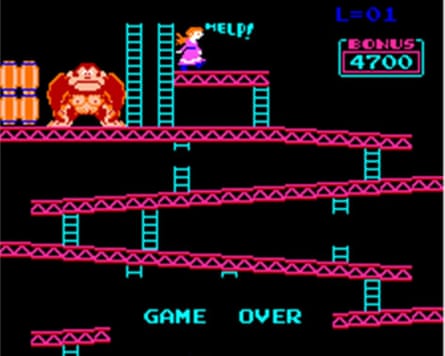
The first mention that we could find of the planet-straddling gaming company couldn’t be more dismissive. “The next inevitable advance of those puerile video games has duly arrived in Japan – the pocket game and watch combined,” sniffed a brief entry on a new Nintendo product in the tech column What’s New in 1980. The Japanese firm’s next mention would come four years later, right in the middle of the home-gaming boom, in a piece by the Guardian’s pipe-smoking tech journo Jack Schofield about plagiarism among video game companies. “Micro Power’s Acorn BBC Game Killer Gorilla closely resembles the Nintendo Game Donkey Kong, licensed to Atari. And there are numerous similar games for other machines … unless the existence of Kongo Kong, Wally Kong, Killer Kong, Dinkey Kong, Krazy Kong, and Donkey King is just an astonishing coincidence.”
Claudia Winkleman
We’ve saved the best one for last. You might have thought that the first mention of The Traitors’ presenter/chief tormentor would have come in the 90s, when she was starting out on TV. But no, it actually came decades earlier, when Winkleman, as a toddler, appeared in a photoshoot for a 1973 piece on children’s clothes. Sporting a lively string-bowed smock (“embroidered Indian smocks and Kurtas lends itself well to small-fry fashion”, the piece suggests) and stripy bell-bottom trousers, Winkleman was already a fashion icon – though the trademark fingerless gloves and severe fringe were still to come.
---
If you want to dig further into the archive yourself, support the Guardian by signing up for Digital plus and get access to the full 200-year archive.
To read the complete version of this newsletter please subscribe to receive The Guide in your inbox every Friday