7 hours ago
12
7 hours ago
12
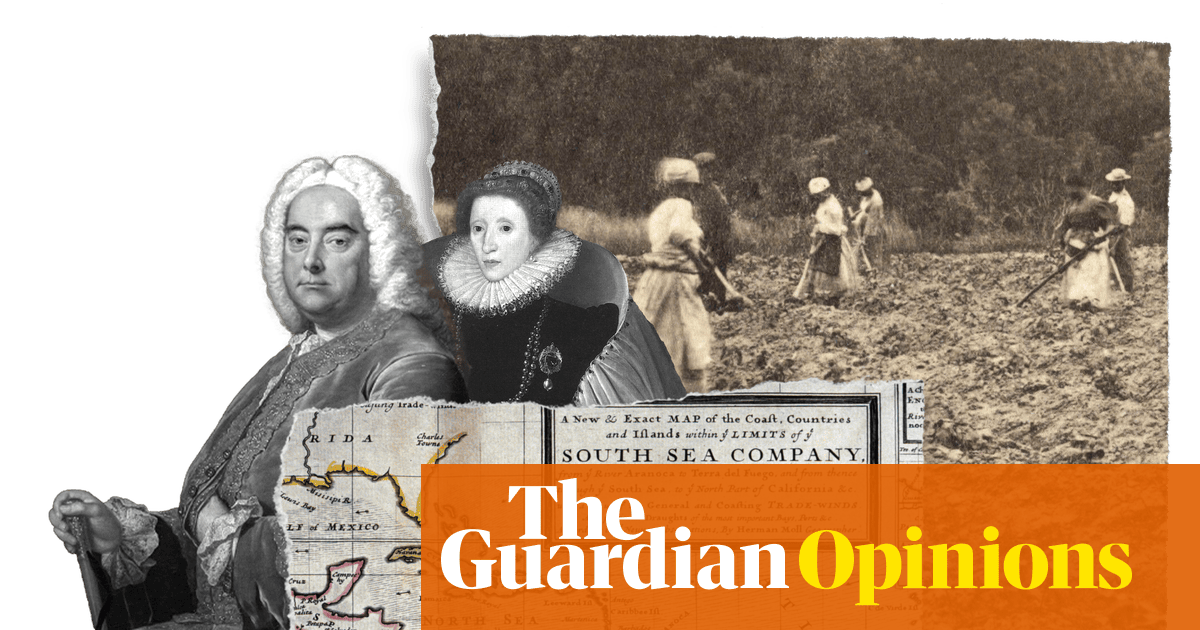
Enslaved African people were seared with hot metal brands bearing the royal crown, according to research by historians who have documented the monarchy’s centuries-long involvement in Britain’s slave trade.
The Register of British Slave Traders identifies thousands of people who invested in Britain’s trafficking of enslaved Africans, including kings and queens.
In response to the Guardian’s reporting of the new research relating to the monarchy, a spokesperson for King Charles said he was “grateful to all those undertaking academic work in this area and thus contributing to the debate about how such issues might best be addressed”.
Dr Nicholas Radburn, a historian at Lancaster University, discovered evidence of the branding in the archives of the South Sea Company, a British crown-backed enterprise that trafficked thousands of enslaved African people to plantations in the 1700s.
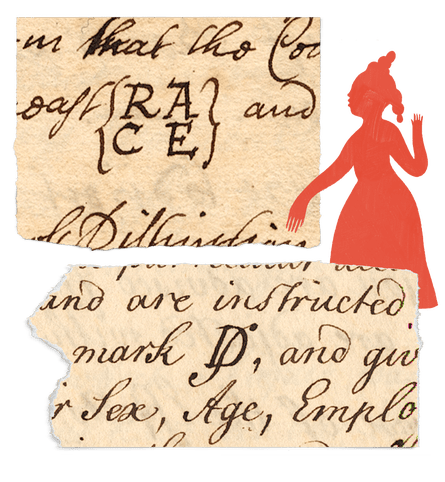
Radburn found a letter sent by the company’s board to its agents in Buenos Aires, instructing them to brand enslaved people with hot metal. The brand bore a crown, a symbol of the British monarchy’s role in the trade. A doctor had warned against the branding, but the board, whose members included figures from England’s establishment elite including MPs and Bank of England directors, instructed the agents to proceed.
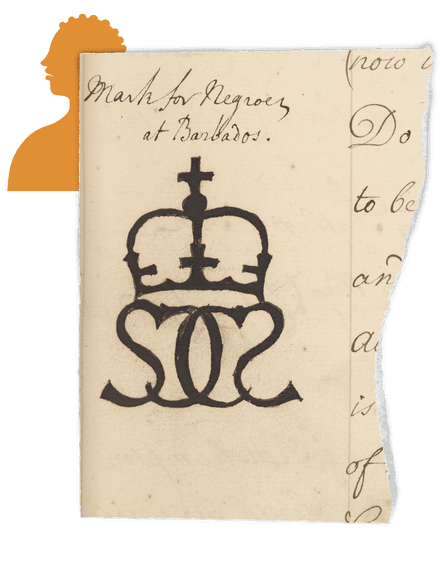
“It now comes out, that you never mark the Negroes,” the letter said, “giving for reason that the French never did it, and that Dr Dover said your mark being so large, might endanger the Negroes.”
Insisting the agents disregard the doctor’s advice, they wrote that it was “the most effectual … way to distinguish our Negroes from others”. The directors sent a crown brand with their letter and instructions for how to scar the enslaved African people with it.
“Herewith you will receive a small silver mark,” they wrote. “As to the manner of using it, the method of our other factorys, is to mark the Negroes on the left shoulder heating the mark red hot.”
The letter was signed: “Your affectionate friends, the court of directors.”
Radburn said the letter illustrated how detailed the company’s dehumanising cruelty was – and its awareness of it.
“These people were members of the London elite, in a boardroom, thinking in fine grain terms about the violence that needs to be done to enslaved people across the ocean,” he said. “And that will have happened as a result of that letter. People will have had their flesh seared with that brand.”
The Register of British Slave Traders, the new historical record for which Radburn was a lead investigator, documents how Britain’s enslaving and trafficking of more than 3 million African people for nearly 250 years was perpetrated as an official national enterprise, led by its monarchs.
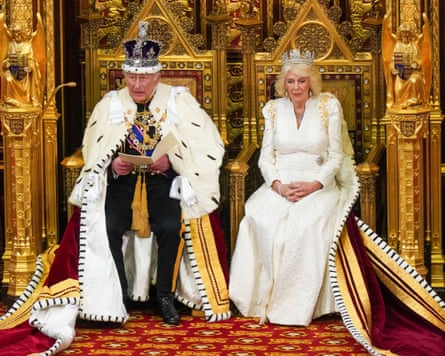
The publication of the register, the most comprehensive research project into the investors in Britain’s trafficking of enslaved African people, will further inform calls for King Charles to finally acknowledge the monarchy’s deep involvement in the trade.
The kings and queens who powered the trafficking most ferociously were those after the monarchy was restored in 1660. James, Duke of York, who became King James II, was the governor and a substantial shareholder in the Royal African Company (RAC), founded in 1672, which trafficked more African men, women and children than any other single organisation in the history of the slave trade.
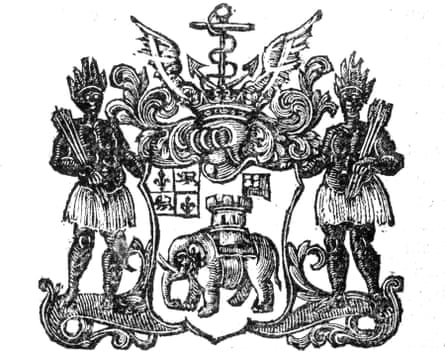
The RAC and its predecessor, the Company of Royal Adventurers, were established by James’s brother, King Charles II, and backed by royalist courtiers, politicians and financiers. These royal insiders, whose biographies are in the register, bore florid titles of the time: Edward Proger, “groom of the bedchamber”, the Earl of Falmouth, “groom of the stool”. The RAC meetings, where decisions about the trafficking of enslaved people were made, were held in James’s personal apartment in Whitehall Palace, the royal family’s London home before Buckingham Palace was built.
Prof William Pettigrew, the register’s lead historian and investigator, said these royal enslaving companies were crucial to the kings of the Stuart dynasty striving to solidify the restored monarchy as an institution.
“I view James II as the most important English slave trader of the 17th century,” Pettigrew said. “The African companies were central to the monarchy’s rehabilitation plan within the British constitution.”
James ran the transatlantic trafficking of enslaved African people with his cousin, Prince Rupert of the Rhine, described in the register as “the visionary for England’s fully fledged, state-backed slave trade”. Other royals, including Charles II’s Portuguese wife, Queen Catherine of Braganza, were also investors in these companies.
In her book The Crown’s Silence, Prof Brooke Newman has chronicled in detail the centuries-long involvement of the British monarchy in the enslavement of African people, from the first trafficking voyages backed by Queen Elizabeth I in the 1560s to King William IV, who relished drinking and debauchery on Caribbean plantations and opposed abolition for decades.
Newman wrote that the RAC also branded the African people it enslaved at its coastal forts and factories, with DY for the Duke of York, and RACE for the Royal African Company of England. An agent in Sherbro, an island off Sierra Leone, was told by company directors: “You are to mark them … on the right breast RACE and the children of them at three years of age.”
As part of a 1713 peace treaty, Queen Anne agreed with Spain’s King Philip V that Britain would be awarded the asiento – an agreement to deliver a stipulated 4,800 enslaved African men to Spain’s American colonies every year.
Anne announced it triumphantly in the House of Lords: “I have insisted and obtained, that the asiento or contract for furnishing the Spanish West Indies with Negroes, shall be made with us for the term of 30 years.”
Queen Anne was a significant investor in the South Sea Company, which was established in 1711, and had rights to almost a quarter share of its overall profits. Anne gave the asiento to the SSC, which contracted the RAC to fulfil it.
Anne’s successors, George I and George II, were also personal investors in and supporters of the SSC.
According to the Slave Voyages database, the SSC trafficked 43,220 African captives from west Africa and Madagascar to the Caribbean and Spanish Americas between 1714 and 1740. From there, Radburn said, they were trafficked again, shipped and forced to march for hundreds of miles overland to the Pacific coast of South America. The company also moved more than 50,000 enslaved people within the Americas.
The trafficking vessels, including ships named Crown, King William and William and Mary, all set off from London. Almost 7,000 people died in the ships’ notoriously appalling conditions.
“It was a merciless, monarchy supported company,” Radburn said, “and the trafficking of enslaved people was the heart of it.”
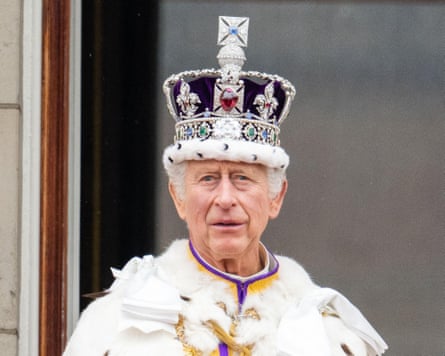
Pressure on Charles from African and Caribbean countries to acknowledge this history and go further than previous expressions of sorrow is expected to build before the next Commonwealth heads of government meeting in Antigua and Barbuda in November.
But successive governments have not formally apologised for Britain’s role in slavery and have rejected any discussion of reparations. Even if Charles wanted to, as king he is constitutionally bound by the government’s stated position.
An official delegation from Jamaica delivered a petition to Charles last week, seeking a legal ruling from the privy council, the final court of appeal for UK overseas territories and some Commonwealth countries. It asks whether the forced transport of Africans to Jamaica was lawful, whether it constituted a crime against humanity, and whether Britain is obliged to provide restitution to Jamaica for slavery and its enduring consequences.
Charles has publicly expressed sorrow over enslavement, describing it as an “appalling atrocity” and referring to “the most painful aspects of our past”, but has not formally acknowledged and apologised for the role of Britain or the monarchy in perpetrating it. In 2023 he signalled for the first time his support for research into the British monarchy’s historical links to transatlantic slavery.
A spokesperson for the king said: “His majesty has on many occasions expressed his personal and wholehearted commitment to promoting greater understanding around the issue of slavery and finding ways to address historic wrongs for the benefit of communities today.
“In that context, he is grateful to all those undertaking academic work in this area and thus contributing to the debate about how such issues might best be addressed.”
David Comissiong, the Barbados ambassador to the Caribbean Community, said he recognised that Charles’s constitutional role meant he must not contravene government policy.
“But just as other British establishment families have acknowledged their involvement in the slavery enterprise and indicated a willingness to make reparation, anybody conscious of the British monarchy’s history would have to conclude that the British royal family should act similarly,” he added.