3 months ago
139
3 months ago
139
When Rachel needed a place to live, Maya was only too happy to offer her spare room. What are friends for?
Rachel had recently returned to her home town to start afresh, having been made redundant. Maya, a childhood friend, owned her three-bedroom home, having been helped to buy it by her parents.
When Rachel offered to pay rent, Maya suggested a figure – the market rate. Rachel agreed, recognising that she was in a bind and that Maya was helping her.
Over time, however, she found herself increasingly at Maya’s beck and call, and doing more than her share of the housework. If Maya left dirty dishes in the sink, or didn’t clean the stovetop after cooking, Rachel did it for her.
She even obliged with Maya’s more idiosyncratic house rules, such as no laundry in the common areas, and no strong kitchen smells. Rachel hung her laundry in her room and refrained from cooking fish or curry. “That was my way of saying, ‘Thank you for sharing your house with me,’” she says, even though she was also paying rent.
But Maya’s demands escalated. She started questioning how often Rachel worked from home and did her laundry. But the breaking point came when the front door lock broke. The locksmith who fixed it said it was a building fault; Maya blamed Rachel and charged her for the repair.
“I realised what had been obvious the whole time,” Rachel says. Maya treated her like a friend only when it suited her. Otherwise, Rachel was her tenant. Rachel moved out not long afterwards. “I don’t think I want a friend who would do that to me – or anyone else.”
Friendship should be cherished as a relationship between equals, but worsening inequality is testing that, forcing friends into the uneven dynamic of landlord and lodger.
According to flatsharing website SpareRoom, there was an 89% increase in homeowners taking in lodgers over the three years to January 2024, driven by rising living costs. Renters face the same pressures, especially in London, where rooms now cost an average of £1,000 a month.
With homeowners seeking a side income, and renters scrambling for affordable accommodation, friends on either side of the divide are meeting each other halfway.
Introducing the “friendlord”: you need a room, they have one to spare, and you know you get on – they might even cut you a deal on the rent. It can seem like the best possible compromise in such an unequal society.
It’s also a risk, creating a power imbalance in a personal relationship. Not all friendships are built to withstand discussions of money, requests for repairs or cohabitation. And should the situation break down, you stand to lose not just a roof over your head, but a relationship, too.
Emily moved in with her friendlord three years ago. They’ve known each other since childhood, and Emily was looking for a room just as her friend was buying a flat – it seemed win-win.
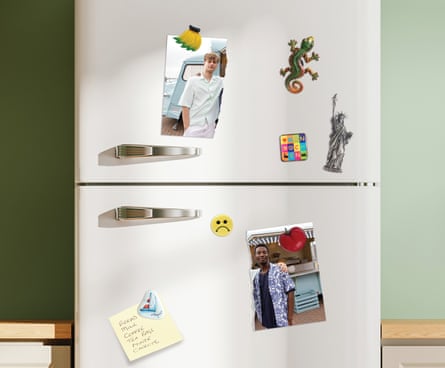
But she’s struggled to feel it’s truly her home. “I’m always very aware of myself, and don’t feel at ease in shared spaces like I did when I lived in a flat we were all renting,” Emily says. She keeps her photos off the fridge and, if any of her food goes missing, she keeps quiet, not wanting to confront a friend. The implicit hierarchy even extends to the bathroom towel rail: her friend’s towel goes on the top rung, and Emily’s below. The close quarters have also brought an uneasy intimacy to their relationship. “No friend should know how much toilet paper the other uses,” Emily says. “She sometimes uses a whole roll in a day – it drives me crazy.”
Her friend is at least not precious or controlling as a landlord, and charges her mates’ rates in rent: “It’s an absolute bargain.”
Emily admits her frustration mostly stems from having to live in her friend’s pocket, at a time in life when she wants independence. “I feel like the loser friend,” she says. “Buying a house is a big goal of mine and I wish it was possible right now.”
For others, however, the risks of renting from a friend are still less of a worry than taking their chances on the market. “When it’s a friend, you know – or you hope – that you’re not going to be totally screwed over,” says Helen.
She rents a room from a friend who lives with her partner. Rather than rely on goodwill, Helen’s friend was “very by the book”, drawing up an agreement and inventory, registering a deposit and even consulting the Landlord Advice helpline.
That brings Helen peace of mind, and not just as a tenant. “Because it’s done in a formal, official way, it helps me to separate her as a friend and as a landlord. I’ve had people go, ‘You’re just paying off your friend’s mortgage’, but we’re in totally different circumstances,” she says. “She was in a position to buy, and I wasn’t.”
For the friendlord, who is in the more powerful position, the shift can be tricky to manage. When Tim offered his flat to his friend, after moving in with his girlfriend, he was keenly aware of the responsibility involved.
“I’ve had plenty of shit landlords over the course of my life – the absolute last thing I would want is to end up being one myself,” he says. “In an ideal world, we wouldn’t have landlords at all.”
Tim’s response has been to try to be as transparent and fair as possible: he charges his friend 25-50% less than market rates in rent, with reductions when cash is tight, and didn’t ask for a deposit. “As friends, those are things we should be able to work out, and I trust him to treat the flat with care,” he says.
Tim is proactive with repairs and maintenance, even paying for materials to paint the walls. “I mean, these are really basic things you’d hope any landlord would do – but when your tenants are your friends, it’s even more important.”
More broadly, Tim strives to be mindful of the essential imbalance between him and his friend. “While the bricks and mortar are my asset, it is his home,” he says.
When they meet up socially, it’s usually at the pub. “I am probably less likely to go round to his flat – my flat – than I am another friend’s, simply because I don’t want to impinge,” he says. “I think it would be a bit weird if I was hanging out there every Friday night.”
Without mutual understanding, the fact that one friend is now the “landlord” can become harder to overlook, says journalist Alice Wilkinson, author of How to Stay Sane in a House Share.
She once rented from an old friend after reaching breaking point in a houseshare, but found their shared history helped them to navigate any awkwardness.
Their six months cohabiting even deepened their friendship, allowing her to get to know her friend’s husband. “I’d never have come to know him that well if we hadn’t lived together, so that was a wonderful thing,” she says.
Others aren’t so lucky. A woman Wilkinson spoke to for her book wound up becoming her live-in landlady’s personal chef, cooking meals to order. She’d signed up to a meal kit, and her landlord would express preferences from the available recipes. “She’d just make her dinners all the time … She didn’t want to live like that, but because her flatmate owned the house, she kind of had to comply.”
Sometimes the divide between the friendlord and the lodger’s statuses is made as plain as day. Melissa lived with a home-owning couple in a flat on a brightly lit street. “One day they came home all excited to tell me about their new blackout curtains,” she remembers. “I was also excited, until I realised they hadn’t bought any for my room.” It highlighted the “weird dynamic”, she says. “I moved out not long after.”
At worst, friendlords can be actively exploitative. After moving in with a friend of a friend who owned a three-bedroom flat, Eimear found herself being treated as a “revenue stream”.
“At the start it was fine,” she says. The friendlord had explicit house rules, but Eimear was happy to comply, given the relatively cheap rent.
But not long after Eimear moved in, the friendlord decided to go travelling. While overseas, she listed her room and the spare on Airbnb – leaving Eimear living alongside a constant stream of strangers.
“At one point I was living with two men who I hadn’t met,” she says. “ I would literally lie in bed thinking: ‘Who is next door to me?’”
The “strange, hierarchical setup” with her friendlord made Eimear feel as though she couldn’t push back. “I had renters’ rights, but I didn’t feel I could exercise them because we were ‘friends’. And she played on that, too,” she adds.
After a few months, she told her friendlord the situation wasn’t working and she was thinking of moving out. “She evicted me on New Year’s Eve.”
A friendlord may even provide less security than taking your chances on the market. Lodgers (sharing their landlords’ primary residence) actually have fewer rights than renters, being more vulnerable to rent increases and not being covered by the deposit protection system. The property owner also has to provide only basic notice of eviction.
“Even if you trust your friend, it is possible that in a week or less you could be kicked out,” says Nye Jones, head of campaigns at Generation Rent.
Jones suggests renting from a friend might be best approached as a temporary solution, and advises caution even between good friends. As a lodger, he says, “you are living with much less security … The landlord can even just change the locks.”
That would probably spell the end of the friendship, too, he agrees. “It’s difficult to come back from a lock change.”