6 hours ago
6
6 hours ago
6
Your credit score is the magic number that helps lenders decide whether or not to approve a mortgage, loan or credit card application.
Typically, the higher the number, the better your borrowing prospects. But a shake-up of the scoring system at TransUnion, one of the UK’s three main credit reference agencies, could mean a shock next time you log in.
Previously, TransUnion’s top score was 710, but later this month it will start rolling out a wider range, rating you out of 999.
And while the change means tens of thousands of people will be promoted to a higher band (bands are colour-coded like traffic lights, with “excellent” at the top and “very low” at the bottom), others will be demoted and find they have slipped down a rung.
The good news, though, is that even if your “score banding” changes, the underlying information held on your credit file will remain the same, and that is what lenders use to decide the outcome of an application – so credit decisions and approvals will not be affected, says the company.
In the UK there is no “universal credit score” that is used by lenders or credit reference agencies (CRAs). Each CRA has its own system: the other two main ones in the UK are Equifax and Experian. At Equifax your credit score is between 0 and 1,000, and at Experian it’s 0 to 1,250.
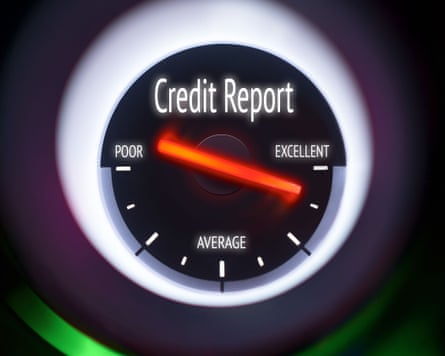
What is my score?
It is a number calculated based on your credit history. That is, it’s a measure of how likely you are to repay your debts on time.
Before you can take on any kind of debt – and for other purposes, too – banks, mobile phone companies and other businesses will check your creditworthiness with any of the three CRAs. They all use slightly different models, but rely on similar data, such as your history of paying bills, to calculate the score. Those in the top bands are considered a more reliable prospect for lenders, with your score also affecting how much you can borrow and the rate of interest charged.
What is TransUnion doing?
Previously, its top mark was 710, but this month it will start rolling out the new system that scores you from 0 to 999.
TransUnion says the overhaul gives consumers a “clearer and more detailed view of their credit health”.
It claims it is “more than a new number range” as it combines how consumers use credit over time, with a “moment-in-time view to provide a more considered picture of how consumers manage credit day-to-day”.

The new score draws on more data, including how account balances have changed over time, and how credit cards are used.
The company has also changed some of its terminology. The bottom two bands used to be called “poor” and “very poor” but have been renamed “low” and “very low”.
TransUnion says most people (58%) will remain in the same score band, while 36% will be boosted to a higher bracket, and 6% will move down a bracket.
Madhu Kejriwal at TransUnion says its new score is “clearer, more transparent, informative and better aligned with how lenders view consumers today”.
The new system is being rolled out in stages between late September and June 2027. As a result, some consumers may briefly see two different scores, depending on the app or provider they use, and when it adopts the new model.
Even if your score ends up looking worse, TransUnion says that nothing about your underlying credit report will have changed – only the number that you see.

TransUnion says: “The information shared with organisations about an individual’s credit history will remain unchanged.
“As a result, the presence of different scores during the transition will not impact or influence lenders’ decisions on credit applications.”
Tom Eyre, the chief executive of the credit-building platform Loqbox, says the changes to scoring systems are not something to worry about. “If a new model moves someone into a lower band, it doesn’t mean they have become less creditworthy overnight. Their behaviour and their history are the same. What’s changed is how the credit rating agency calculates or presents their score.”
Eyre adds: “It’s far more important to understand what’s in your report and what shapes it, rather than a specific band or number, as it’s those pieces of information that credit providers actually look at, alongside their own criteria, when making a decision.”
What about Experian and Equifax?
Experian rejigged its scoring system last year, increasing the top of its range from 999 to 1,250, and factoring in items such as rental payments for the first time.
Equifax changed its score range from 0-700 to 0-1,000 in 2021 and is not thought to be planning another change any time soon.

Experian says its new system “better reflects more of the everyday financial behaviours that matter – like paying rent or reducing overdraft use”.
after newsletter promotion
It also gives people a “more personalised view of how they’re doing financially, and more practical ways to improve their score”, the company says.
Experian also got rid of the “poor” and “very poor” labels, as well as the use of the colour red. Its bands are now called “excellent”, “very good”, “good”, fair” and “low”.
After the change, Experian says 42% of people saw their score band improve, and a similar number recorded a drop, while 14% registered no change.
What if my score falls?
Small movements are not unusual – they can be caused by things such as the fact you’ve used a bit more of your credit card credit limit – and a slight dip is unlikely to affect your ability to borrow.
Also, remember that a “low” or “very low” score does not block access to credit. It may make it harder to obtain, though, and the available options may come with a higher interest rate.
John Webb at Experian says that, generally, there is “no need to worry” about small changes.
“Your credit score can change regularly as the information on your credit report is updated,” he adds.

It is worth keeping an eye on the direction of travel, and there are lots of free, and paid-for, ways to check your score – many high street banks include the feature in their apps.
Eyre says each agency works out its own score from the information it holds, but “it’s the credit file that gives you the detail behind it, such as your accounts, payments and searches”.
He explains: “Every credit reference agency is legally required to give you your statutory credit report at no charge, and services such as ClearScore, Credit Karma and the Experian app will show a score, and often basic credit report insights, for free, although you might need to pay to access some additional features.”
A steep drop in your credit score is a red flag and you should investigate. It could be something straightforward such as the closure of an account after paying off a longstanding credit card bill, or something more serious, such as a missed payment or identity fraud.
How can I improve my credit score?
Start by checking that the information in your credit report is accurate.
You need to check all three credit reference agencies as Loqbox chief executive Tom Eyre says no single one gives you the whole picture. “They don’t all hold exactly the same information about a person, because lenders and other providers may report to one, two or all three – and some lenders lean on a particular agency when assessing applications.”
Experian’s guide to improving your credit score advises using 30% of your credit card limit, registering on the electoral roll (this helps lenders verify your identity), avoiding new applications for credit unless needed, and keeping up to date with minimum payments.
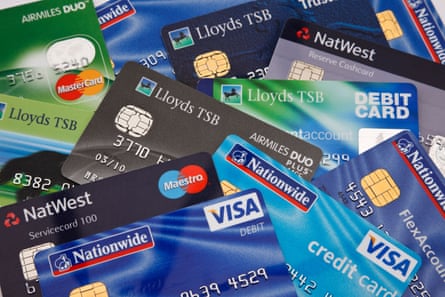
Craig Tebbutt at Equifax says it is important to “make full repayments on time. Missed payments go on your credit report. Paying back what you owe in full and on time shows lenders you are able to manage your finances, which supports your overall credit health.”
Tebbutt says that if you already have a lot of credit available – for example, several credit cards or a large overdraft – lenders may take this into account.
Also think about closing accounts you do not use.
You should also “be careful when applying for credit”, says Tebbutt. “Every time you formally apply for credit, it leaves a ‘hard search’ on your credit report. Try to space out your applications, and only apply for credit you need.”
Finally, review your financial associations: if you have a joint bank account or mortgage with someone, you are “financially associated” with them. If their credit history isn’t great, it could affect your own application.