1 month ago
93
1 month ago
93
The jury of the Venice Biennale has said it would not give awards to artists from countries whose leaders are facing charges of crimes against humanity, in a statement apparently aimed at Russia and Israel.
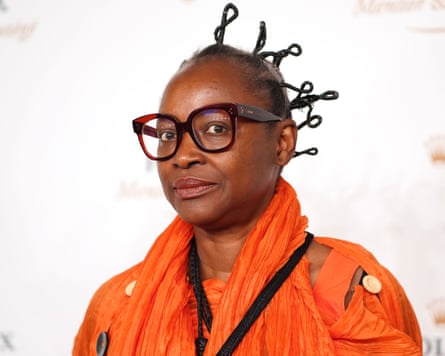
The five-member jury of the art exhibition said it was committed to “the defence of human rights”, in continuity with the vision established by Koyo Kouoh, the Swiss-Cameroonian curator who was appointed to lead the 2026 edition of the biennale before her death last year, and would therefore refrain from the consideration of those countries whose leaders were charged with crimes against humanity by the international criminal court (ICC).
The jury is responsible for choosing the winners of the Golden and Silver Lion awards among the 110 artists participating in the event, which opens on 9 May.
The statement did not mention Russia and Israel, but the mayor of Venice, Luigi Brugnaro, told reporters that the jury had sent his council a letter saying they were unable to give those artists awards whose governments were under investigation by the ICC. Brugnaro added: “It’s an independent choice which we respect, just as the biennale is independent in choosing to have these pavilions.”
The ICC has issued arrest warrants for the Russian president, Vladimir Putin, over alleged war crimes committed against children in Ukraine, and for the Israeli prime minister, Benjamin Netanyahu, over alleged war crimes and crimes against humanity in Gaza.
Biennale organisers have been under fire for allowing Russia to reopen its pavilion at the event, which runs until 22 November. The statement from the jury, which was nominated by Kouoh, came as the European Commission said it had sent a letter to organisers saying it planned to terminate or suspend its €2m (£1.73m) grant for the exhibition because of Russia’s participation. The biennale has 30 days to respond.
Italy’s far-right government has also clashed with the biennale over the reintroduction of Russia, with the culture minister, Alessandro Giuli, saying the decision had been made “entirely independently by the Biennale Foundation, despite the Italian government’s opposition”.
In February 2022, days after Russia’s full-scale invasion of Ukraine, the biennale, one of Italy’s most important cultural institutions, condemned the aggression and banned access to that year’s event for anyone linked to the Kremlin. Although it never formally barred Russia from participating, the country was absent from the 2022 and 2024 editions.
In March, Ukrainian government officials urged organisers to reconsider Russia’s participation, arguing that the biennale must not become “a stage for whitewashing … war crimes”.