3 months ago
114
3 months ago
114
Kiran’s* husband was more than 10,000km away from the home she shared with her in-laws in a village in northern India. But despite the vast distance, he watched her constantly through cameras which beamed into a screen in his Brisbane home.
“He would say: ‘I can always see what you do’,” she recalls through an interpreter.
While her husband was visiting his family home in India in 2017, the cameras were installed in the house – in the kitchen, living room and outdoor area – after the couple’s first child was born.
Two years earlier, the couple had married in a Sikh ceremony in Punjab, near the India-Pakistan border. But in the subsequent eight years, her husband would visit his wife just four times in India, staying for about a month.
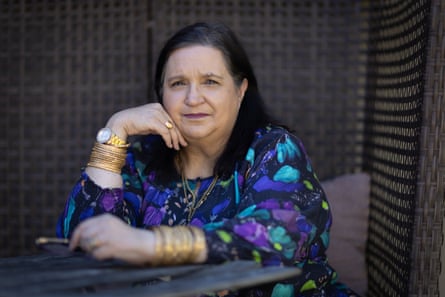
Kiran is one of thousands of Indian women to have been sold a dream that they would migrate overseas once they were married and “start a new life” only for it to turn to a nightmare, says Yasmin Khan, the head of Queensland-based service the Bangle Foundation, which supports south Asian women facing domestic abuse.
Women’s rights advocates say the phenomenon is creating “abandoned brides” – women deserted after their wedding day by Indian-born husbands living abroad in countries including the UK, Australia and Canada.
Some abandonments are for financial gain, with husbands absconding with a dowry – which remains widespread despite becoming illegal in India in 1961. In other cases, husbands use their wives to provide domestic help for their in-laws in India which some advocates liken to modern slavery.
Other men may want to take their wife overseas but unforeseen visa issues prevent this.
Human rights campaigners have documented cases of abandoned brides living in Australia, with legal recourse often complex.
Sign up: AU Breaking News email
In Kiran’s case, her husband promised they would split their time between India and Australia before eventually settling down under to raise their children. But when she fell pregnant, he told her he would “never let” her join him in Australia.
“I came to realise this life was not for me. He had no interest in me. I had just been bought here to take care of others,” she says.
The then 22-year-old knew little of the man before their wedding day. But what she knew – he held permanent residency in Australia, worked a white collar job and abstained from alcohol – made him an eligible match in her family’s eyes.
But after a month of marriage, Kiran’s husband flew back to Australia to resume work, and during the handful of times he visited India arguments often turned violent.
Over long-distance phone calls from Brisbane, Kiran’s husband told her to follow his mother’s orders for domestic duties, which included cooking and cleaning for her in-laws.
“He would say I can see you on the camera – make sure what you cook is fresh for my parents,” she says.
By early 2022, Kiran’s mental health was deteriorating and there were calls from community elders in Punjab – which has been labelled by advocates an epicentre of abandoned brides – for the family to be reunited. It prompted her husband to travel to India and bring her and the children to Australia the following year.
“At that time, I thought God has finally listened to my prayers and I will get to live with my husband, my children will have a father,” Kiran says.
But when she arrived in Brisbane she discovered her husband, who later initiated divorce proceedings, had brought her to Australia on a tourist visa instead of a partner visa, which has a pathway to permanent residency.
It meant she had no legal right to stay indefinitely despite her children being Australian citizens.
Khan, who supported Kiran after the couple’s separation, says her husband’s surveillance and power he exerted over her through the vulnerability of her being on a temporary visa were forms of coercive control that she faced – issues that many of the service’s clients face.
Bangle – which relies on state government support, grants and donations, but receives no ongoing funding – takes about 1,000 calls for help on domestic abuse, visa abuse and trafficking each year, with 60% of those from women based interstate and abroad.
Khan says fear of having to “explain” cultural norms like arranged marriages can be a barrier to migrant and culturally and linguistically diverse (Cald) women experiencing domestic abuse seeking help from a mainstream service.
“They’re not going elsewhere because of issues of culture, tradition, shame, honour and embarrassment.”
Kiran, who remains in visa limbo, is fighting to be able to stay in Australia with her two children. She clings to the hope that her children can give her the happiness she craved from her husband.
*Name has been changed
In Australia, the national family violence counselling service is on 1800 737 732. In the UK, call the national domestic abuse helpline on 0808 2000 247, or visit Women’s Aid. In the US, the domestic violence hotline is 1-800-799-SAFE (7233). Other international helplines may be found via www.befrienders.org