6 hours ago
12
6 hours ago
12
In the five years since the Taliban’s return to power, the walls have been closing in on the women and girls of Afghanistan.
As the regime has tightened its grip, it has banned girls from education after the age of 12, ejected many women from the workplace and created legal frameworks for child marriage and husbands beating their wives. Taliban rule has ushered in a new era of women being whipped for minor infractions and constant inspections by ‘vice and morality’ officials, with men compelled to become enforcers in their own homes. Even the borders of the online world have been creeping inward, with a new spate of smartphone bans and internet restrictions.
Marking the grim anniversary, a dozen women and girls have, at great risk to their safety, documented their lives for the world to see
The soldier stripped of her uniform
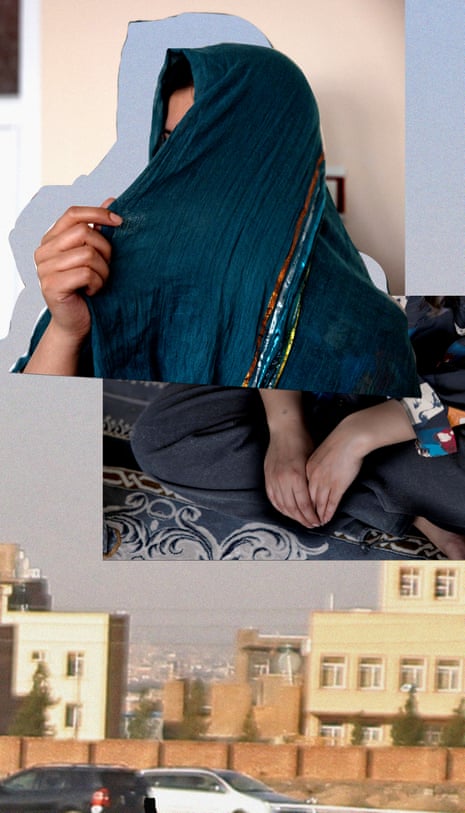
Herat province
Every day, I wake up to the silence of dawn. I feel as though I am still holding my weapon. I lie on my bed for a few moments, taking deep breaths. With every awakening, I make a promise to myself: if my husband manages to return home safely today, I will thank God even more.
My name is Parasto*, and I live in Herat. For six years I served here as a soldier. Within a few days of taking the city, the first thing the Taliban did to me and my female colleagues was hold a meeting and demand that we hand over our uniforms. When they took that uniform, I felt as though I had lost something grand that belonged to me; it was a profound pain.
Because my husband and I served with the previous government, the Taliban have summoned him several times to question him about how many Taliban he killed, or how many I killed. We have been threatened with death many times, through phone calls and messages. In the early days, many of my colleagues fled. The Taliban arrested two women whose names I do not wish to mention, and nothing is known of their fate to this day. Where are they? Are they alive or not? We tried to smuggle ourselves over the border to Iran, but were turned back by border guards. Today, we still keep our bags packed and waiting, in case we have to flee.
Now, my morning begins with chores. I wake, light the fire, make breakfast, prepare my children for school and my husband so that he can search for a day’s work. I stand by the house gate until they leave. After the gate closes, the house sinks back into silence. I pull the curtains closed again so no one knows who lives here.
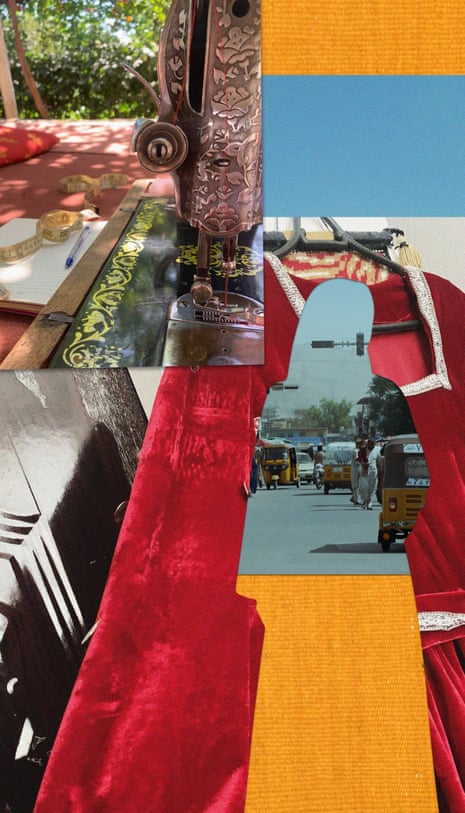
I spend the days alone in the heat of this house. Sometimes, to keep my mind off the past, I sit behind the sewing machine, thread the needle, stitch the fabric slowly. It is a way to pass long hours of loneliness. The weather is also getting hotter every day, as if fire is raining from the sky.
At night, before my eyes close, I think of the days when I would prepare myself for the next day’s shift.
I had so many dreams of serving this country more, but the times do not allow me to. I still dream that I am wearing my uniform and going to duty. When I wake up, it takes a few moments to realise that none of it exists any more.
As told to Goharshad
The undercover journalist
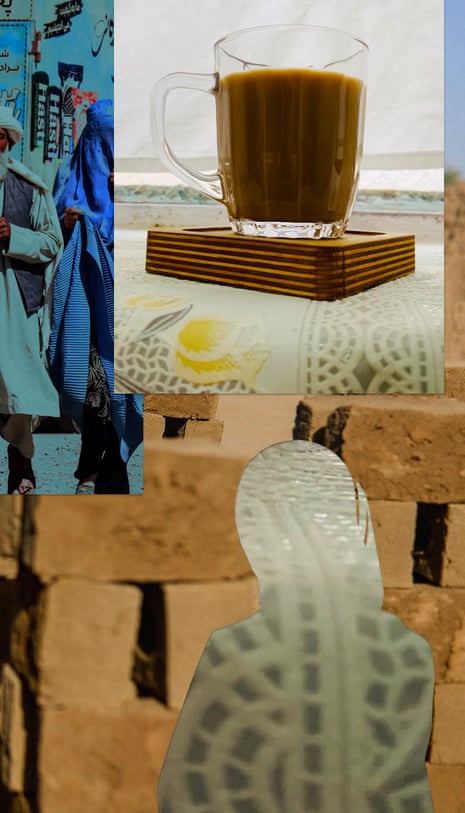
Northern provinces
The fear of being exposed is constant. Every time someone knocks on our gate, I panic. Whenever I hear the sound, I immediately hide my laptop under my mattress because of what is held on its screen.
I am an undercover journalist in one of Afghanistan’s northern provinces, working under an alias. My writing days unfold in a 12-sq-metre room, with a small desk, a mobile phone and a laptop.
Coffee is my therapy. Every morning, as soon as I get out of bed, the first thing I reach for is a cup of coffee. I pick up my phone and check the latest news in Afghanistan. I open my pseudonymous email account to see what assignment my editor has left.
I have already lived through two house searches by Taliban officers. Since then, every knock at the gate fills me with dread. What if it is the Taliban? What if they enter the house while I am working on a report about a killing, interviewing a transgender person or writing the account of a survivor of violence? A thousand scenarios race through my mind and fear consumes me.
The job of a journalist is to meet people and record their stories – but every time I do so, it holds the risk that I could be betrayed. Last week, I went to interview a woman with a disability who had experienced domestic violence. She lived on the outskirts of the city, so a friend accompanied me. To reach her house, I had to change taxis twice. The trip was filled with anxiety because she lived in an area where restrictions are especially severe: women wear burqas, and it is unacceptable for a woman to move around without a male guardian.
We walked along dusty alleyways, winding through countless narrow turns. It was a small, impoverished house with barely any light. As I spoke to her, the entire time I was terrified. I had never met her before; she had only been introduced to me through someone I trusted. I did not know what kind of place I was walking into or whether I could trust the situation.
When I returned, I told my editor that we should not publish yet. I feared that, after publication, the Taliban could use the city’s expanding network of security cameras to trace my movements and identify her, or me. This is the reality of working under Taliban rule: reporting in a near-total suppression of press freedom is extraordinarily difficult.
As told to Sophia Malek
The neighbourhood baker
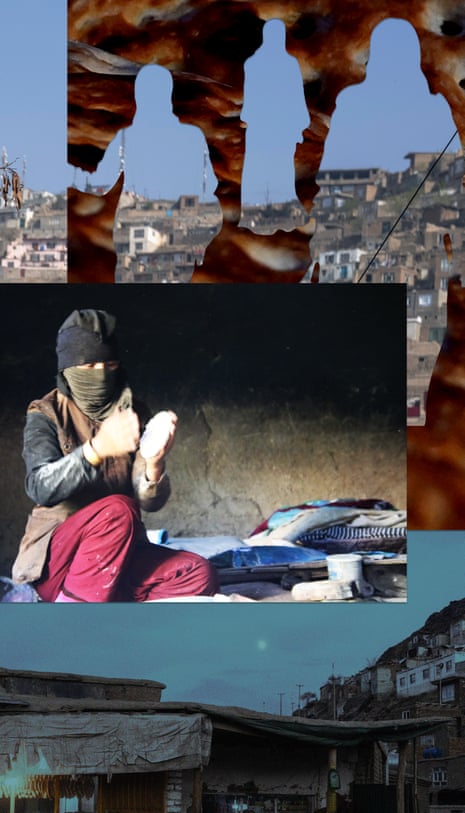
Kabul
Every day, when most people are still asleep, my sister Marzia and I wake at 4am. We light the oven. This is how our day begins.
My name is Fatema*. I am 32 years old and a mother of six: four sons and two daughters. Me and Marzia, who herself has eight children, run a small home bakery in a corner of Kabul.
Women from all over come to us with dough they have prepared the night before, asking us to bake their bread. This work has been our only stable source of income during these five difficult years.
My eyebrows and eyelashes have disappeared because of constant exposure to the heat of the fire. My eyes burn. My knees ache at night, and I no longer feel the burns on my hands. Work is good, but I never wanted such a hard life and such difficult work for my daughters.
I pray my morning prayer while the oven is heating up. After the prayer, women begin arriving one by one. Some come from distant neighbourhoods, carrying with them fear and worry. They say: “The Taliban were in such and such alley today.” Sometimes they arrive silently, hand over their dough and wait.
We bake the bread, and they return home with fresh loaves.
As I work, I always remember my mother. She taught my sister and me the art of breadmaking, and was a wise woman. She encouraged me to attend school so I could learn the Qur’an, and she taught me sewing, baking and caring for my children. All these skills have helped me survive. I still light the oven the way my mother taught me. But the wood, which used to cost 60 afghanis per bundle (70p), has risen to 110 afghanis (£1.25). Now, we use almond shells as fuel – they’re cheaper, but their bitter smell stays with me until the end of the day. We charge six afghanis for each batch of bread. On good days, we might earn about 1,000 afghanis (£11), but usually we earn half of that. My family of eight and Marzia’s family of 10 survive on this.
My eldest daughter is now 12, and my youngest is eight. Beyond how difficult the work itself is, my biggest worry is that I cannot do anything for their education. I don’t have enough income to send them abroad to study, and I have no hope that conditions inside Afghanistan will improve soon. I wanted my daughters to study and have a more informed and comfortable life. What if they end up like me? A difficult life with very limited choices.
By mid-morning, I can take a break, take off my work clothes, wash my hands and face, eat breakfast and rest a while. In the afternoon, I light the oven again, and the work continues until 7pm.
When women come and share stories about their lives, I realise that the lives of women and girls in Afghanistan have never been easy. With the arrival of the Taliban, they have become a living hell.
As told to Tarana Mohammadi
The 12-year-old blogger
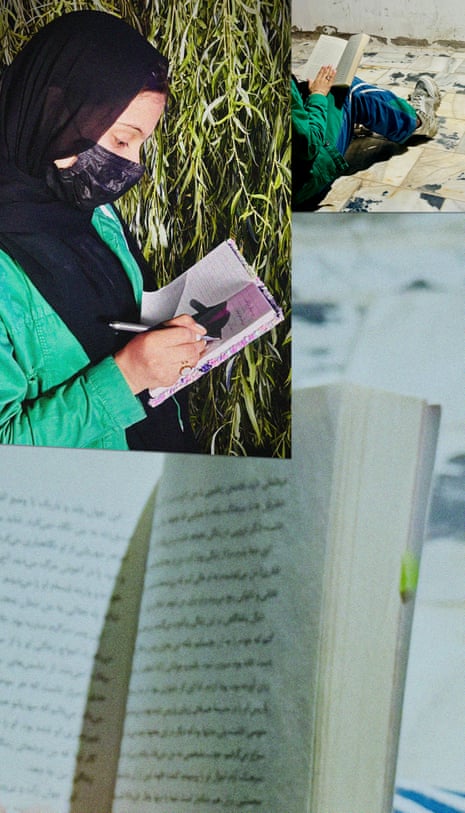
Undisclosed
I wake up to the sound of my parents’ laughter. In the living room, my mother spreads out her flower-patterned tablecloth and prepares breakfast. For me, she makes a boiled egg because she knows I love them. I am 12 years old, preparing for my sixth-grade exams – the last I will be allowed to take.
After breakfast, my sisters and I go to our room, where my older sister gets lost in old books and notebooks, studying and writing. She dreamed of becoming a writer whose books would be read around the world. But the Taliban buried that dream inside her. My other sister reached 10th grade before she had to leave. Now she sits for hours, searching social media for scholarships and journalism training programmes.
I know that soon the fate that came to my sisters will come for me. I will also remain trapped in this room, our forced refuge for years. Even at night we do not dare pull back the curtains for fresh air, fearing the Taliban or suspicious neighbours. What if someone says: “Three young girls live in this house and move around freely inside it”?
On the shelf where we keep our clothes, there is no colour left except black. I put on my black dress, scarf, mask and chador. I must wear my chador, even in this scorching heat – two classmates were arrested and expelled from school for failing to wear it correctly.
Finally, I reach the school gate, surrounded by girls. The teacher enters the classroom and places a preparatory exam paper in front of us. But I stare at the exam paper and ask myself: what should I write? What future am I studying for, when that path no longer exists?
Every day after school, I go straight to that same room and record my blog. I talk about life, recite poetry and speak about girls whose books have remained closed for years, women prevented from living an ordinary life. My mother brings her phone to record me. I receive encouraging messages from women and girls who relate to my words. But whenever I publish a video, relatives come to our home and fill my father’s ears with criticism. They say: “Your daughter has grown up. The honour and dignity of the family will be destroyed. Why is she blogging? Why is she speaking out against the Taliban?”
Every time I hear this, I feel like more walls are being built around my life. One greater fear stays with me: that someone might reveal my identity and location to the Taliban. Today, perhaps the Taliban see my videos and do not know who the voice behind them is. But what happens if they find me?
Sometimes I imagine that if one day I can return to seventh grade, if I can place my books on a desk again and hold my pen without fear, the first thing I will write will be the story of these days. I am a 12-year-old girl. Hear our voices, before our silent rooms become filled with buried dreams. We are still here.
As told to Awa Nikyar
The polio survivor who became a master tailor
Undisclosed
Twenty-five years ago, when I was 10, I contracted polio. Because we were a poor family living through war in a remote village, we had no access to doctors or vaccines. My legs bent at the knees, and walking was difficult. My body and height did not grow like those of average people.
As a child, struggling with the muscle pain and paralysis, I realised my life would be different from other people’s. I saw my pace in this world was slow, and that I was viewed as a burden. The pain I saw in my mother’s eyes made me realise how difficult my life was going to be. She never said it out loud, but I read it in her gaze.
To escape the pain in my mind and body, I would take a needle and plastic scraps to make clothes for dolls. Gradually, I won my mother’s trust and she let me hand-sew a dress for her. Her faint smile was a stamp of approval. I still remember the first proper garment I ever sewed: a white cotton shirt and trousers for my father. He made my heart swell with joy, saying: “Bravo, my daughter!”
This talent was a gift from the creator: I had never had a teacher, but I found I could look at anything, replicate its pattern and sew it. One day, one of my sisters showed me a dress by a skilled tailor and asked if I could make one like it. When it was done, seeing I could work like a master tailor, she promised to buy me a sewing machine – and she kept her promise.
From that day on, my reputation spread by word of mouth, and clients began coming from more and more distant villages.
When clients arrive, their first look is often searching and sceptical. They ask: “Is the tailor here?” I know exactly what they are thinking. When I tell them it is me, they place their orders with looks of disbelief and curiosity. When they see me using a pen and paper to write down measurements, they ask: “How are you literate?” They have no idea how hard I worked to teach myself to read. I became a student of my own students; in exchange for teaching them tailoring, I had them teach me writing.
I sometimes have so many orders that I can earn 6-7,000 afghani (£68-80) a month, helping to support the family. Since my mother died and my father lost his sight due to old age, I run the household myself. I keep thanking God for giving me the strength to do so. Despite my legs and skeleton being ravaged by polio, I have never looked down on myself. My art has ensured that people do not look at me with pity or condescension; instead, they look at me as their trusted tailor.
As told to Hura Omar
The aspiring novelist
Balkh province
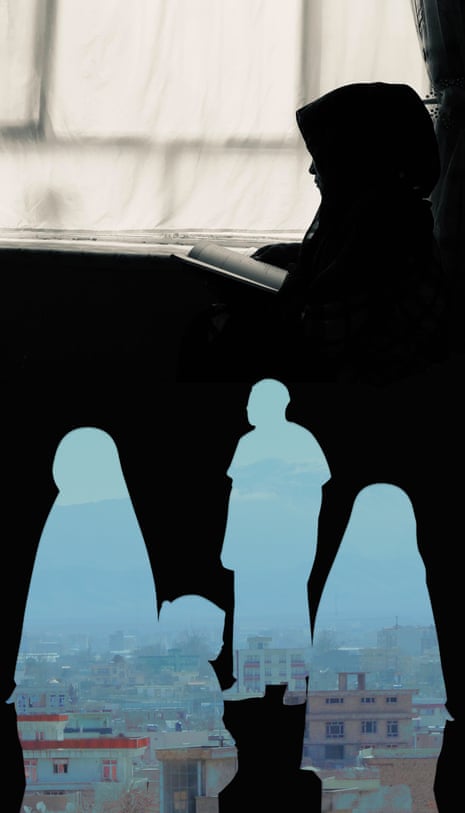
If you want to know me, do not start with my name, but with my room’s window. Every morning, before the city fully wakes up, I sit in front of it. The road in front of me is just an ordinary street, but to me it is filled with people, and each has a story that no one has yet written. An old man who slowly drags his cane across the asphalt; a girl who clutches her bag tightly to her chest and walks briskly; a child chasing his ball … Sometimes, before I write the first sentence, I just watch them for a few minutes.
I am Mahtab*. I am 23 years old and from Balkh province, and I am writing a novel.
I began writing on my own, but now I take online classes as well. One by one, students appear onscreen. Some could be my older sister or even my mother. Every time I see their faces, I think how remarkable it is: here, where the paths to learning grow narrower every day, there are still people who have not given up. Sometimes, the internet disconnects, sometimes the power goes out, but none of this stops the class.
Let me tell you about last week: I was missing going to the bookshop, so I adjusted my shawl and set off. The little bell above the door chimed as it opened, and the smell of paper and new books filled the shop. The bookseller smiled and said: “I haven’t seen you in a long time.” I went straight to the fiction shelf. My fingers slid over the spines of the books, and I was holding one in my hand when, through the glass, a few men in official attire passed by. Instinctively, I held my breath.
Through the glass, I saw girls passing the shop: one holding her little sister’s hand; one with a book hidden beneath her shawl; another walking so fast, as if she wanted to get away from the street’s gaze. When I stepped out, I held the book tight against my chest. In a time when so much can be taken from a person, the dream of reading, writing and creating cannot be stolen unless one gives it up. For me, writing is not just putting words together; it is a way to preserve what is being lost: dreams, memories, the voices of people who are still hopeful. Perhaps, one day, someone will read these writings and know there were people who, despite all the walls, still kept a window open to the future.
When night falls, I sit behind the same window again. I may not be able to change the pain of this city, but I can remember it, write it down and not let it be lost in silence.
As told to Sofia Malik
The cleaner and brickmaker
Jawzjan province
My husband used to be the breadwinner in our family. But in 2021, he was in injured in a traffic accident, leaving him unable to stand on his feet or work. From that moment, the responsibility of providing for the family fell on my shoulders.
My name is Leilma*. I am 33 years old. I am originally from Faryab province, but I now live in Jawzjan. I am the mother of four children – three daughters and one son.
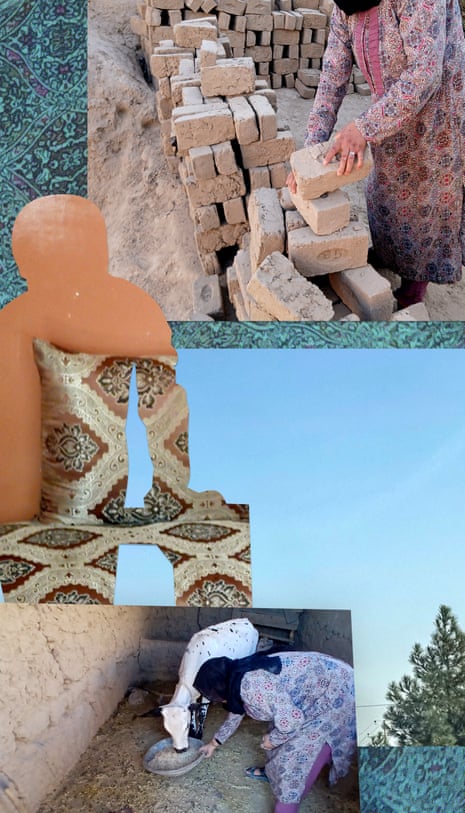
Every day, I wake up before sunrise, pray and begin my household chores. I prepare breakfast for my children and husband, send my children to school, prepare food for our cow and goats and feed them, then tie them under the shade of trees so they can be protected from the scorching sun.
Then, I head to the hotel where I work as a waitress and cleaner. From 6.30am until 8 or 9pm, I work continuously.
On days when there are wedding ceremonies at the hotel, I arrive early, arrange tables and chairs, and serve guests food. Then I clean every part of the hotel with brushes, mops and brooms, and arrange the tables and chairs again. I wash the tablecloths, chair covers and dining sheets, and dry them on the hotel roof. Once they are dry, I collect them, spread them back on the tables and chairs and return home.
For all this work, I earn only 200 afghanis (£2) a day. Although this income is very little and does not cover all our needs, I have no choice but to continue. My children’s hopes are tied to my tired hands.
I live with my husband and four children in a very small house with only one room. To be able to build at least one more room, I make raw bricks whenever I have free time.
My brother used to do this work so I know how bricks are made: preparing the soil, mixing it with water to make mud. I spend hours pressing and kneading the mud with my feet until it is ready. After that, using a brick-making mould, I shape the raw bricks from the mud and leave them under the sun to dry.
Sometimes, there is a wedding ceremony at the hotel while the mud for making bricks is also ready at home, so I cover the mud with plastic and go to the hotel. When I return home at night, I start making bricks again.
My neighbours tell me that if I continue putting so much pressure on myself, I will collapse. But I do not know any other way. My children are all still young, and I cannot bring myself to send them to work.
I tell myself: I did not have the chance to study and became a cleaner; let them study and become educated.
As told to Simin Daneshjo
The teacher at a girls’ school
Day Kundi province
My day begins at four in the morning. After waking, I pray and read the Qur’an until the sky begins to brighten. Then I pick up empty water containers and walk to the nearby spring to collect fresh water.
I have breakfast with my son – tea, sugar and tandoori bread. We live in a remote village in Day Kundi province, but unlike many other villagers, our table is not filled with eggs or cheeses. My name is Sediqa*. I am 41 years old, and I have been teaching at my village’s girls’ school for 18 years. I studied at this same school. After the fall of the previous Taliban regime, when Hamid Karzai came to power in 2002 and girls’ schools reopened, I was among the first to return – although I was over 20 years old at the time, I started my education from first grade. Eventually, I became a teacher.
I married a man who promised to support my work and education, because I hoped to build an independent life. But after my son was born, he failed to support me, did not allow me to study at university and opposed my going to work. Then, when the government collapsed and the Taliban took power, my husband left Afghanistan. My son and I were displaced, moving from one person’s home to another. The house I built through years of hardship and with the money I earned from teaching was taken away from me by his family. We eventually settled in a mud house near the school.
In the morning, I prepare dough and go to an area among the trees near my house to gather firewood. I light the clay oven and bake our bread, then leave for school with my son. We each take separate mountain paths and walk to our schools alone. My son walks an hour on foot while my journey takes 45 minutes.
Eighteen years ago, many girls and I gathered at this school under a single tent. There were no professional teachers, our school had no building and the tent was unbearable in the heat and cold – yet we gathered beneath that roof with great enthusiasm and a deep desire to learn.
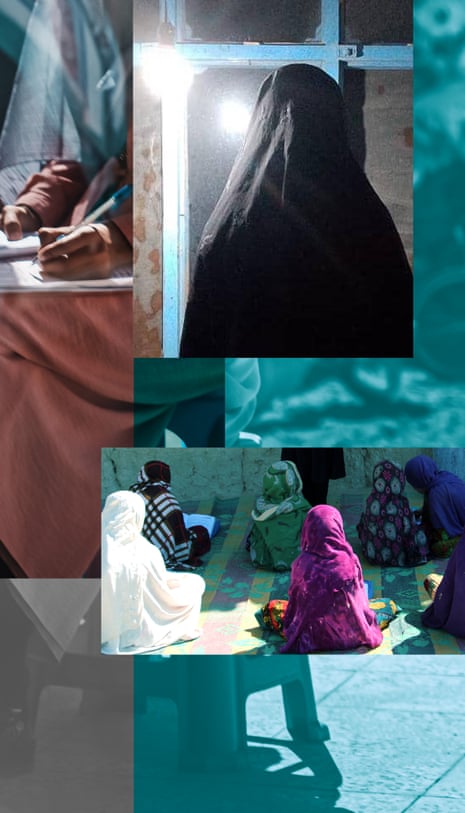
Today, our school has a building, and classrooms with desks and chairs. But our girls can no longer study beyond sixth grade. The school uniform has been replaced with large black prayer garments, chador namaz, which education officials come to inspect. The youngest girls are just six years old. Despite their age and the long distances they travel, they must carry these heavy garments through the difficult journey, enduring the heat and cold.
I teach first grade, and my day ends with the happy laughter of these young girls. Girls who are starting school for the first time are happy, energetic and full of dreams. Being around them gives me a sense of joy.
As told to Nahid Naji
The student locked inside and losing hope
Nangarhar province
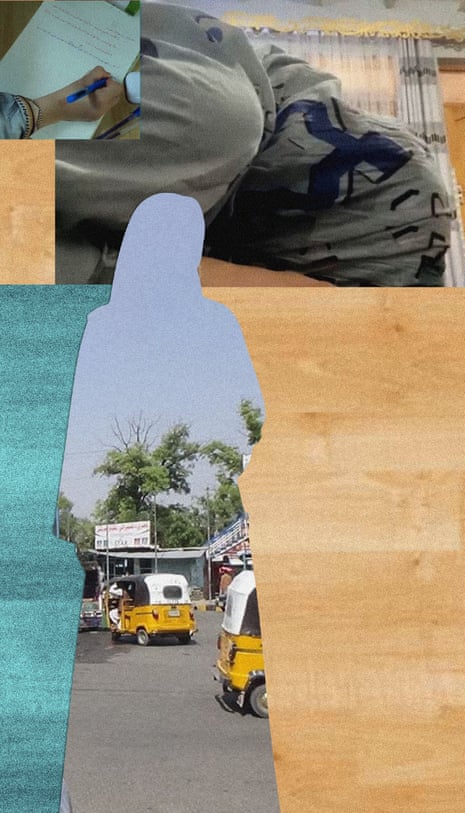
Sometimes, when I catch a glimpse of myself in the mirror during the day and see the colour of my face and my hair, I fall silent. I see how much I have truly changed over these past few years. My skin has become pale and lifeless, as if I am fading away; the dark circles under my eyes look frightening. Sometimes, I think the girl I see in the mirror is not me.
My name is Leima*. I am 24 years old, and I was studying computer science at a private university in Nangarhar when the Taliban announced the closure of universities. I was in my room, working on a course project. It was 9pm when I finished studying and saw the news on my phone.
I fell into a state of shock. When my mother and sisters saw me they became silent. They had wanted to hide the news from me, but I already knew. For days, my family and relatives tried to reassure me that the universities would reopen.
When the universities stayed shut, I was left hopeless. My father – who has always supported our education – told me not to worry, that he would find every possible way for me to continue my studies. Eventually, he decided that we should leave Afghanistan and go to Pakistan or Turkey so I could resume my education. But because my younger brother has a physical disability and is paralysed, we were unable to leave.
Now, life has reached a point where no ordinary day is truly ordinary. My mind is so filled with thoughts and worries that even when I’m cooking, tears fall from my eyes without me realising.
This morning I woke up at 2am, recited prayers and sat on my prayer mat, crying. Every night, I ask God to make everything right. In the darkness, I go into the courtyard and look at the silent sky, the moon and the stars. It gives me a sense of comfort. I tell myself that everything will change one day.
There was a time when I would dress up every day. I would lovingly dye and style my hair, apply my favourite bright lipstick, listen to my favourite music at full volume and dance happily in my room. This morning, after brushing my teeth, I wanted to comb my hair. But my worries are making it fall out: so much hair gathered on the brush that I felt as if every strand had died.
As I sat there, my eyes fell on my old perfumes sitting beside the mirror. I picked one up and sprayed it on myself; for a moment, my mood changed. I felt like the person I used to be years ago.
As told to Hosai Ismail Khan
The prosthetist helping women to walk
Faryab province
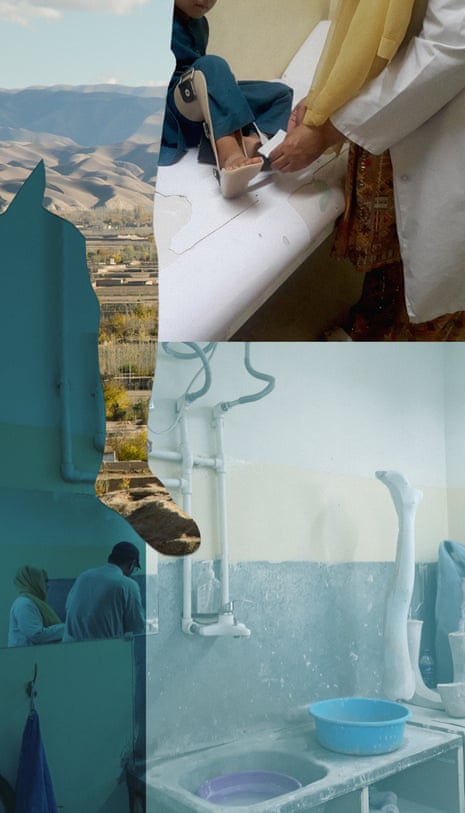
My workday revolves around plaster, moulds, plastic prosthetics, scissors, screws, rubber, glue and other tools.
My name is Nazanin*. I am 42 years old and the mother of four children – two daughters and two sons. For the past 21 years, I have worked as a technician in a hospital, making orthopaedic assistive devices, casts and plastic prosthetic limbs for women and children with physical disabilities.
I begin each day with prayer, then wake my two sons, who leave for their classes at 6am. My younger daughter is in second grade, so I take her to school in my rickshaw. My older daughter, however, is 13 and no longer allowed to attend school.
Now, she stays home alone. She does all the housework, prepares meals for her father and siblings. She has been at home for two years, and it breaks my heart. No one truly understands a mother’s fear. Every time I close the gate behind me, it feels as though my soul remains on the other side with my daughter.
I arrive at work at 8am and check how many orders we have. I produce several casts or artificial limbs most days.
I think about my daughter as I work and wonder what she is doing. How long can she keep herself busy with housework? How much television can she watch? I worry that she might harm herself. I worry that she might lose hope.
Then I tell myself that there are women who need me – who dream of walking independently and doing everyday tasks on their own. One young woman I worked with was the mother of seven children. Her husband was a farmer and they lived in a remote mountainous district. Before receiving the prosthesis, she had to crawl to do her daily tasks.
Now, she can walk powerfully on those uneven fields. Later, when she visited us to have her prosthetic leg repaired, she told us with great happiness: “I went to the market – I saw the market up close. I work on my land now, and I no longer think about the fact that I once did not have a leg.”
In the evening, when my husband returns from work, he comforts me about our daughter. He says: “Are you anxious? Well, this is something that has happened to all girls.” He takes our daughters out for a walk and buys them ice-cream or something small. He says: “At least let their faces light up a little.”
As told to Tomiris Tamga
The dental assistant who dreamed of being a surgeon
Jawzjan province
Getting to my place of work is never easy. On my way, I pass several mosques and a Taliban-run religious school. When the young men come out, the way they look at me sometimes makes me fearful. Every time I walk that route, I wonder whether I could end up like Farkhunda – a young woman killed by a mob for no reason. The men’s stares reveal how deeply they resent women leaving their homes.
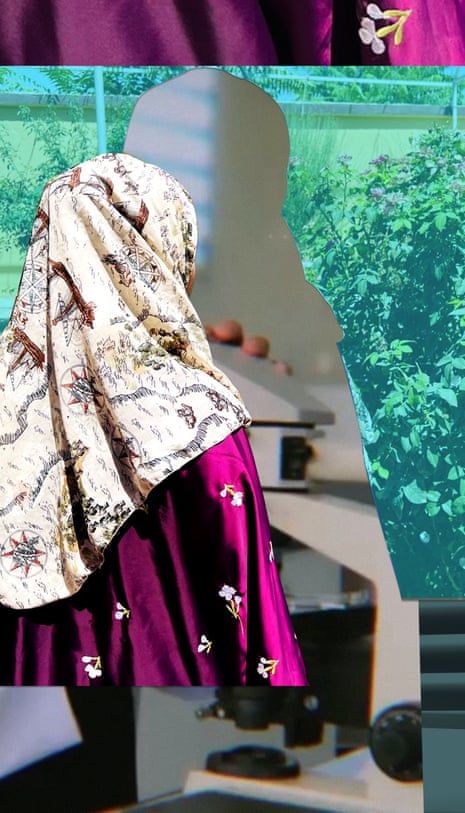
My name is Marwa*. I am 23 years old, and once I dreamed of being a brain surgeon. When women were banned from universities, I found I could study an online course in dental prosthetics. Today, I work as a dental assistant in a small private clinic run by a friend of my father’s.
When I arrive at the clinic, I push fear aside and focus on my work. Taliban officials and soldiers all come to the clinic. One commander came to have a tooth extracted and asked the dentist about the anaesthetic injection. The soldier with him laughed and said: “Doctor, don’t numb the commander. Our commander has spilled so much blood – let him lose a little blood from his tooth as well.”
Hearing that, I wondered how many innocent people this man had helped kill, how many families he had left without loved ones, how many women and children had suffered because of him. Every moment, I worried that he might suddenly become angry.
Officials from the Ministry for the Propagation of Virtue and the Prevention of Vice visit the clinic to carry out inspections. They always ask: “Who is this young woman’s guardian and why is she working alone?” Every time, I worry they might shut down the clinic or create problems for us. Whenever they arrive, I hide so they do not see me.
This is not the future I imagined for myself. When I was 17 and began preparing for Afghanistan’s national university entrance exam, I told myself I would earn the highest score in my province. I had dreamed of becoming a doctor, but by the time exam results were announced, the political system had changed and I wasn’t able to pursue that. Once, a man who had been my teacher came in for treatment. When he saw me, he said: “You are capable of much more than being a nurse or an assistant. If circumstances had been different, you could have become a better doctor than many practising today.” His kind words meant a great deal.
There are months when I feel hopeless. But then, a small sense of hope returns. Maybe the circumstances are not right today, but no one knows what tomorrow will bring. Some girls have lost hope and are searching for a refuge in life – they think if they get married, they can find that refuge in their husbands. But I want to be my own refuge.
As told to Atousa Azar
The teacher who fears her students will be married off
Samangan province
People often say that the beginning of the week starts with motivation and energy, but since the day Afghanistan fell to the Taliban and my studies were left unfinished, I have had no motivation to live. Morning and evening, day and night, every day of the week feels the same: dark and heavy.
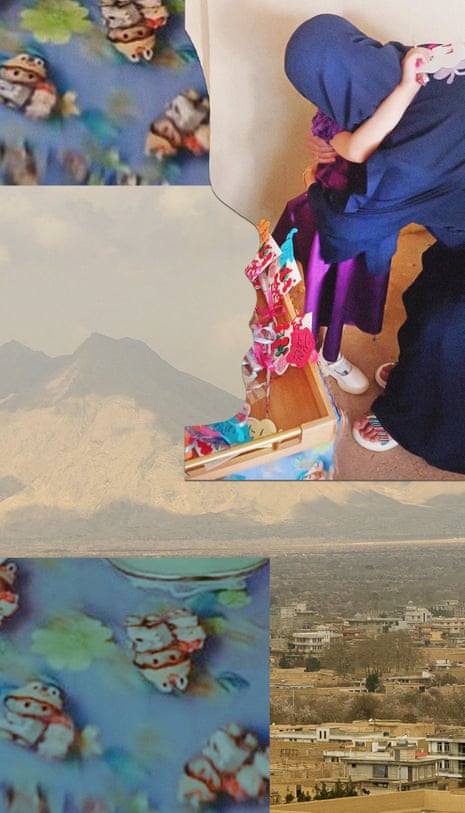
My name is Fatana*. I am 25 years old and live in one of Afghanistan’s northern provinces. When the Taliban seized control of Afghanistan, I was a third-year student of law and political science, living in a government-run dormitory. Since then, I have been prevented from continuing my education. My six-year-old sister and I get into a rickshaw and go to school – a private school where I have worked as a teacher for nearly two years and earn a monthly salary of 4,000 afghanis (£45). Alongside teaching, I try to encourage my students. I tell them that to achieve success, they often have to work several times harder than boys.
One of my students lost her father to cancer last year, and her family is struggling financially. She is a quiet and sorrowful girl who often keeps to herself. In addition to her regular lessons, I teach her English for one hour every day through WhatsApp. Sometimes, I cannot escape worrying about her future. I fear that poverty and family pressure could force her into child marriage – a fate that still shapes the lives of many children.
The most painful part of my work at the school is seeing my students graduate from sixth grade. Their sad and hopeless faces on their final days are unbearable for me. Every time I think about those girls, and wonder what conditions they are living in today, my heart aches. I ask myself: how many of them are still holding on to their dreams of education? How many have been forced into marriages they did not choose?
As told to Raha Malik
* Names have been changed