1 month ago
89
1 month ago
89
If not Keir Starmer, then who? That’s altogether the wrong question. What matters is not who but what comes next. A black cloud of near terminal despair has fallen upon Labour MPs, but seeking a saviour is a useless endeavour until they decide what it is they want to do.
The party is facing a cataclysm in next week’s local elections. MPs will watch their councillors, the backbone of their local parties, vanish. Can they avoid panic? In their slough of despond they need to stop and think. Look at it this way: they have three full years ahead with a vast working majority of 165. They have the power to do everything the country most needs. Sunk so low in the polls, they have nothing to lose and nothing to fear (but fear itself). This chance may never come their way again, and they will regret it for ever if they throw it away, vainly chasing lost popularity through overcaution, trying to appease everyone while pleasing no one. By starting again unconstrained they can regain some lost respect.
The country is in deep decline, the cost of living crisis worsening. The prime minister’s chief secretary, Darren Jones, warns that rises in energy, fuel, food and flight prices “as a consequence of what Donald Trump has done in the Middle East” will last long after whenever the war ends, and the International Monetary Fund says the war will hit Britain hardest of the G20 countries. The UK’s inflation rate tops the G7 chart. Socially we fall behind, losing two years of healthy life expectancy over the past decade, as gross inequality catches up with us.
This is a national emergency to be treated as wartime, not keep calm and carry on time. The government needs to break from obsolete economic pledges made in an era before Donald Trump’s tariffs, tantrums, economy-wrecking war and threats to Greenland and the Falklands, and before Europe felt unprotected on every flank. A new leader needs the freedom to think again about everything, not offering the public reassurance but raising the alarm.
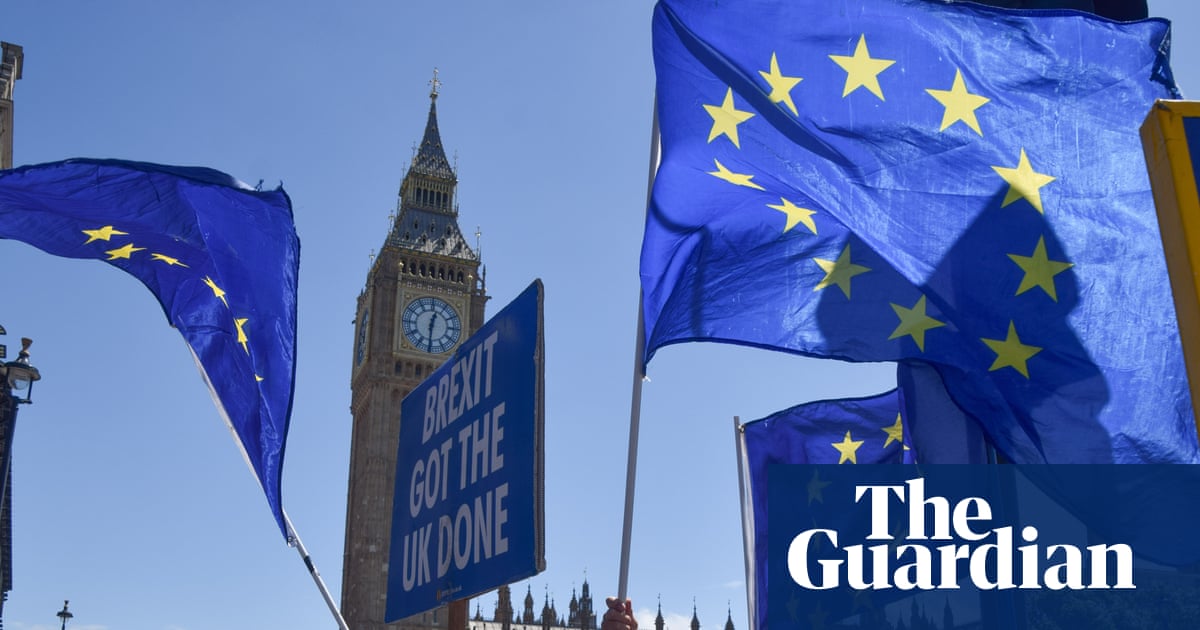
Some things are blindingly obvious: the “reset” with Europe is vital – we need to rejoin as fast as the EU will let us. After 10 years of Brexit regret, 55% of Britons want to rejoin (a number that is growing), 33% are against. After the colossal loss of 6-8% of GDP, it is time for Labour to rejoin, no more tiptoeing – as Neil Kinnock advised this week.
The government should signal the depth of this national crisis with a one-off wealth tax that could raise £160bn, a shock-and-awe levy that would be easier than a tricky annual tax. Offer the public government bonds at lower than market rate interest but with an incentive: bonds exempt from inheritance tax could entice an avalanche of buyers, raising billions more for public investment than would be lost in IHT. Growth needs heroic investment in housing, defence and renewable energy.
And on pensions: uprating by the triple lock rather than earnings will cost an extra £15.5bn by 2029, reports the Office for Budget Responsibility. Redirect that money from older homeowners to the young, families and social housing. All parties know the lock must stop, but the right dares not risk its grey vote.
It’s time for long overdue council tax reform; Rachel Reeves’s new mansion tax for property over £2m is the right direction, but all bands need fair revaluation, raising sound revenue for councils. That creates more winners but losers make the most noise: be brave.
Immigration has plummeted by 78% in two years: use that fact to warn of Britain losing out in the global contest for scarce skills in medicine, engineering, life sciences and construction: universities need visas to attract back lost foreign students. Change the language about the migrants we need.
Revive our decrepit democracy with proportional representation to prevent any repeat of Labour’s 2024 landslide on just a 34% vote, or Clement Attlee’s 1951 defeat despite winning the most votes. Reform the House of Lords, so never again can seven peers block a Commons majority, massively supported by the public, as over assisted dying. Clean up politics by abolishing all but small political donations.
All these are difficult but urgent repairs to this dilapidated, demoralised country. Ambition on this scale would recast Labour as the party brave enough to grasp longstanding dysfunctions and astute enough to invest for growth despite hard times, raising funds for public services from potholes to courts and NHS waiting lists. Never mind being unpopular, nor howls from the right and its media; enough people know change is essential to arrest decline. Britain doesn’t need to be “world beating” nor “world class”, but on the road back to self-respect and rejoining our EU neighbours’ community. It would save Labour from extinction as a defunct party of yesteryear, boasting nothing but old banners in dusty museums.
Remember this: two previous great reforming Labour governments took power in dire economic circumstances and achieved greatly beyond anything this government has yet dared. In 1945 Attlee inherited a virtually bankrupt country, with a debt of 270% of its gross domestic product, nothing available but a US loan at a crippling rate. Yet the NHS was created in three years, coal, rail and the Bank of England nationalised, with universal pensions introduced and a massive housebuilding programme begun. Despite top tax above 90%, tightened belts and rationing, they were voted back in 1950 and 1951 (though cheated of victory by first past the post).
Look what Labour did in 1964, despite inheriting an empty Treasury, a balance of payments crisis, an overvalued exchange rate and trade-crushing dock and seamen’s strikes. It delivered more than 1m homes, 30 polytechnics, the Open University, comprehensive schooling, a Rent Act to deliver fair rents, and rising pensions. Look at its liberalising reforms: race relations and the Equal Pay Act, abolishing the death penalty and theatre censorship, reforming divorce, gay rights and abortion laws. In the same vein this government can seize on cost-free nation-changing radical reforms from my list. (I only omit comparison with the Blair government’s achievements because it enjoyed a good economic inheritance, with restraint only needlessly self-imposed in its first two years.)
Starmer vows to “fight on and win the next election”. Of course, until the day he or others decide otherwise. Who comes next? That’s secondary. What does Labour want to do? MPs need time to think and speak freely on a future direction during a dignified departure for Starmer, with several months’ notice. Time for Andy Burnham to return, time for candidates to expound plans that honestly face up to the scale of this national crisis. They have nothing to lose in matching their ambition and bravery to that of previous Labour governments. In next week’s post-election frenzy, don’t dash to decapitate.
-
Polly Toynbee is a Guardian columnist
-
Guardian Newsroom: Can Labour come back from the brink?
On Thursday 30 April, join Gaby Hinsliff, Zoe Williams, Polly Toynbee and Rafael Behr as they discuss how much of a threat Labour faces from the Green party and Reform UK – and whether Keir Starmer can survive as leader. Book tickets here or at guardian.live