3 months ago
164
3 months ago
164
In my novels I find that I very rarely write “a car” or “a van” or “a lorry” – I always tend to specify the marque and the model, often with some pedantic precision. Why should this be so? After all, I am a non-driver, someone who claims to be able to drive (I did learn), but who never passed his driving test. And yet, paradoxically, I’m something of a car enthusiast – a sort-of petrol-head, I confess – perhaps a consequence of spending many hours, or maybe that should be years, in the back of minicabs that conveyed me here and there around London. In my long experience of minicab use I’ve found that most conversations with minicab drivers often end up being about cars. I’ve learned a lot.
There is another reason why I like to specify. I have a conviction that the type of car, or vehicle, that you drive is as much an expression of your personality as the clothes you wear or the decor of the home you call your own. Even the blandest of mid-price cars – the Toyota Prius, the Kia Picanto, the Volkswagen Jetta, for example – are making a covert statement about you, the owner. You chose that car – and your choice is surprisingly eloquent.

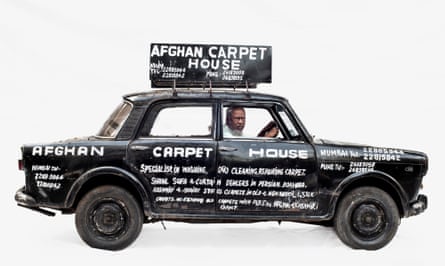
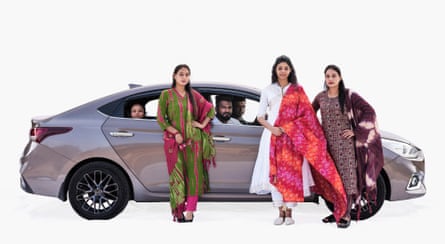
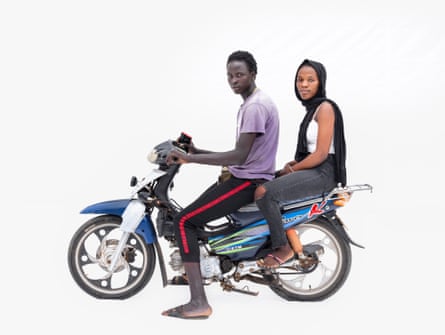
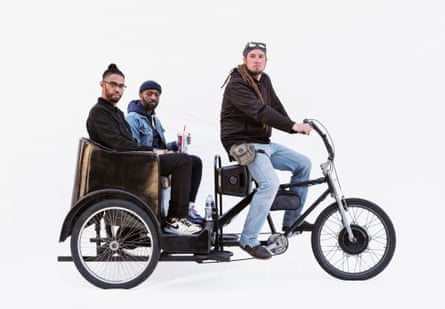
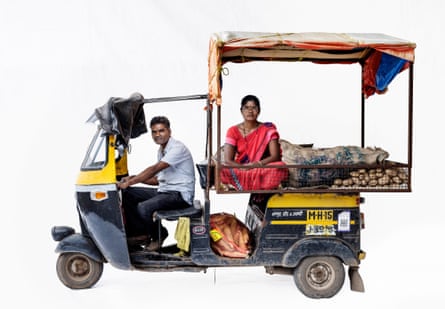
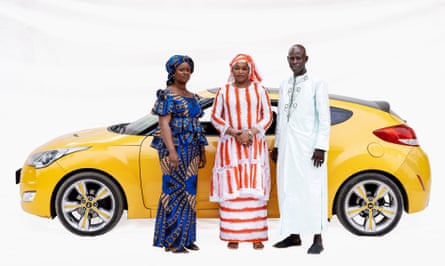
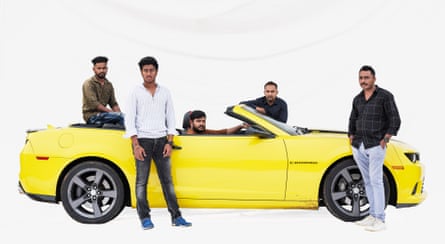
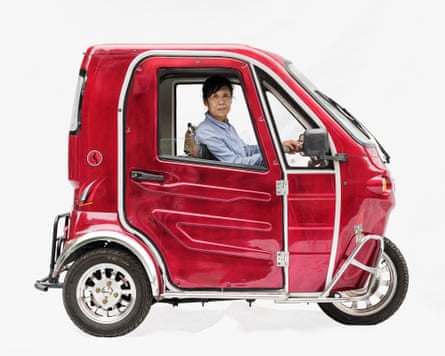
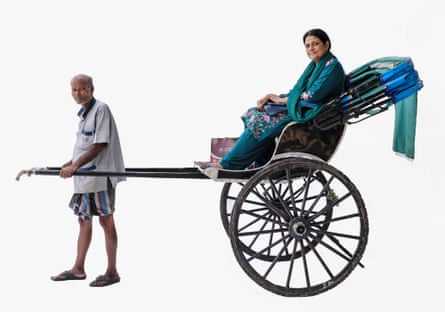
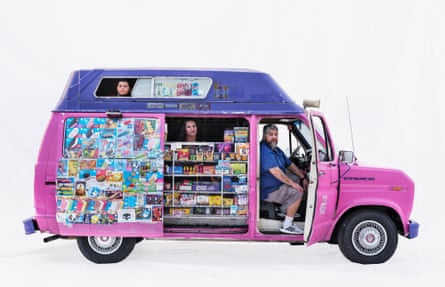
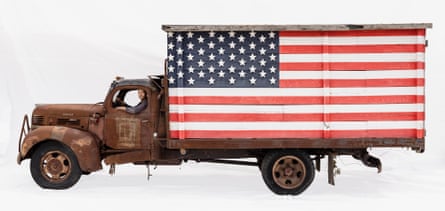
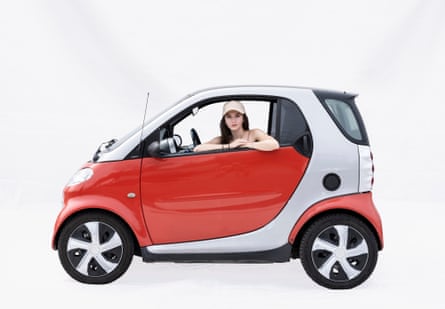
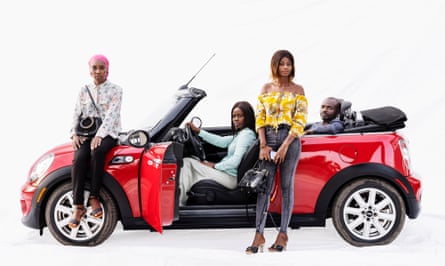
All this is by way of a preamble to Martin Roemers’ Homo Mobilis, a remarkable series of photographs of people posed with the various vehicles they drive. Moreover, these photographs, I would claim, bear out the thesis that the car, the van, the lorry, and so forth, are an extension of, and a window to, their owner’s personality and, quite possibly, an indication of their value system as well.
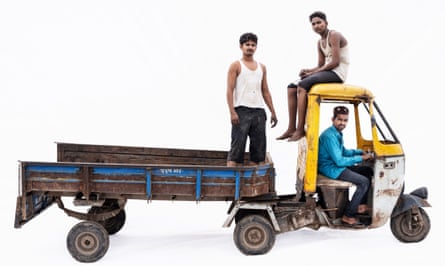
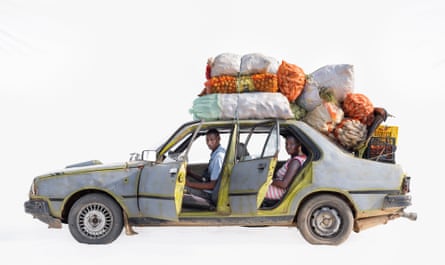
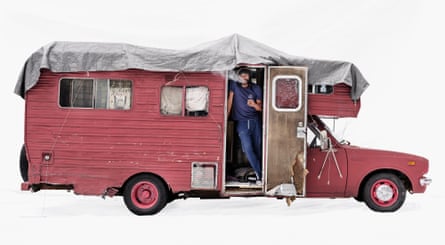
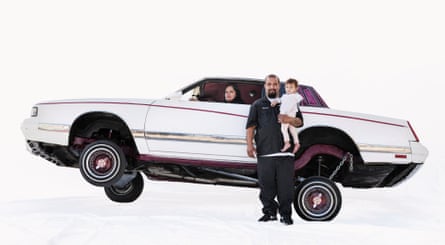
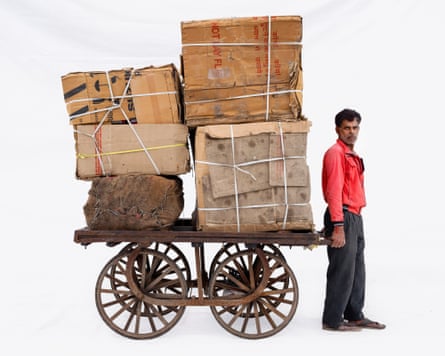
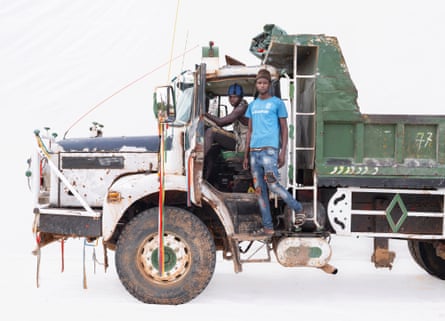
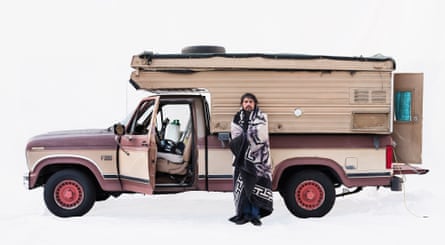
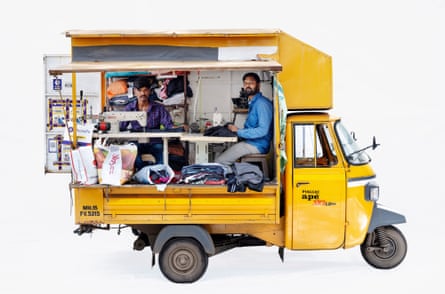
Roemers has ranged far and wide to photograph the various vehicles that catch his eye. Among the many countries he’s visited are the US, India, Ukraine, Senegal, the Czech Republic, China and the Netherlands. And the type of vehicle he photographs is equally eclectic – not just cars and trucks but also campervans, invalid trikes, handcarts and minibuses, people-carriers, ice-cream vans and tractors, road-rollers, donkey-carts, motorbikes and hearses. The variety of vehicles on display is astonishing but one’s eye is inevitably more drawn to the eccentric: the mud-splattered, multi-dented taxis, the rust-badged family saloons, the lurid paint-blistered lorries, the MOT-challenged, spavined minibuses.
However, Roemers’ stroke of genius is to have removed the geographical and urban context of the vehicles in his photographs. Richard Avedon shot his famous 1985 series of portraits, In the American West, with the subjects seated in front of a completely neutral, starkly white backcloth. The effect was to concentrate all attention on the sitter. These human beings became entirely what they presented to the camera lens – there was no distraction, no prop or identifier beyond the features of their face and whatever items of clothing were visible. It was a uniquely desolate and unsettlingly graphic form of portraiture.
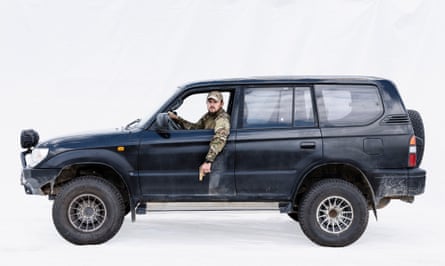

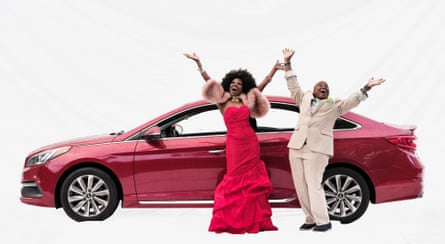
Roemers has cleverly adopted the same technique and has isolated his vehicles and their owners and passengers by erecting a huge white cloth backdrop draped over an armature of scaffolding and has parked the cars and trucks in front of it. The vans and lorries, three-wheeled scooters and autorickshaws look as if they’re stuck in some vast, empty snow-field. It’s the same Avedon-effect: all concentration is focused on the vehicle and its textures and patinas, its colours and contents, in a way that makes them seem more like an art installation or some form of bizarre modern sculpture. The fact that these images are, effectively and essentially, about modes of transport seems secondary. It’s the aesthetic dividend that resonates in these photographs. Never has a decrepit jalopy looked more intriguing, and, in a strange way, shot in this manner, it has become a beautiful object in its own right – its form suddenly separate from its mundane function.
The one further observation I have is not so much a critique but a kind of compliment. Roemers’ unique vehicle photographs could run and run, as it were – the subject matter is almost infinite, after all – but one finds oneself wondering if the demographic could be extended. The cars, taxis and lorries in these photographs are largely owned by poorer, hard-working people as their scuffed and dilapidated means of transport testify. What would Roemers make of soccer-moms in their huge 4x4s? Or executive chauffeurs with their glossy Mercedes S-Class limos or 7 Series BMWs? Or well-heeled boy-racers with their Lamborghinis and Maseratis? Or cyclists with their bicycles? It’s a tribute to the complete success of this photographic enterprise that we can ask for more, please.
The writer Stephen Bayley, in his book Death Drive, declared that: “Cars have a talismanic quality. No other manufactured object has the same disturbing allure. More emotions are involved in cars than in anything else we make or use.” Roemers’ work in Homo Mobilis establishes the truth of that statement and also that the allure of a given vehicle doesn’t necessarily have anything to do with price or design or exclusivity. “We are what we eat” is a tried and tested truism; these superb photographs establish that “we are whatever we drive” is just as valid..
Homo Mobilis (Lannoo Publishers) is priced at £50. To support the Guardian, order your copy for £45 at guardianbookshop.com. Delivery charges may apply.