3 months ago
125
3 months ago
125
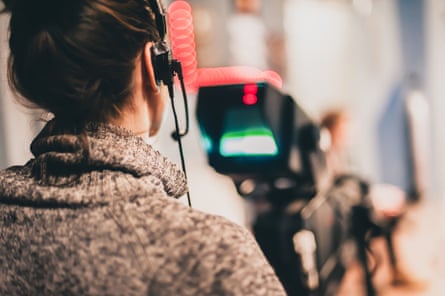
There’s a generally accepted ethical requirement for news organisations to reflect society, both in terms of the content they produce and the people who produce it. Unfortunately, this is just not happening. Look, for example, at the new study released this week by the Sir Lenny Henry Centre for Media Diversity revealing a DEI backlash in British journalism, with one respondent describing their office as an “apartheid newsroom”. Look, too, at the Press Awards, said to showcase “the best of national journalism in the UK”, and notably the individual awards shortlists. Search for the Black journalists in them. You’ll struggle. Diversity was clearly not a priority: several categories, including news reporter of the year, feature only men.
As the head of journalism and strategic communications at Goldsmiths, University of London, this all makes my heart sink.
Our journalism programmes attract talented young people from all racial and other backgrounds. We work hard to equip them with the skills and critical thinking required to succeed in the industry. We heed the saying “you can’t be what you can’t see”, while also teaching our students how to critically engage with the forms of tokenistic diversity this sentiment can lead to, including the sham that visible representation leads to structural change.
We know this is far from the case. But we also know that change must start somewhere, and visionary leaders can enact it and set new precedents. So, my colleagues and I try to reflect people, issues and events from a range of backgrounds in our teaching materials and via the fantastic speakers we invite in, including excellent Black British journalists. But beyond our lecture theatres, our Black students struggle to see anyone lauded in their industry who looks like them. This is unacceptable.
The prestigious Press Awards’ ceremony takes place on 21 May, four days before the sixth anniversary of George Floyd’s murder. While that occurred in Minnesota, the anger was worldwide and calls for a racial reckoning reverberated across British newsrooms and other sectors.
But we’d experienced that pain and disappointment before. After the Black British teenager Stephen Lawrence was murdered by a racist gang, British journalists and editors, reporting on the institutional racism the Macpherson report uncovered within the Metropolitan police, were urged to reflect on racial equality within their own institutions.
In 2020, we found ourselves once more engaging in the ritualistic dance with racial diversity when Meghan Markle highlighted the racist treatment she’s been subjected to by the British press. She was swiftly reprimanded by Ian Murray, the then executive director of the society of editors, who said her comments were “not acceptable” and made without “any supporting evidence”. Yet the evidence highlighting structural racism within British journalism keeps rearing its ugly head.
That injury damages us all, and the latest findings just add insult to injury to those aspiring to be journalists, those already in the industry whose work is ignored or marginalised, and crucially, everyone in society. Whether you consume news daily or try to avoid it, news permeates our social fabric, shaping public discourse and norms.
For years, numerous people and studies have highlighted that a lack of diversity in journalism, racial or otherwise, means audiences get at best a distorted view of their country and the rest of world, and at worst a completely inaccurate picture. From the Scottish independence referendum and Brexit to the 2011 riots and Grenfell, a lack of diversity among journalists in the UK has led to some of the biggest stories of our time either not being adequately reported by our national press or missed altogether until tragedy strikes. It’s no secret that skewed reporting can skew public attitudes, and deficiencies in news weakens civic participation and a democracy already in crisis. Engagement with news is declining, particularly among historically disenfranchised groups who already have low trust in news due to persistent under- and misrepresentation.
While the share of Black UK journalists increased from 0.3% to 1.3% between 2015 and 2023, they remain underrepresented compared with 4% of Black people in the population. White journalists are overrepresented, making up 86% of UK journalists, compared with 83% of the working population. They also hold the power in major news organisations. We may see more people of colour reading the news and featured in picture bylines, but top editors in Britain and other dominant global news markets, such as the US, are disproportionately white. The most underrepresented group in Britain are women of colour, who are notably absent from leadership positions in newsrooms and as protagonists in content.
Exclusion matters and it’s a critical matter during this increasingly polarised moment when algorithms can ignite far-right riots – lighting a fuse beneath baseless rumours, as happened after the horrific Southport murders. Second, the characteristics and experiences of those who manage newsrooms matter. They can influence who is hired, kept on and promoted, and who is nominated for awards.
There is much talk about diversity, but still only a handful of this year’s 61 press award judges are Black, journalists of colour earn less than their white peers on average and Black journalists report higher levels of stress at work. For all the promises past and present, the playing field is anything but level. Isn’t it time we tried a bit harder, as a society and a profession, to make it so?
-
Dr Omega Douglas is an academic and writer. Her latest book The Racial Dynamics of Reporting Africa: Colonial and Decolonial Practices is Mainstream Western News Media is published by Routledge.
-
Do you have an opinion on the issues raised in this article? If you would like to submit a response of up to 300 words by email to be considered for publication in our letters section, please click here.