3 months ago
171
3 months ago
171
The road to ramen paradise ends in the unlikeliest of places. At Men Endo, located in a suburban street, next to a school and a low-rise apartment block, bowls of noodles disappear in a flurry of slurps, gulps and hurried but heartfelt exchanges of appreciation between customer and chef.
On a cold afternoon in Yamagata, a city in Japan’s northeast, the wait for a seat at Men Endo’s counter is mercifully short. Inside the door, a ticket dispenser lists myriad options, from regular shoyu (soy sauce) ramen – in small, medium or large portions – to maji soba, a soupless symphony of toppings, sauce and noodles that diners are invited to mix together with their chopsticks, along with a spoonful of spicy miso.
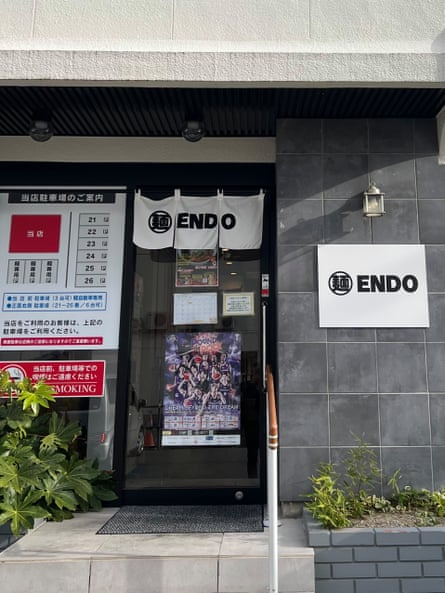
That Men Endo – men is from menrui, the Japanese word for noodles, and Endo is a family name – has managed to secure a loyal clientele – which today includes construction workers, couples and a solo diner from the Guardian – is no mean feat.
In Yamagata, 340km north of Tokyo, noodle fiends have around 230 establishments to choose from, with several opening their doors early for those craving comfort food.
“People here don’t ask each other where they want to go for dinner, but which ramen restaurant to go to,” says Osamu Higuchi, assistant manager in Yamagata’s brand strategy section.
It is that level of dedication to eating at restaurants – as opposed to making ramen at home or grabbing a lunchtime cup of the instant variety – that has earned Yamagata, a modestly sized city of 240,000, the title of Japan’s ramen capital.
The accolade is a source of pride, its current reign the result of an aggressive campaign to outperform its closest rival, Niigata, which shocked the ramen world by taking the title in 2021.
Last year, Yamagata’s households each spent an average of ¥22,389 [£106] on ramen – well ahead of second-placed Niigata on ¥16,292, according to the internal affairs ministry, which will soon announce the winner for 2025. Only the annual ranking for gyoza consumption generates similar levels of anticipation. That title currently belongs to Hamamatsu in central Japan.
“When Niigata won it was a huge shock,” says Higuchi. “Eating ramen is a big part of daily life here … to be honest it hurt our feelings.”
But the city’s appetite for ramen has its drawbacks. Frequent consumption can increase health risks, mainly due to the soup’s high salt content, according to a study of almost 7,000 people aged 40 and over led by Yamagata University. People who have the dish three or more times a week have a mortality risk 1.52 times higher than those who eat it once or twice a week, according to the four-year study published in October in the Journal of Nutrition, Health and Aging.
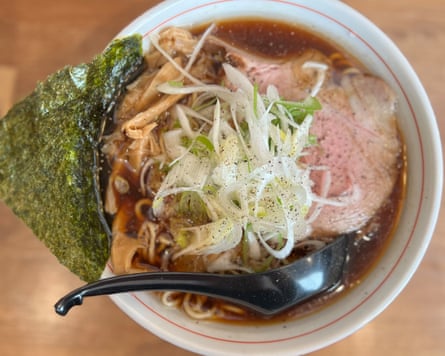
The experts added, however, that the statistics did not mean regular consumption was a “definite danger”, given that those most at risk possibly indulged in other habits “common among frequent ramen” eaters, such as excessive overall salt intake, drinking and smoking.
“I’ve been trying not to drink all of the soup, but it’s very moreish, and the chefs go to a lot of effort to make it so it feels rude to leave any,” says Higuchi who, after consulting a smartphone app, announces he has polished off 225 bowls of ramen so far this year. “That said, households here spend an average of about ¥2,000 a month on ramen … it’s not that much when you think about it.”
Health risks aside, no Japanese dish commands as much loyalty, or generates as much discussion, as ramen. Popularised in Japan after the second world war – thanks to returning soldiers who fondly recalled how it had sustained them in Japanese-occupied China – it became a symbol of recovery and resilience.
Ramen critic Rikiya Yamaji believes Yamagata has perfected the art of adapting what was originally a Chinese dish to suit the Japanese palate. “Ramen has been around in Japan since the Meiji era [1868-1912], but became particularly popular when it was served at food stalls after the war,” said Yamaji, who gets through 30 bowls a month and has been known to visit several ramen shops a day.
“A distinctive feature of Japanese food culture is its ability to ‘localise’ dishes introduced from overseas … curry rice is a good example. In the same way, ramen has evolved into new food culture with a uniquely Japanese approach, like Tex-Mex cuisine in the US. It used to be considered cheap and filling, and it’s still convenient and inexpensive, but these days there is more emphasis on quality and fusion ingredients.”
The noodle dish with humble origins is now the yardstick by which Japan’s regions measure their culinary caché, triggering fierce rivalries and competing claims to have achieved the perfect marriage of soup, noodles and toppings. Varieties range from miso ramen in the far north, to those sitting in a pale but pungent pork-based broth in the deep south.
The roots of Yamagata’s obsession lie in the aftermath of the 1923 Great Kantō Earthquake, which killed more than 100,000 people in the Tokyo area. Ramen chefs who fled the destroyed capital to work at soba restaurants in Yamagata shared their ramen-making skills and found a population with an appetite for steaming hot noodles to get them through the city’s bitterly cold winters. Households would order ramen, rather than trays of sushi, to serve to guests – a custom that gave children an early introduction to a dish they continued to eat into adulthood.
After it ceded its title to Niigata a few years ago, ramen shop owners and officials in Yamagata teamed up to create an organisation dedicated to re-establishing the city as Japan’s “ramen kingdom”.
Higuchi is confident Yamagata will retain the title when the government announces the 2025 results in early February. “If our ramen businesses do well, then so does the local economy – farmers and soy sauce manufacturers, even the companies that produce hot towels for restaurants,” he says. “I don’t think it’s going too far to say that Yamagata is ramen.”