2 months ago
55
2 months ago
55
A gargantuan flock of birds had gathered in the mouth of the River Esk. We were heading towards the Musselburgh Lagoons nature reserve, where there is a marshy wetland area made from reclaimed land. As I cycled along the track, I could hear the geese honking and chattering on the sand. It was mid-autumn and I wondered whether they were resting midway through their migration to warmer countries. I could see an oystercatcher pecking hungrily at the mud and using its blood-red legs to energetically kick at the sand. There was a curlew scouring through pebbles with its curved beak.
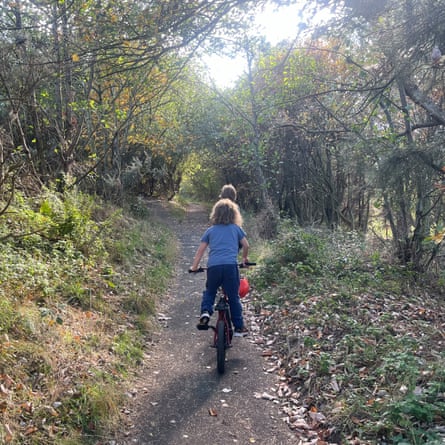
I cycled into the forest. The sunlight was bouncing off the leaves. When we got to the bird hide it was silent, even though there were lots of people inside. Their telescopes and cameras were all trained on a small, speckled, brown bird in the distance. It had long, pale yellow legs and was wading next to the muddy bank: a marsh sandpiper! It was so exciting that it was hard to be quiet.
I learned that it was an unusual sight as these beautiful birds are rare to see in Scotland. They would usually be in Africa, India or Australia in winter. In the UK we have similar birds like greenshanks, green sandpipers and common sandpipers instead. They feed on aquatic insects and small fish and weigh only 60g-100g. I felt lucky – I only saw it because a lovely man let us look through his spotting scope.
Sachin, eight
Read today’s other YCD, by Mia, 11: ‘Finding fly agaric was a fairytale’