3 months ago
103
3 months ago
103
Abu Ali spent the first hours after the toppling of the Syrian president Bashar al-Assad boxing up his merchandise. Old-regime bumper stickers, mugs with Assad’s face, T-shirts on which Russian and Syrian flags faded into each other – it all had to go.
A year later, the weathered tourist shop on the boardwalk of the Syrian coastal city of Tartous has entirely new products. The shelves are lined with the new three-star Syrian flag, mother-of-pearl jewellery boxes engraved with revolutionary slogans, and pictures of rebel fighters killed during the country’s 14-year civil war.
“Business is slow these days. Tourists and travellers used to come before but now it’s slowed down. We just need more security and things will improve,” said Ali, 48, the owner of the shop.
Ali’s old customers – Russian soldiers from nearby military bases, American war influencers and Lebanese tourists – have disappeared. Only the faded Cyrillic on the storefront hints at the shop’s past hawking regime wares.
A year after the fall of the 50-year-long Assad dynasty and its replacement by an Islamist-led government, Syrians are renegotiating the symbols and culture that once defined their country. Statues of Hafez al-Assad have been toppled and bulldozed and the portraits of his son Bashar that once plastered across every billboard, office and classroom now survive only as defaced remnants, if at all.
The pace of change has been blistering. The sudden collapse of the Orwellian security apparatus that controlled all facets of life and the arrival of the new government has left Syria in a state of cultural flux.
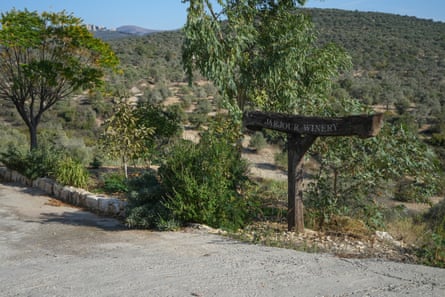
For Syria’s vineyards, some of the oldest in the world, the change has been bewildering. Shadi Jarjour, the owner of the Jarjour winery in the hills above Tartous, said the most immediate impact of the fall of the Assad regime was an end to ceaseless harassment from corrupt government officials.
“You never knew what excuse they would come up with to mess with you, it was never comfortable,” he said. “Once, we didn’t have the right stamp on our papers and were threatened with three years in prison, but then the regime fell.”
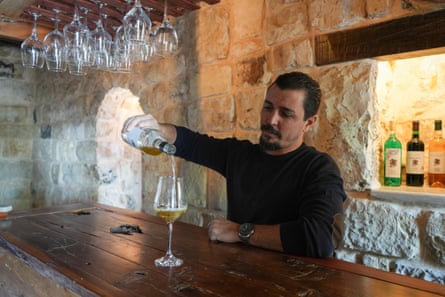
Jarjour, one of Syria’s few wineries, sits on a hilltop overlooking sloping hills dotted with olive trees. Groups of tourists and diplomats often come to the quaint brick building, which has wine tanks on the bottom floor and a bed and breakfast on the top floor.
Business was growing prior to the fall of the Assad regime. Under Assad, alcohol was legal to produce and sell, and the seeds of a wine culture in Syria began to take root, Jarjour said, as consumers expanded their palettes past generic red wines. The family moved their winery to Tartous and started to produce in greater quantities, making up to 50,000 bottles a year.
Jarjour and his family were anxious after the fall of the regime, wary of how Syria’s new rulers would view a winery. The core of Syria’s new government is made up of former members of Hayat Tahrir al-Sham (HTS), the Islamist rebel group that led the rebel offensive that toppled the Assad regime.
The government assured Jarjour that it did not want to interfere in his business and asked the winery to keep its doors open. But despite these private assurances, the government has seemingly not made up its mind when it comes to the treatment of alcohol in Syria.
Jarjour can produce wine but due to a lack of a clear law concerning the sale of alcohol in the country he cannot sell it. “I haven’t sold anything since December 2024. If a law isn’t published in the next month or so, I will have almost two years of losses,” he said.
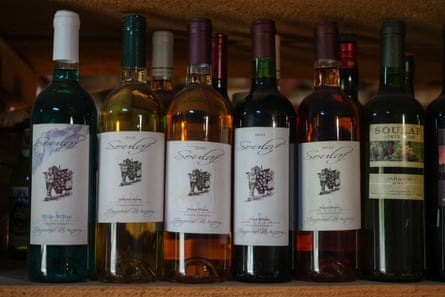
Though no formal restrictions exist on the import of alcohol, Syrian border guards regularly search personal luggage for alcohol and pour it out if found. Bars have been raided and arbitrarily closed across the capital city, Damascus, under the justification that they do not have a licence to serve spirits, and there is no route to renew licences. After an outcry, most bars were reopened and continue to serve alcohol.
One bar owner explained how he had to close his bar at the request of authorities, who told him to visit a government office in a few weeks. The official allowed him to reopen, only telling the owner that he had had to be taught a “little lesson” for staying open during the holy month of Ramadan, something that is not an offence under Syrian law.
Nonetheless, a party scene still thrives in Damascus, with rooftop raves and house parties aplenty. At one techno party, an off-duty member of the General Security Service danced euphorically, exclaiming that he was having the best night of his life as he experienced his first rave.
The residents of the cosmopolitan capital braced themselves when men with long beards and Kalashnikovs descended upon its streets last December, wary of how the Islamists might reshape the city’s character. But it may yet be Damascus that reshapes them.
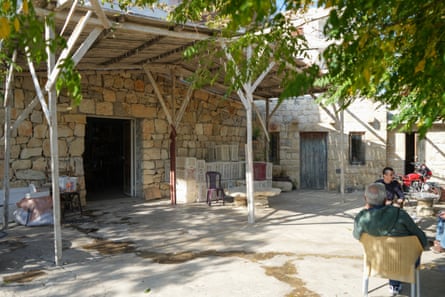
Syrians are still revelling in their newfound freedom, putting on plays about the brutality they suffered under the Assad regime and playing revolutionary songs that once could have earned them a spell in prison. But they are also learning how to interact with the new authorities, and the authorities are learning how to reign over a country, not a province.
Some Syrians at first fell back on instincts learned from their five decades of autocracy, replacing portraits of Assad with images of Syria’s new president, Ahmad al-Sharaa. Syrian authorities quickly banned such hero worship, at least in such a brazen manner, and the pictures of Sharaa disappeared. It was an early glimpse of the quiet tug-of-war between Syrians and their new rulers as they feel out the boundaries of expression and texture of culture in the post-Assad era.
Despite the uncertainty, Jarjour is still optimistic. He wants to expand the winery to widen its market within Syria, and then start exporting bottles one day, hoping for it to become a global brand that represents his country.
“We are waiting to see what the new laws will be, and we hope it comes soon so we can get back to work,” he said.