3 months ago
106
3 months ago
106
In Tanintharyi, the southernmost region of Myanmar, the local resistance has managed to contain the military. After five years of guerrilla warfare, the revolutionary youth there remain determined to restore democracy through armed struggle.
A long, narrow stretch of land at the southern tip of Myanmar, between the Andaman Sea to the west and Thailand to the east, Tanintharyi region is one of the areas where the resistance challenges the military’s authority. For decades, the region has been home to an armed rebellion led by the Karen ethnic minority, which operated mainly in the peripheral mountains.
-
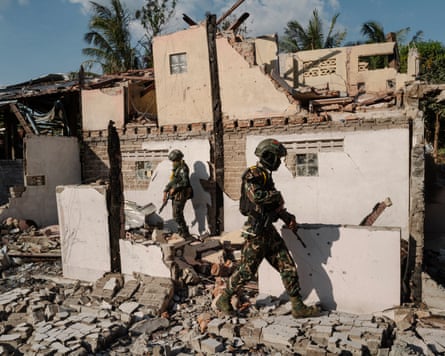
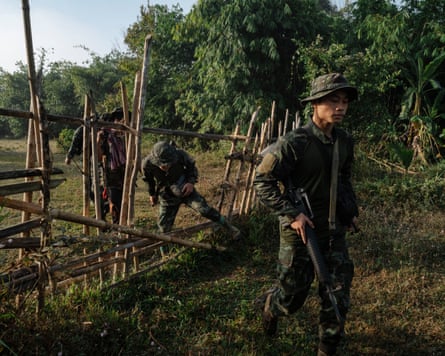
Soldiers from the Karen National Union (KNU) inspect the ruins of a Buddhist monastery destroyed by a junta airstrike in Myeik district, Tanintharyi region
-
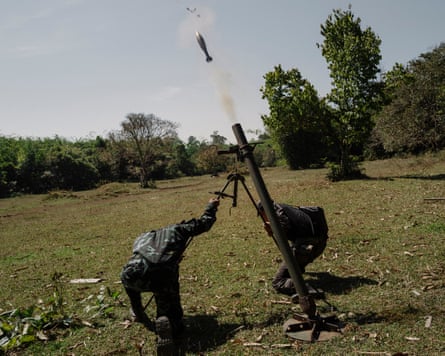
Resistance fighters fire mortar rounds toward Myanmar army positions in Tanintharyi region. Three shells are launched in quick succession before the young fighters rush to take cover, fearing retaliatory artillery fire
-
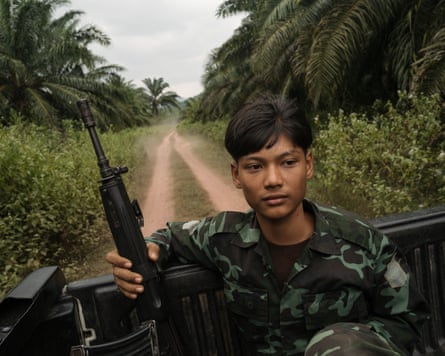
Left: a rebel soldier rides in the back of a pickup truck heading toward the frontline near Theybu. Right: soldiers from the People’s Defence Force attempt to outflank enemy positions by cutting across open fields near Theybu
After the coup and the wave of popular uprising, the local guerrilla movement has grown dramatically.
On 1 February 2021, the military overthrew the civilian government of Aung San Suu Kyi, ending a decade of democratic experimentation in Myanmar. Peaceful protests against the coup were brutally suppressed, pushing the youth – at the forefront of the opposition – to join the armed resistance. The country then plunged into the chaos of war, with the junta facing several armed groups, some born from the coup itself and others from ethnic minorities who for generations have defended themselves against the atrocities of the Burmese army, the Tatmadaw.
-
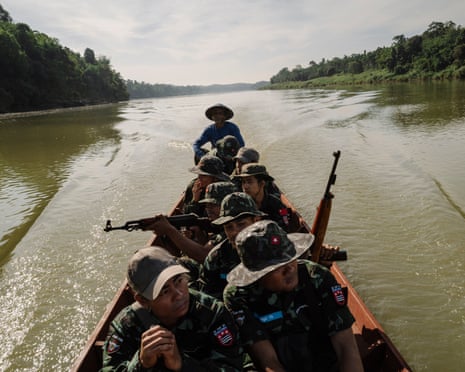
Fighters from the PDF, the local resistance, patrol near the town of Ta Ku, along the Tanintharyi River, one of the main waterways in southern Myanmar. The rebels control nearly half of the Tanintharyi region, including rural areas and several navigable routes
In the Tanintharyi region, thousands of young people from various ethnic and religious backgrounds, fuelled by hatred of the junta – which has indiscriminately committed war crimes and massacred civilians – left the key regional cities to join the bush and learn to handle weapons. The region then witnessed the rise of local pro-democracy battalions, spontaneously formed across Myanmar after the coup: the People’s Defence Force. This new generation of urban activists, alongside the main local ethnic armed group, the Karen National Union (KNU), seized vast territories in Tanintharyi region. Moving down from the mountains, they pushed into the plains toward the sea, challenging junta forces up towards the coastal towns.
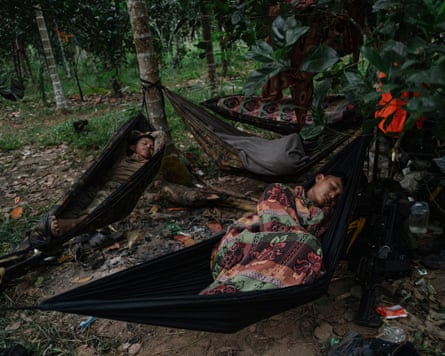
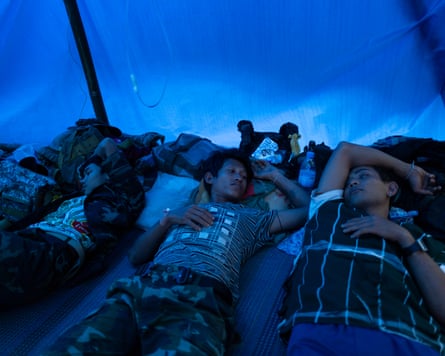
-
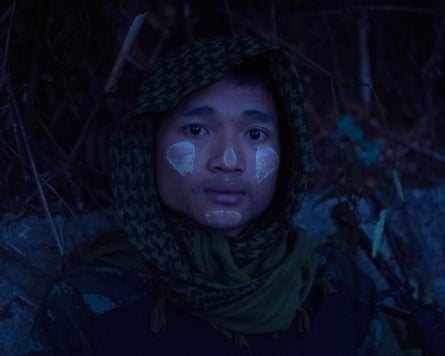
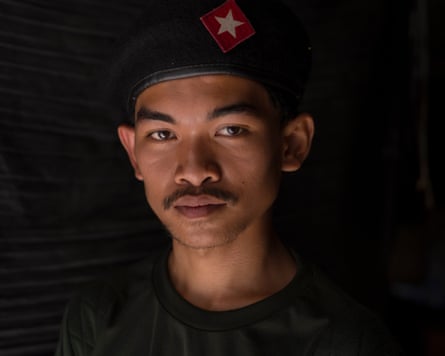
Clockwise from top left: a young rebel, a member of a drone unit, hides along the frontline as night falls over the Tanintharyi region; a young man who fled his family home to join the jungle resistance and the PDF; rebel soldiers receive treatment in an improvised hospital hidden deep in the jungle of the Tanintharyi region; fighters sleep near the frontline
In 2026, as Myanmar enters its fifth year under military dictatorship, the resistance faces numerous challenges. After several years of nationwide advances, catching a weakened junta off guard and raising hopes of the regime’s collapse, the rebels are being confronted with a bloody counteroffensive by the Tatmadaw. Strengthened by more than 80,000 forcibly recruited troops and supported by Beijing, the Myanmar military is attacking on many fronts, forcing some insurgent groups to withdraw from strategic areas.
-
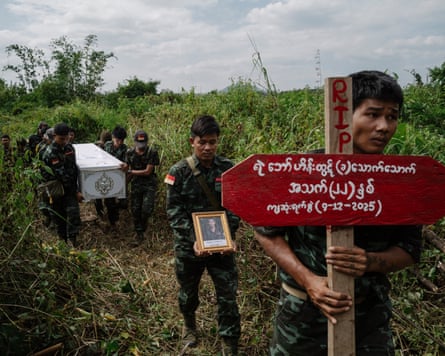
Members of the resistance carry the coffin of one of their comrades, known as Thougt Thougt, who was killed on the Tanintharyi front at the age of 22. Three other young fighters died the same day, and several small improvised cemeteries are emerging from the thickets. In total, the war has claimed more than 90,000 lives.
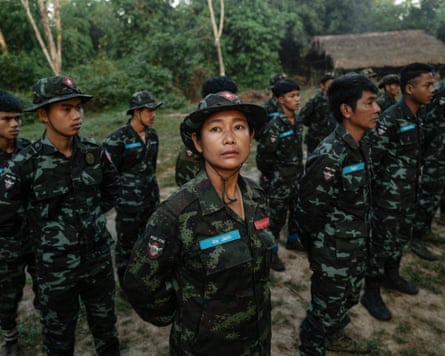
-
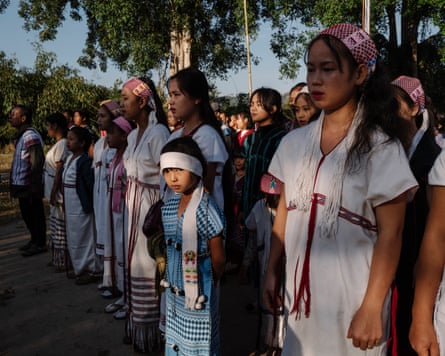
Left: Ma Jack, who was a member of the National League for Democracy, the party of Aung San Suu Kyi. For five years, she has been living in the jungle and fighting “out of obligation, so that future generations do not have to endure the brutality of the junta”. Right: members of the Karen ethnic group celebrate new year in the Tanintharyi region. On the sidelines, resistance fighters from the community stand guard to protect the ceremony. Such public gatherings are frequent targets of airstrikes.
In Tanintharyi region, the multi-ethnic local resistance fights side by side to hold on to the territories they have gained. Ammunition is scarce and enemy troops and aircraft pose a constant threat. Yet the guerrillas hold their ground. In November, the local rebellion scored a major victory by capturing Mawdaung, a border town and key trade route to Thailand. The Tatmadaw is trying to retake it at all costs, but faces fierce resistance. Across Myanmar, the rebels still control nearly half of the country (precise estimates are difficult), and continue to make advances on new fronts despite the counteroffensive.
-
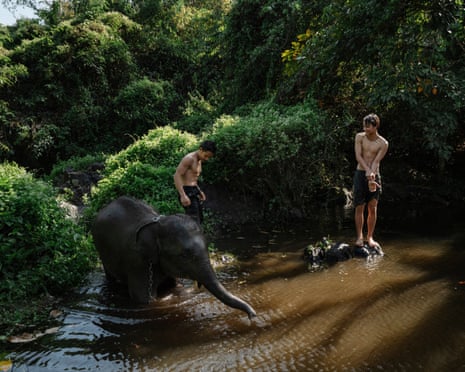
During the day, soldiers and villagers often share daily life and bathe in the rivers, as seen here with a young elephant
The people of Tanintharyi pay a heavy price for the insurrection. Across Myanmar, the junta has escalated its violence to crush the rebellion through targeted bombings of civilians and the destruction of villages. According to Acled (the armed conflict location and event data project), air and drone strikes increased by about 30% in 2025, making it the deadliest year since the coup.
-
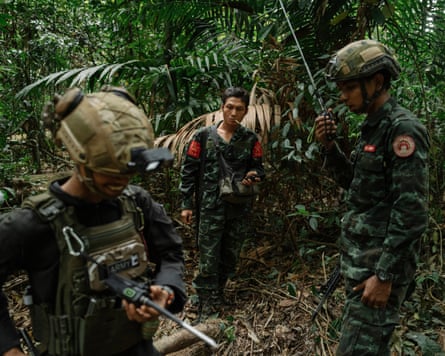
On the front near Theybu on 13 December, several rebel groups have come to reinforce the local resistance. Alongside the PDF and the KNU – including a Muslim battalion – are the Forces for Federal Democracy, made up largely of young fighters from Yangon; the People’s Liberation Army, founded on communist ideology; and the Bamar People’s Liberation Army, representing the Bamar, Myanmar’s Buddhist and majority ethnic group.
The war has claimed more than 90,000 lives and displaced more than 3.5 million people, according to the UN. Nearly half of Myanmar’s 55 million inhabitants now require humanitarian aid, a situation that continues to deteriorate.