3 months ago
134
3 months ago
134
This government has become very adept at U-turns. Apparently it is time to turn again. By deciding to block Andy Burnham’s candidacy for the Gorton and Denton byelection, the Labour NEC has turned its back on a different and better form of politics, one that Labour and the country so desperately need. The decision today has implications far beyond personality or faction: instead, it is about how a modern and effective government operates to meet the complex and interrelated challenges our society now faces.
Francis Crick once said: “A good scientist values criticism almost higher than friendship.” This is equally relevant to politics. Any progressive party needs agility to navigate an endless onslaught of events beyond its control. What therefore matters most are systems and cultures that allow constant feedback, and different views and voices to be heard. Governing is always a mix of professional expertise, top-down control and open debate and negotiation. It is the latter trait that needs to become predominant for any organisation to survive, let alone thrive, given the complexity, even chaos, of governing today.
What has all this got to do with Andy Burnham? Three things. First and most simply, he doesn’t hold exactly the same views on everything as Keir Starmer. Some see this as a threat, as though nothing but a North Korean level of leader-worship is acceptable. But a high-functioning 21st-century organisation sees difference as a strength, in which only through contestation can better government emerge. This kind of healthy political contestation shouldn’t be blocked by the NEC.
Second, Burnham doesn’t just have differences of opinion, but rather a viable if small-scale version of government that the Labour leadership could learn from. His mayoralty in Greater Manchester is showing that pluralism works. By emphasising place before party he brings everyone except the national populist right with him. Rarely if ever do the Greater Manchester combined authorities have votes, because everything is consensually agreed. And it works. This openness has allowed Burnham and his team to plan for the long term with a greater level of certainty. Among other things, they have created the fastest growing city region in the UK. And when, at the end of last year, Burnham made a speech in Manchester talking about how this growth can be replicated and scaled across the country, he was introduced by the Liberal Democrat leader of Stockport council.
Burnham does not have all the answers to all the problems that face Britain – neither does Starmer – but U-turns may be less frequent and better long-term decisions may be made if they and others worked together. I think Starmer and Burnham want to get to very similar places but have different paths – let them and others work out together how best to achieve that through collaboration and contestation. That’s politics.
And third, if Starmer reverses this decision and lets Burnham run, it would signal the biggest and best possible reset for Labour. Thousands of people energised by the ideas around Burnham may stay on as Labour members, and many more could rejoin or join for the first time. A big and energetic byelection can take place in which the forces of progressivism go head to head with the forces of regressivism. The tide of Reform UK could be turned back.
But this moment is much bigger than Burnham, Starmer or even Labour itself. Beyond all this febrile talk inside the party and the media about people’s intentions, ambitions, the supposed rivalries and gamesmanship, this is a moment for Starmer to signal a new way of behaving and doing politics. It is nonsense to suggest that everyone should simply shut up and be loyal, that no one who aspires to better things for their party or their country should make speeches and write articles and develop their thinking and their networks. Or stand for their party. If we want future leaders, we can’t expect them to say and do nothing to prepare themselves for leadership. This isn’t how all other relationships, families, organisations or companies work, and it shouldn’t be how our political system works. This is a moment for all of us to grow up.
Finally, this is a moment for Labour to reestablish the principles of internal pluralism. Every political party needs to protect its borders from those out to wreck it, or those with offensive or extreme views. But outside those cases, healthy debate is the only route to a healthy party. No debate, no alternatives and the absence of nuance mean any organisation will wither and eventually die. Ultimately, the left and the right in Labour need each other.
This is not a call for disagreement to end, but for honest, constructive and respectful disagreement to fuel the reset that everyone knows the party, the government and the country need. Just when public cynicism and contempt for politics couldn’t seem to get any worse, this decision makes the world feel a little darker. For our prime minister to look his best, to show who is in charge and signal the change Britain voted for in 2024, he should reverse this decision.
-
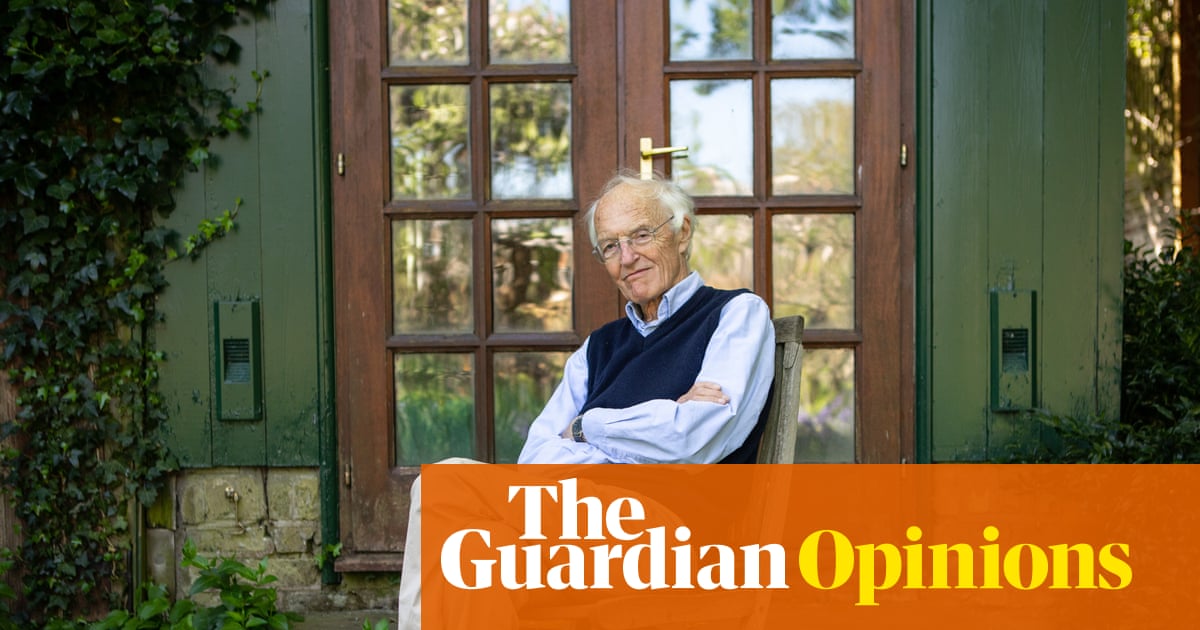
Neal Lawson is director of the cross-party campaign organisation Compass