3 months ago
197
3 months ago
197
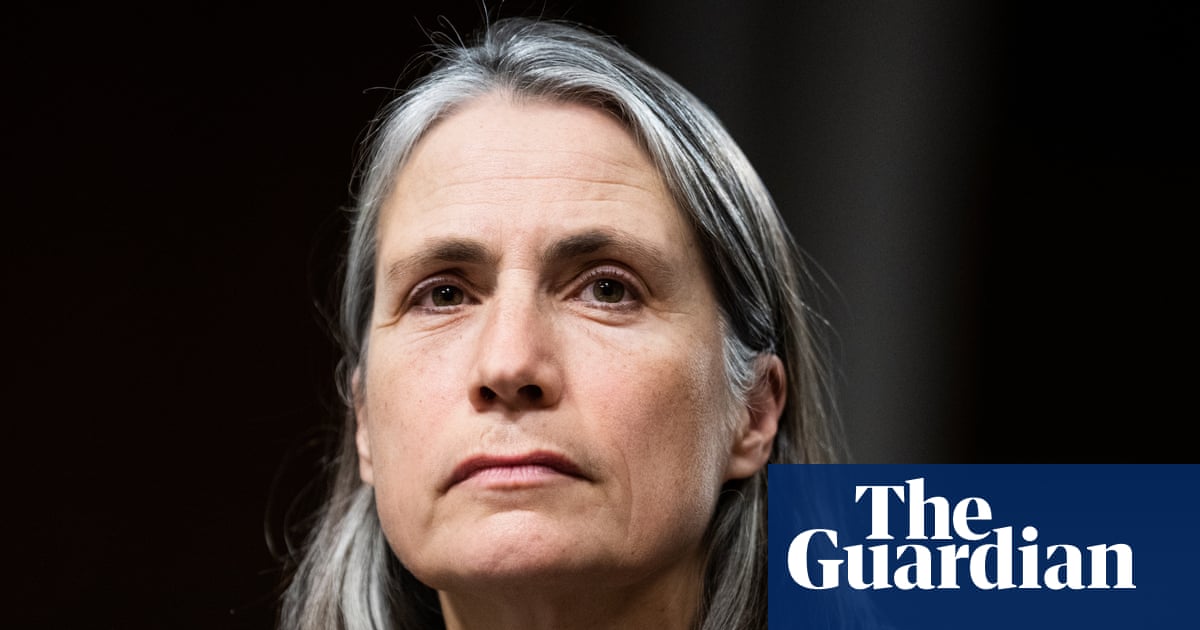
The UK now has a “surfeit” of graduates and students must accept that a university degree is no longer a “passport to social mobility”, a leading vice-chancellor has argued.
Prof Shitij Kapur, the head of King’s College London, said the days when universities could promise that their graduates were certain to get good jobs are over, in an era where nearly half the population enters higher education.
Kapur said a university degree is now more like a “visa” than a guaranteed route to professional success, a reflection of the shrinking graduate pay premium and the increased competition from AI and other graduates from around the world.
“The competition for graduate jobs is not just all because of AI filling out forms or taking away jobs. It’s also because of the stalling of our economy and it’s also because of a surfeit of graduates. So I feel that that simple promise [of a good job] has now become conditional on ‘Which university did you go to? What course did you take?’” Kapur said.
“The personal equation of the university as a vehicle for social mobility, almost as a passport to social mobility, meant that if you got a degree, you were certain to get a job as a socially mobile citizen. But now I think it has become a visa for social mobility – it means you’ve got a chance to go and visit that place called social mobility. Maybe you’ll make it there, maybe you won’t.”
While arguments have raged for decades over the value of a university degree, in 2025 Keir Starmer declared that aiming for 50% of young people to enter higher education was “not right for our times”, ending Tony Blair’s pledge made in 1999. Starmer’s declaration came two years after Rishi Sunak as prime minister had claimed: “The false dream of 50% of children going to university … was one of the great mistakes of the last 30 years.”
But Kapur said experts such as the sociologist Martin Trow have long predicted that large-scale entry into higher education would change the status of university degrees, as the sector moved from educating an elite of just 5% to 10% of young people to a more universal system attracting young people from all parts of society.
Kapur said Trow predicted: “Three things will happen. Social regard for the exceptionalism of university graduates will go down. The second thing is, the graduate premium will go down, because a degree will become something that’s not scarce at all. And from being a privilege, it [a university education] will start becoming a necessity” for participating in advanced society.
He added: “I think in the UK we are reaching that point now.”
Figures from the Department for Education show that England’s graduates still enjoy higher rates of employment and pay than non-graduates, although the real earnings of younger graduates have been stagnant for the past decade. Kapur points out that the national economy’s slow growth coincided with England’s introduction of £9,000 tuition fees and student loans in 2012, making it “the worst possible time” to transition to individual student loans.
In 2022, Kapur wrote a gloomy discussion of UK higher education that described a “triangle of sadness” between students burdened with debt and pessimistic prospects, a government that used inflation to cut tuition fees, and overstretched university staff trapped in between.
Three years later, Kapur says the situation has worsened, with the government “fossilising” domestic tuition fees at a level that does not cover undergraduate teaching costs. But he is convinced that UK universities still provide the best education in the world, thanks in part to the premium tuition fees they earn from international students.
The higher fees allow the likes of King’s College London to subsidise the world-leading research that maintains their high position in international league tables. The high position in turn enables UK universities to charge premium fees – and benefits domestic students through greater access to researchers and a wider choice of courses.
But souring attitudes towards immigration have resulted in recent governments restricting international student visas and, most recently, imposing a levy on their fees that could disrupt those benefits.
“It’s an interesting national conversation we need to have. Often people think that international students are some sort of self-serving indulgence. But what I would like people to understand is that this is now a feature of our system. It really does bring benefits to our domestic students, in addition to the nation. Therefore, if we’re going to mess with it, we should do it knowingly,” Kapur said.
But he warned: “Governments have to be careful, because if there is any hope that this productivity slump we keep talking about is going to change, it is not going to be because we become faster baristas.
“It will only turn around if we are able to ride the new wave of technology better than others, that we are the makers and not the takers of the next technological revolution, and universities will have a central role in doing that.”