3 months ago
180
3 months ago
180
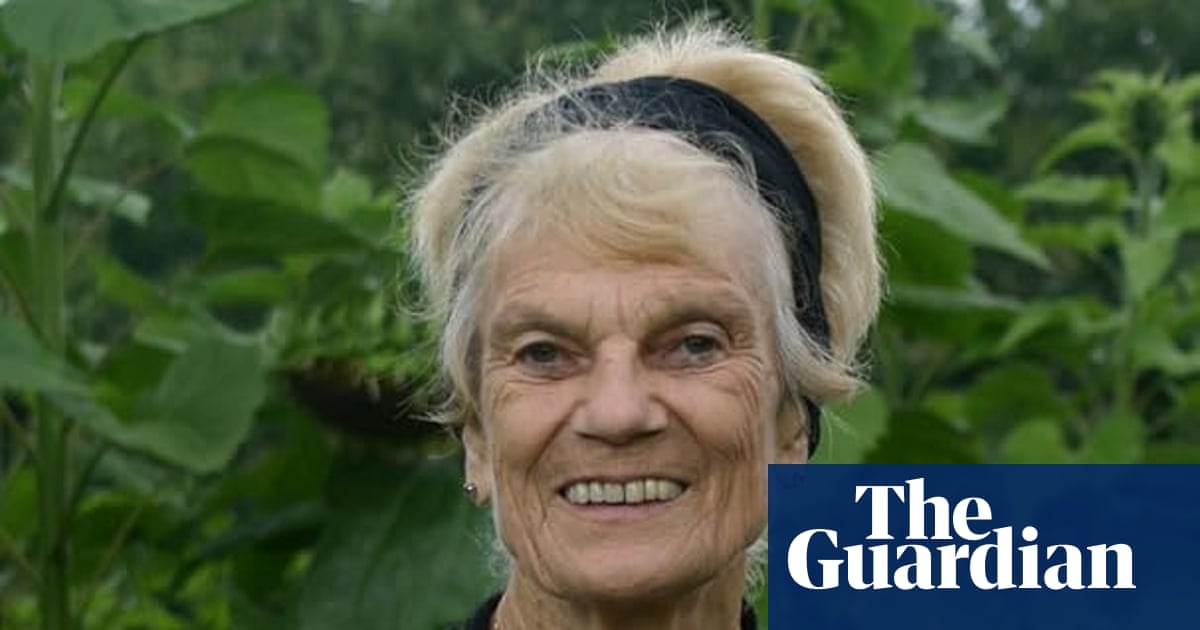
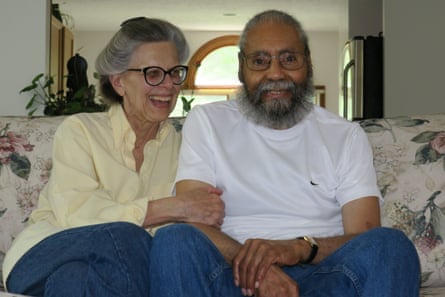
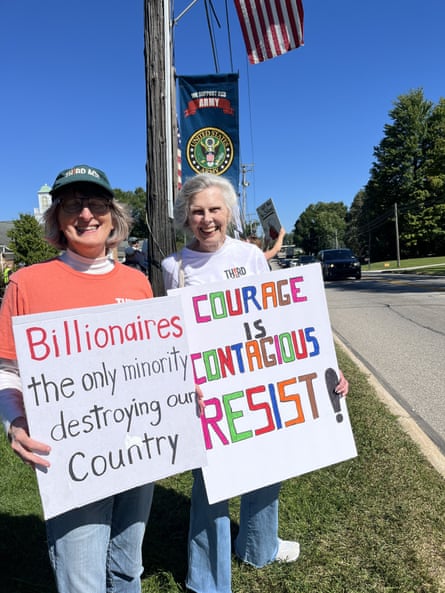
When Lani Ritter Hall’s beloved husband of more than 40 years, Gus, died in 2022, she felt a bit unmoored. Taking care of him had been the thing that got her out of bed in the morning, and with him gone, the 76-year-old felt she’d lost her purpose.
That is, until she found organizing.
Shortly after Gus’s death, she came across an op-ed about a new group called Third Act, focused on mobilizing older adults to protect democracy and confront the climate crisis, and figured she might as well reach out. Though the former public school educator had never been involved in any political organizing or activism before, she soon found herself serving as a volunteer coordinator at Third Act, setting up more than 120 Zoom calls over the course of 10 months to welcome people who were new to the organization and help them figure out how to plug in.
At a stage of life when many people find themselves increasingly lonely, isolated and aimless, Ritter Hall began to feel more connected than ever, both to her sense of purpose and to other people. “It’s been the biggest joy of my life,” she said.
Ritter Hall isn’t the only one who’s had this experience: across the country, activists, organizers, mutual aid workers and volunteers are setting out to change the world for the better – and finding that the connections they make and the larger purpose they connect to often helps make their own lives better, too. From twentysomethings who celebrated “Friendsgiving” together after meeting as canvassers for Zohran Mamdani, to millennials who have stayed friends since volunteering at reproductive healthcare clinics a decade ago, to elders like Ritter Hall, the country is full of people with these kinds of stories.
In the context of a society so fractured that former surgeon general Vivek Murthy declared a “loneliness epidemic” – in which civic engagement and participation in social activities has been in decline for decades – movement-building spaces are offering people unique opportunities to connect to others and a sense of purpose.
“Mainstream culture says you have to be productive, you have to be good enough, attractive enough, social enough – you have to be all of these things to be acceptable,” said Gabrielle Gelderman, a “movement chaplain” focused on offering spiritual and mental health support to organizers. “Movement spaces can offer a radical alternative to that, where you belong and you have something to offer, regardless of who you are, where you come from, the language you use. That’s deeply profound for people to feel a part of a community in that way.”
Fighting injustice and finding community
Loneliness isn’t what prompts most people to join social movements – a desire to right something that’s wrong in the world is often where involvement starts. For Ritter Hall, seeing Roe v Wade overturned, and wondering whether other rights protected by the 14th amendment, such as same-sex and interracial marriage, might come under fire, activated her like never before.
“My Gus was African American. I’m white. I was just so appalled at the thought that somebody would say that what Gus and I had had for more than 40 years could be possibly thrown out, or that other people would be denied that opportunity to have such a wonderful marriage,” she said. “It was time for me to step up and try to do something for our democracy.”
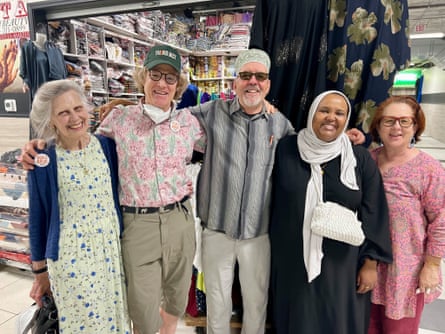
But many like Ritter Hall find that by trying to push back against injustice, a sense of community also comes along the way, with relationships that can offer a compelling reason to stay involved. Emmanuel “Juni” Taranu, an organizer with the St Louis Palestine Solidarity Committee in Missouri, has likewise found movement spaces to be powerful for relationship-building. With a birth family that doesn’t see eye to eye with them about the genocide of Palestinians, Taranu has built deep, familial bonds with other people organizing on behalf of Palestinian life and dignity. One such bond is with a Palestinian American couple that Taranu looks to as mentors, whom they now consider family.
“We go out to dinner together, to comedy shows, celebrate birthdays together,” said Taranu. That’s possible, they say, because there’s a deep trust that comes from working together around shared values. With the foundation of solidarity that comes from fighting for the same things, those relationships are able to take root in a deeper way.
Ritter Hall has noticed her organizing relationships develop similarly. She now Zooms with some friends just to chat about their families and what they’ve been up to in their gardens. She accompanies others to nearby protests. “For the first time in my life, at 76 years old, I was out in the street protesting with a sign in front of a bank in downtown Cleveland,” she said with a laugh.
According to Dr Tangela Montgomery, a psychologist and assistant professor at the University of Buffalo, this connection between community and values sets movement spaces apart from purely recreation-focused social groups. “The most amazing thing that I think activism does for the individual is give them a sense of community. If you think of someone who has a minority identity and is being oppressed, that sense of community literally can be life-saving for some people,” she said. “Seeing the group as a movement, seeing the group as a body that can change something for the better – that’s different from just sitting and having a beer with people every Saturday.”
That’s not to say that getting involved in these kinds of groups is without inherent challenges. Montgomery’s research, which often focuses on queer people of color, has found that “high-risk activism” – the kind of actions you could get arrested for – can have negative mental health outcomes for participants. It makes sense: putting yourself on the frontlines means you’re “more likely to get beat up by a police officer” or ICE agent, she said, which isn’t good for anyone’s mental health. Gelderman adds that, like any organization created by human beings, movements can go awry when they push participants to self-sacrifice to the point of burnout or overwhelm.
But both practitioners would argue that’s not a reason to avoid organizing so much as it is a reason to make collective care a core value. Many organizers also strategize together about whom to send to the frontlines and whom to involve in other ways, so that particularly vulnerable members of a community don’t end up in the highest-risk situations. While police confrontations in the street or being chained to a pipeline might draw the most attention, other forms of movement-building, such as talking to neighbors about voting for a certain candidate or starting a union in the workplace, can yield powerful results.
Mary Holzman-Tweed, a 48-year-old in Queens, New York, knows that relationships that arise from movement work aren’t always easy. An alcoholic who was looking for a way to heal after hitting rock bottom, she involved herself in a local mutual aid effort to build and run a food pantry during the height of pandemic lockdowns as a way to try to give back to her community. She saw isolation as part of her problem, but living with “extreme” social anxiety in combination with Ehlers-Danlos syndrome, which affects her mobility, made connecting with others – especially without alcohol – a challenge.
Getting involved in the food pantry, which started out of the trunk of a volunteer’s car, was not an always-painless ticket to easy relationships. With anything that works on a consensus basis, she said, “you’re not going to like everyone you work with. They’re not all going to be your besties. But the thing that it teaches you about is how to get the work done outside that.”
For her, learning to work with other people – even when it’s difficult – for the sake of something she believes in has been life-altering. The relationship skills she built through working for the food pantry have given her more confidence in other social settings, too, and now she joins local poetry readings, craft nights and book clubs, all of which she traces back to her initial involvement in the food pantry. Now, after nearly 25 years of living in her neighborhood, she feels known there in a way she never did before.
“I went from being extremely isolated, and really only a recognizable face at my local bar, to walking down the street with my partner at a street festival and barely being able to move five steps before someone’s calling out my name,” she said.
Five years later, Holzman-Tweed is still involved in the food pantry, and she’s proud that it’s outlasted the acute crisis that birthed it. To anyone who’s considering getting involved in a new way in a mutual aid or organizing project, she said: don’t be afraid to take the leap and start finding ways to care for your neighbors.
“We have to go out and touch people, because we never know what’s going to save us,” she said.