2 months ago
66
2 months ago
66
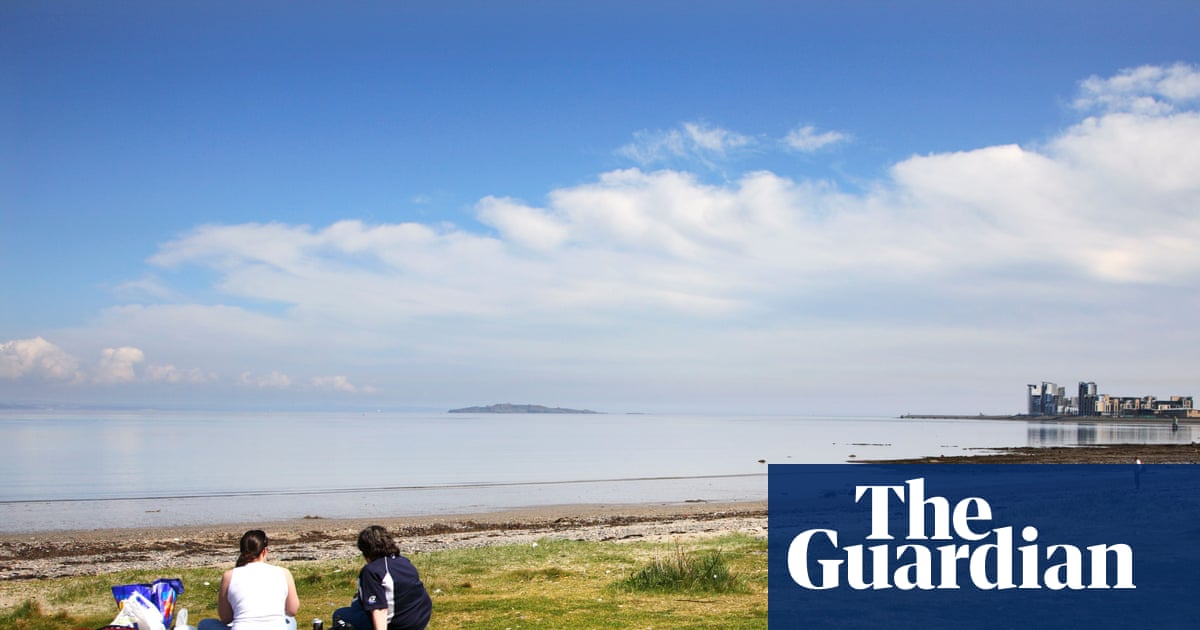
A woman has died after a shark attack on the New South Wales mid-north coast at Kylies beach.
NSW police said the woman, aged in her 20s, had been killed at the beach at Crowdy Bay on Thursday morning.
Emergency services were called to the beach about 6.30am by reports that a shark had bitten two people.
“Witnesses assisted the pair prior to the arrival of NSW Ambulance paramedics; however, the woman died at the scene,” a police spokesperson said.
A man – also believed to be aged in his 20s – was airlifted to John Hunter hospital in a critical condition. His condition later improved to serious but stable.
Police Chief Insp Timothy Bayly said on Thursday that “they were known to each other [and] they were going for a swim” at the time.
Kylies beach was closed and police were liaising with experts from the Department of Primary Industries to determine the species of shark involved. A report was to be prepared for the coroner.
A DPI spokesperson said “a female swimmer has died and a male has been severely injured as a result of the incident”.
The department was deploying five “smart” drumlines at Kylies beach. The “shark management alert in real time” drumlines used in NSW are a non-lethal tagging method that lures sharks using baited hooks.
Sign up: AU Breaking News email
When an animal is hooked, operators receive a ping and head to the spot in 17 minutes, on average. The shark is tagged, released further out to sea, and then tracked by satellite and acoustically.
Surf Life Saving NSW said Kylies and nearby beaches would be closed for at least 24 hours. Drones were surveilling the area.
The remote stretch of coastline was unpatrolled, with the nearest surf club at Crowdy Head to the south, the organisation said.
“This is a terrible tragedy and our deepest condolences go to the families of the woman and man involved,” the Surf Life Saving NSW chief executive, Steve Pearce, said on Thursday.
after newsletter promotion
“We have been able to activate our drone capability quickly and have assets on scene to provide surveillance and report on any remaining dangers in the area. For now, please remain clear of the water at beaches in the vicinity.”
The woman’s death comes less than three months after Mercury Psillakis was killed by a 3.5-metre great white shark at Long Reef beach in Sydney in early September.
This year, there have been five shark bite fatalities in Australia.
In 2024 there were 13 unprovoked bites resulting in no fatalities – 10 fewer unprovoked bites than in 2023, when there were four fatalities. In 2020 there were seven unprovoked fatal attacks.
“Broadly speaking, across Australia and over the last two decades, there’s been an increase in the number of shark bites,” Prof Charlie Huveneers, the director of Flinders University’s Marine and Coastal Research Consortium, told Guardian Australia after Psillakis’s death.
More people are using the water than ever before – but that is only part of the explanation.
Coastal population growth, climate breakdown, habitat depletion, uptake of water sports, weather anomalies, distribution of prey and even better wetsuits – keeping us in the water for longer and over cooler months – are among 40 factors that, depending on the location, are likely to have contributed to the rise, Huveneers said in September.
Fatalities are a different story. Rob Harcourt, emeritus professor of marine ecology at Macquarie University, has said the number of deaths from shark bites today is likely to be the same or lower than in the 1930s, per capita, because of faster emergency responses, tourniquet kits at every surf life saving club and first aid training.