3 months ago
157
3 months ago
157
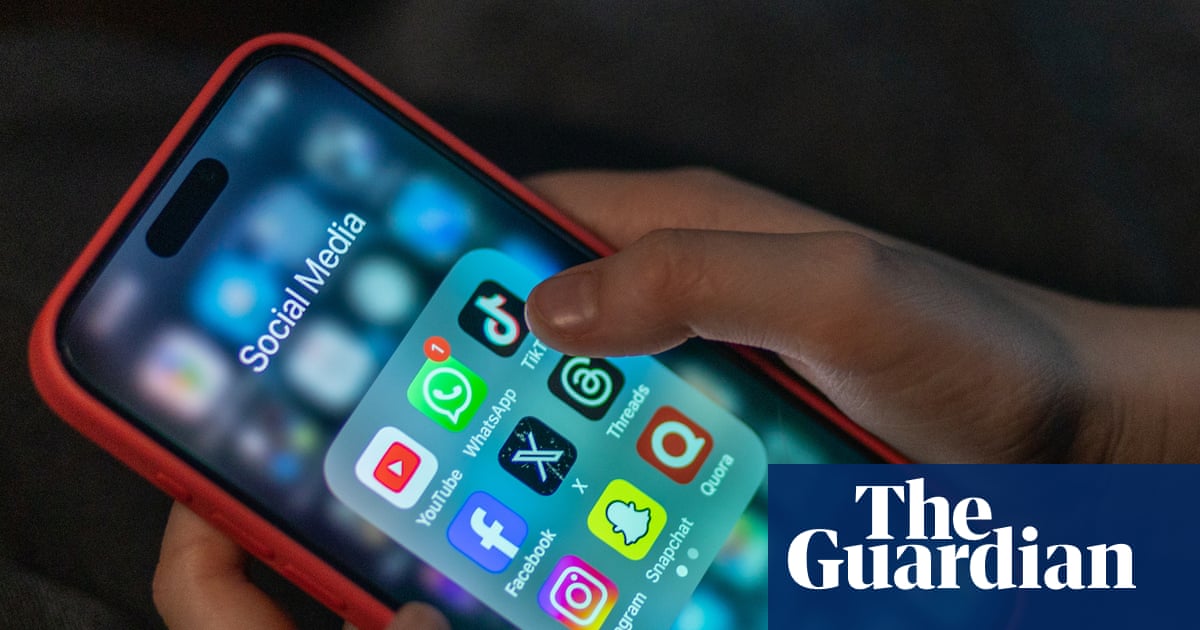
The government’s consultation surrounding whether to ban social media for under-16s responds to widespread concern about digital harms (UK ministers launch consultation on whether to ban social media for under-16s, 19 January). We in the Neuroscience, Ethics and Society (Neurosec) team at the University of Oxford contend that such investigations should extend also to whether young people should have access to generative AI. In the case of social media, ministers and commentators have focused on features like addictive feeds and age limits; our research team’s work with young people shows that we must also reckon with such considerations – among many others – in an era of AI-driven technologies.
To be sure, concerns about mental health, social comparison and addictive design certainly apply when thinking about young people’s experiences online, but the digital world of 2026 includes far more than Instagram and TikTok. AI-based chatbots are increasingly present in young people’s lives across a host of domains, from education to companionship. And adolescence is a formative stage for developing social understanding, one’s sense of identity and so on. This raises urgent questions, such as: at what age should young people have access to AIs simulating friendship or intimacy? What safeguards are needed to protect young minds from manipulation and dependency grounded in artificial “connection”?
Any policy focused on protecting children must broaden its scope beyond traditional social media platforms, including all relevant technologies that affect young people’s development. Consultations should invite evidence from developmental psychology and AI ethics, and perspectives from young people themselves. Asking simply whether a platform should be off‑limits misses a deeper question: what kinds of relationships to technology do we want future generations to form, and at what age is it appropriate to begin them? Young people deserve thoughtful, future-aware policy, not merely reactionary fixes.
Dr Madeline G Reinecke
Neurosec, Department of psychiatry, University of Oxford
A social media ban for under‑16s is the bare minimum that our government should be pursuing for children in the UK. Since my career as a teacher began in 2010, I have watched the mental health crisis unfold, while those in power have shown an alarming lack of urgency in tackling the safeguarding risks posed by social media. Politicians, parents and educators have got to help children to find and maintain real, deep connections in an analogue world. This doesn’t mean locking away all technology; it means regulating access to addictive and dangerous platforms at the peak of adolescent neuroplasticity and vulnerability.
The answers are not new – sport, music, the rejuvenation of the youth club, simple role‑modelling – but those in power have got to take bold action to prevent the harms of social media being baked in for the next generation.
Alexandra Cocksworth
Deputy head, Lord Wandsworth College, Hampshire
Recent articles on the growing calls for a social media ban or greater restrictions rightly highlight that we are at a tipping point in this debate. In 2015, the Youth Sport Trust published the first of a trilogy of reports warning of a generation being held hostage by handheld devices. They’re connected 24/7, but lonelier than ever. Our recent Class of 2035 report warned that, without change, the situation will continue to deteriorate. In a decade’s time, if the current trajectory persists, half of children will be using screens for entertainment purposes alone for at least three hours a day. The need to reimagine childhood is clearer than ever – and the time for change is now.
Ali Oliver
CEO, Youth Sport Trust