3 months ago
90
3 months ago
90
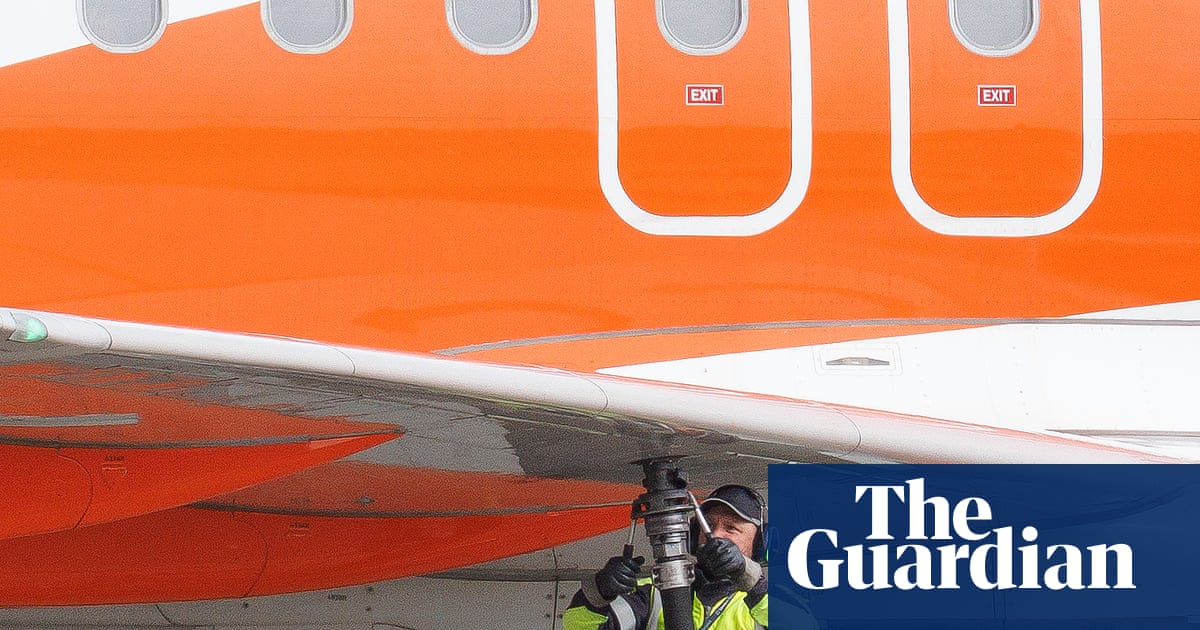
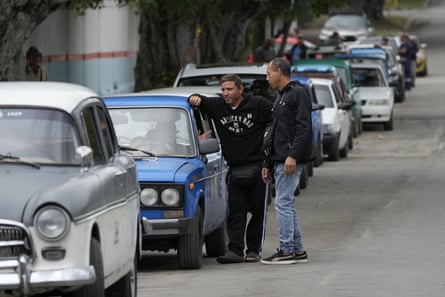
It’s just gone midday on Linea, one of the main roads through Havana’s Vedado neighbourhood, and Javier Peña and Ysil Ribas have been waiting since 6am outside a petrol station. They’re passing the time fixing a leak on Ribas’s 1955 gold and white Mercury.
A tanker has pulled up on the forecourt in front of them, and so the queue behind is growing fast. Although this station only takes US dollars, at a cost far out of reach of most Cubans, Peña says it’s their only choice. “There is no gas in the national pesos,” he says, shrugging.
Soon, even buying petrol in dollars may be impossible. The United States has said it will ensure there will be no more fuel shipments to the beleaguered island.
On Thursday, Donald Trump signed an executive order allowing extra tariffs to be slapped on any country that sells oil to the island. The White House said the move was to “protect American citizens and interests” from a regime that provides “a safe haven for transnational terrorist groups, such as Hezbollah and Hamas”.
While no proof of this allegation was offered, the Trump administration has now made plain it is seeking to fell the 67-year-old communist regime. “Cuba will be failing pretty soon,” Trump said earlier in the week.
On Friday, Mexico’s president warned that Trump’s tariff’s “could trigger a far-reaching humanitarian crisis, directly affecting hospitals, food supplies and other basic services for the Cuban people”.
For Cubans, the situation is precipitous. Only one oil shipment has arrived this year – 84,900 barrels from Mexico – according to the data consultancy Kpler. Given current reserves, if no more tankers arrive, Kpler estimates Cuba will run out of fuel in the next three weeks, the Financial Times reported on Thursday.
In a social media post on Friday, Cuba’s president, Miguel Díaz-Canel, accused Trump of trying to stifle the island, writing: “Under a false and baseless pretext … President Trump intends to suffocate the Cuban economy by imposing tariffs on countries that sovereignly trade oil with Cuba.”
Jorge Piñón, an energy expert at the University of Texas, said diesel is key: “[If Cuba runs out,] the impact would be catastrophic as diesel fuels transportation – both passenger and commercial, the railroad, agriculture, industry, water distribution and sugarcane.” It also powers an electricity system that is faring so badly that many parts of the island suffer from 12-hour-plus blackouts every day.
Help does not seem to be on the way. A shipment due to arrive from Mexico has been cancelled – a “sovereign decision” according to that country’s president, Claudia Sheinbaum, despite clear pressure from Washington.
There have been no supplies from Venezuela, another traditional ally, since the US violently removed the country’s president, Nicolás Maduro, on 3 January. Other allies such as Russia and Algeria have been even less forthcoming, with shipments last October and February respectively, according to Kpler.
While China expressed “its deep concern and opposition to the United States’ actions”, promising “support and assistance”, it has traditionally bought oil from Cuba, which the Cuban government had received in aid from Venezuela.
“It’s not rocket science to understand they have used up all their cards,” said a businessman who has long worked with the Cuban government.
On Wednesday, as the Cuban people prepared for more misery, the US embassy threw a party for Freedom 250, the anniversary of the US declaration of independence.
In a speech to fellow diplomats – Cuban independent journalists reported being stopped by Cuba’s security services from attending – the US chargé d’affaires to Cuba, Mike Hammer, said the Cuban government needed to hear the message coming from Washington. “The Cubans have complained for years about ‘the blockade’,” he said of the six-decade US embargo. “But now there is going to be a real blockade.”
This follows robust anti-Cuba briefings all week from Washington. A story in the Wall Street Journal reported officials were actively seeking members of the Cuban government who “would cut a deal”, echoing reports that the US contacted members of Maduro’s inner circle before toppling the Venezuelan strongman.
Another briefing, to the website Politico, said Washington was weighing a full naval blockade on the island, although a European diplomat at the US party shook his head at this: “They don’t need gun boats. Pressure alone appears to be enough to stop anyone sending oil.”
On Wednesday CNN reported that Hammer had advised staff in an internal briefing: “If you don’t have your bag packed yet, then pack your bag.” The embassy said it have no plans to evacuate.
The Cuban government has responded by releasing videos of soldiers training to resist invasion. Carlos Fernández de Cossio, who leads the US desk at Cuba’s ministry of foreign affairs, said a blockade “is a brutal assault against a nation that doesn’t threaten the US”.
But the reaction has been, in general, understated. Unlike Venezuela’s president before the attack on Caracas, no senior Cuban officials have been seen dancing in the face of the aggression.
Nonetheless, Cuba’s leaders have few options. According to their own government figures, the economy fell by 11% between 2019 and 2024 and another 5% through September 2025. Hyper-inflation has beggared those with state wages or pensions.
Eddy Marrero is waiting in the queue for gas with his motorcycle. He is a trained doctor but he now works as a moto-taxi driver, ferrying people around the city. “Doing this, I make in one day what I’d make in a month as a doctor,” he said. Having petrol is critical, of course.
No one is clear on what will happen next – only that life is going to get more difficult. “It’s been a downward spiral for 20 years,” said a man waiting in the queue beside his yellow Lada. Asked who is to blame, he replies: “I don’t get involved in politics.”