3 months ago
114
3 months ago
114
“The flood waters are only good for scavenger species,” says Steve Hussey, searching hard for a silver lining to last week’s deluges brought by Storm Chandra. When the waters recede, crows and ravens will feast on the carrion of hedgehogs, dormice and other small animals unable to escape the rising water, he says.
“It sounds very apocalyptic, doesn’t it?” says Hussey, a communications officer with the Devon Wildlife Trust.
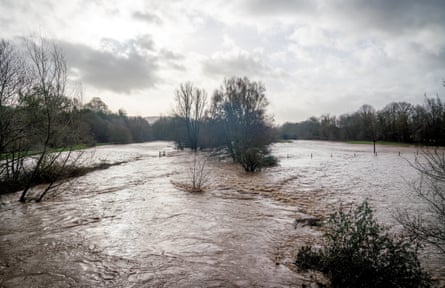
Between Tuesday and Wednesday last week, some areas in the west of the UK saw more than 110mm (4.3in) of rain during the storm. The deluge meant several places in south-west England broke daily records for January rainfall, causing authorities to issue rare “danger to life” flood warnings. More than 100 flood alerts remain in place.
As heavy rain and strong winds continue to buffet the west of the UK, conservationists have again been faced with the consequences of extreme weather for wildlife in a warming world. In parts of the country, some nature reserves are completely under water. Rivers have burst their banks; butterfly and other insect eggs will probably have been washed away; wintering and potential nesting sites will have been lost.
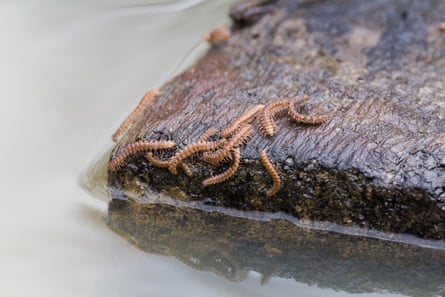
“For the long-term health and robustness of our wildlife, it’s bad. Wildflowers suffer in the same way as a farmer’s crop that has been washed away. It is difficult to come back from and there are unseen consequences. Some butterfly species overwinter as caterpillars. If they are washed away, what does it mean for a blue tit in a couple of months’ time who needs to feed their chicks?” says Hussey.
Rising temperatures mean extreme rainfall events have become more severe during storms in the UK, with research indicating they are 20% more intense. But many conservationists say that nature can also be part of the solution for mitigating flood water, particularly for slowing its movement through the landscape and avoiding fast-moving deluges that damage properties and threaten human life.
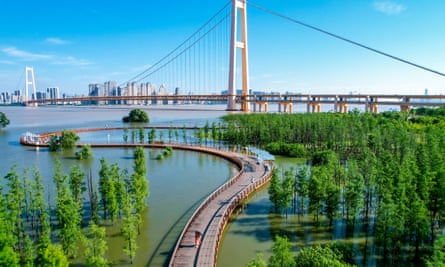
Many urban areas use nature to control the flow of water, with places such as Wuhan in China and Berlin in Germany using a “sponge city” approach in their planning. These places use green areas to absorb rainwater and slow its movement. Environmentalists say this is needed on a landscape scale.
The UK has lost more than 90% of its wetlands in the past 100 years, today covering just 3% of the country. In many places, river systems and wetlands have been altered to funnel water away from land as quickly as possible instead of allowing it to naturally burst out on to floodplains. Environmentalists say that restoring wetlands and the natural flow of rivers, along with continuing the reintroduction of ecosystem engineers such as beavers, will help.
“It is all about slowing the flow of water. And the reason we get really passionate about beavers is because they do all of this naturally,” says Jamie Marsh, director of land management at Hampshire and Isle of Wight Wildlife Trust.
“When humans do it, it’s a long process that involves mapping and modelling, specialist consultancies and getting permission through different agencies. It’s long and expensive. Beavers do it for free.”
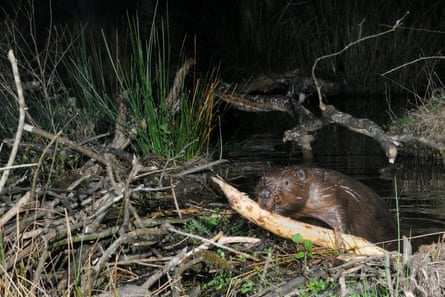
The rodent, Britain’s largest, is thriving in many parts of the country after a 400-year absence. Their dams are designed to transform streams and small rivers into ponds, which stop rainwater from rapidly draining. During times of drought, their dams hold more water in the landscape, making the ecosystems more resilient in the summer. With at least 2,000 beavers in the UK so far, their numbers are expected to rise.
But conservationists caution that much deeper changes are needed. Reconnecting rivers with floodplains and allowing them to meander naturally in high-risk areas are vital measures.
“We have 30 beaver families on the River Otter, which flooded this week. We can’t expect them to sort it,” says Hussey. “They have to be part of a bigger mix. If you are waist-deep in your house in Ottery St Mary at the moment, having beavers in that river system isn’t going to make much of a difference. We need to tackle soil compaction, plant trees in the right place and improve soil health.”
Find more age of extinction coverage here, and follow the biodiversity reporters Phoebe Weston and Patrick Greenfield in the Guardian app for more nature coverage