3 months ago
127
3 months ago
127
All vaccine recommendations are being reconsidered by the US’s vaccines committee, according to its top adviser, who in recent interviews slammed vaccination requirements for attending school and said vaccines should be taken on the advice of an individual’s doctor.
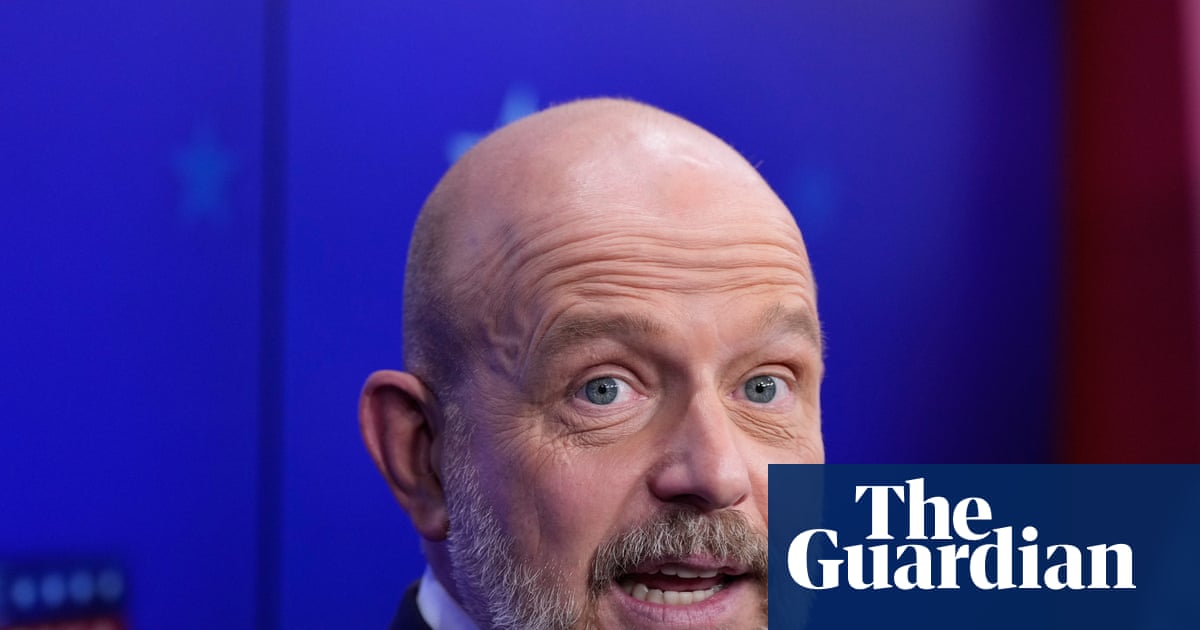
The stance from Kirk Milhoan, chair of the Advisory Committee on Immunization Practices (ACIP), represents a dramatic departure for the group tasked with making US vaccine recommendations for decades, signaling an increasingly hostile approach from the Trump administration to routine vaccines.
The childhood vaccine schedule is undergoing radical changes under the purview of Robert F Kennedy Jr, secretary of the US Department of Health and Human Services (HHS) and longtime vaccine critic. Some of these changes are being led by his handpicked vaccine advisers, several of whom have expressed outsized fears of the very rare risks of side effects of vaccines compared with the benefits of protecting against illness, hospitalization and death supported by decades of evidence.
Significant additional changes may be made to the childhood immunization schedule this year, Milhoan, who is a pediatric cardiologist, told the New York Times last week. ACIP may “not necessarily” change the recommendations for all vaccines to become optional, but the committee is “reevaluating all of the vaccine products including risks and benefits”, Milhoan said.
In a separate interview on the podcast Why Should I Trust You?, which was released last Thursday, Milhoan said that he supported individuals over the collective public and framed vaccine debates as “autonomy versus public health”.
“There’s always going to be a tension between what is supposedly good for all and what is good for the individual,” Milhoan said.
That’s a false dichotomy, said Jason Schwartz, associate professor of health policy and management at the Yale School of Public Health, because vaccines provide protection both for individuals and for those who come into contact with them.
“It’s often portrayed as this idea of the greater good, but it’s an individual benefit that also provides a lot of good for our communities,” he said.
Polio and measles vaccines were especially prominent in Milhoan’s discussions.
“As you look at polio, we need to not be afraid to consider that we are in a different time now than we were then,” Milhoan said on the podcast, pointing to upgrades in sanitation – a common Kennedy talking point that does not explain the sustained improvements in Americans’ health. “Our risk of disease is different, and so those all play into the evaluation of whether this is worthwhile,” Milhoan said.
Polio outbreaks have been suppressed in the US because of highly successful vaccination campaigns.
“Vaccine-preventable diseases are so much less common because we vaccinated in the first place,” Schwartz said. Yet experts believe more polio cases could be on the horizon as vaccination rates drop.
The measles outbreak in the US is reaching new heights, with 416 cases confirmed already this year, compared with 2,255 confirmed cases last year, according to the US Centers for Disease Control and Prevention (CDC). The US is already at about one-fifth of 2025’s cases after only three weeks of 2026 – and last year was the worst outbreak in three decades.
Milhoan seemed to see the rapid growth as an opportunity to understand how dangerous measles is for unvaccinated people.
“What we’re going to have is a real-world experience of when unvaccinated people get measles. What is the new incidence of hospitalization? What’s the incidence of death?” he said on the podcast.
Elizabeth Jacobs, professor emerita at the University of Arizona and a founding member of Defend Public Health, said Milhoan “wants to experiment on the people of the United States by seeing what happens as vaccination coverage plummets and infectious diseases spread”.
“This is so dangerous as to approach criminality,” she added.
Milhoan framed vaccination recommendations as giving families “no choice” and likened it to “medical battery” in the Times article. All vaccination is already optional in the US. The US government has never mandated any shots for children. The independent advisers of ACIP are tasked with making evidence-based recommendations, which the CDC may or may not take up.
But Milhoan appeared to mischaracterize that role on the podcast: “We make a recommendation, CDC has to basically canonize it.”
The vaccines committee recently changed recommendations “because we were concerned about mandates, and mandates have really harmed and increased hesitancy”, Milhoan said on the podcast. Previous committees’ “heavy-handed” and “authoritarian” recommendations “led to mandates”, he added.
Milhoan did not respond to the Guardian’s questions about the committee’s review of vaccines and the role recommendations play in school mandates.
The current ACIP members “clearly see even the act of recommending a vaccine, which is the charge of the committee for the last 60 years, as infringing on parental freedom”, Schwartz said. That’s akin to suggesting that the dietary guidelines issued last week infringe on the freedom to choose which food to eat, he said.
States and localities, not the ACIP or CDC, set vaccination requirements, with “exhaustive processes” that usually involve local health departments and often require legislation to make changes, Schwartz said.
“The idea that there is some sort of rubber-stamp approach by states to simply transfer the CDC schedule to the mandate schedule just doesn’t match what states actually do,” he added. There are also several vaccines, like influenza, rotavirus and HPV, which have been recommended by the CDC but are rarely required for school.
While some jurisdictions have looked to the evidence behind ACIP or CDC recommendations to help inform their decisions, “it’s clear that link has been severed”, Schwartz said. The majority of states are now decoupling their recommendations from federal guidance, according to a new report by the health policy non-profit KFF.
All states offer medical exemptions for school vaccination requirements, and some states also allow philosophical exceptions – a growing trend that risks driving outbreaks, according to new research.
“What I would like to be able to do is give people medical freedom,” Milhoan said on the podcast.
But experts said this approach will lead to less personal freedom, not more.
“What about the rights of vaccinated kids to be in playgrounds and camps and schools where their risks of vaccine-preventable diseases can be increased through unvaccinated children?” Schwartz asked. “What about the rights of children who can’t be vaccinated because of weakened immune systems or other medical conditions? This question about rights does work both ways.”
Medical freedom includes the ability “to not contract a potentially fatal infectious disease against your will”, Jacobs said – and since the overwhelming majority of families want vaccines, this group is significantly larger than the vocal minority opposed to them.
Milhoan raised concerns that vaccines “stimulate an immune system over and over again” and expressed concerns, not supported by decades of data, that vaccines could be linked to rates of allergies, asthma and eczema.
He also said he doesn’t like the term “established science” when he speaks about vaccines. “Science is what I observe,” which means safety can only be observed – not proven, he said. But observations are only the starting point of research, followed by the painstaking work of gathering and analyzing data.
“Established science is why we’ve lived in a golden age where we’ve been able to hold at bay vaccine-preventable diseases that for centuries used to regularly disable and kill children,” Jacobs said.
The next ACIP meeting is planned for February.
“We should fully expect this committee to continue to sow doubt about the value of vaccines, to emphasize the alleged harms of vaccines and underplay their benefits, and advocate for a more narrow set of recommendations from the federal government,” Schwartz said.
Recommendations from medical organizations, state and local health officials, and new regional health alliances will carry greater weight than ever, he said: “The rest of the public health community needs to recognize where they can step up to fill the void that ACIP traditionally filled.”