3 hours ago
10
3 hours ago
10
King Charles and Prince William could be forced to spend up to £10m upgrading hundreds of rental properties on their private estates to meet planned energy-efficiency rules.
The government has announced that landlords will need to ensure their properties have energy performance certificate (EPC) ratings of C or higher by 2030 – up from the current requirement of an E.
EPCs are documents that provide an energy-efficiency score for properties, in relation to their running costs.
Introduced in 2007 amid growing concern about carbon emissions, they help to estimate energy bills and environmental impact. The most energy-efficient properties are awarded an A rating, and the worst are given a G rating.
A Guardian investigation has found that almost nine in 10 domestic properties on the duchies of Cornwall and Lancaster and the Sandringham estate have had EPC ratings of D or lower.
Both Charles and William have been praised for their environmental advocacy. They are likely to be criticised if the estates fail to meet the new government standards as fears about soaring energy costs and the climate crisis intensify.
They face spending up to £10,000 to upgrade each property, and could be fined £30,000 for every home they continue to rent without carrying out the necessary work.
A government spokesperson said: “Everyone deserves to live in a warm, comfortable home. Our plans for private rental homes to be EPC C by 2030 could lift up to half a million households out of fuel poverty by 2030, cutting bills to give families across the country the breathing space they need.”
Nationally, just over half of all rental properties currently have an EPC rating below C, but the Guardian has found that properties on the three large royal estates are more poorly insulated and expensive to heat than average.
The king inherited the Sandringham estate and the Duchy of Lancaster from his mother, Queen Elizabeth II, after her death in 2022. He did not pay inheritance tax on either estate because assets passed between monarchs are exempt.
The Duchy of Lancaster was established in 1265 to provide a private income for the sovereign and its profits soared during the late queen’s reign. It spans about 18,000 hectares (44,000 acres), stretching from the north-west of England to parts of London.
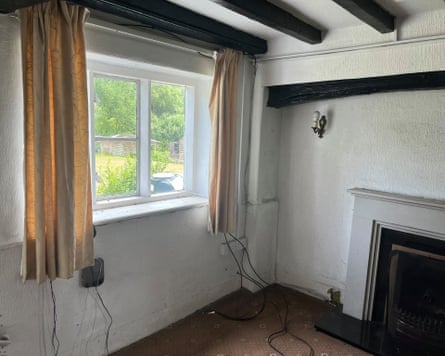
The income generated by Sandringham, bought by Queen Victoria in 1862 and set over 8,000 hectares (19,000 acres) in rural Norfolk, has not been disclosed.
When Charles became king after his mother’s death, he passed the Duchy of Cornwall to William. Founded in 1337 to generate money for male heirs to the throne, it too became significantly more profitable in recent decades. It covers about 55,000 hectares (135,000 acres) and is concentrated mainly in the south-west of England.
The Guardian examined more than 700 domestic EPCs across the three estates and found that 630 would fail to meet the government’s proposed requirements.
This analysis revealed that 99% of the rental properties on the Sandringham estate had an EPC rating of D or lower. The figure was more than 90% for the Duchy of Lancaster and about 80% for the Duchy of Cornwall.
The investigation excluded properties that appear to have been converted into holiday lets or those with separate leasehold titles, as it is unclear how the new rules will apply to them.
The precise number of domestic properties across the three estates is also unclear because they do not publish lists of their landholdings, though the figure is believed to exceed 1,200.
In the past, aides working at the two duchies have gone to great lengths to obscure details of their property portfolios, withholding the information even from parliament.
However, if this sample of more than half is representative, then more than 1,000 properties could fall foul of the new rules, requiring improvement if they are to be rented out.
The renovation costs could exceed £10m, similar to the annual combined residential rental income of the duchies. The duchies pay out about £50m a year to Charles and William. They are exempt from most business taxes, which helps them maximise their profits.
The details of how landlords will be required to upgrade their properties from a minimum of an E to a C from 2030 are yet to be published by the government.
This week, the Guardian revealed that more than 100 domestic properties on royal estates have EPC ratings of F or G.
Some have exemptions from the minimum energy efficiency standards regulations, while others are outside the scope of the rules as they are farmhouses or because the tenancies pre-date the current regulations. It is unclear if these loopholes will remain in place when the rules are amended.
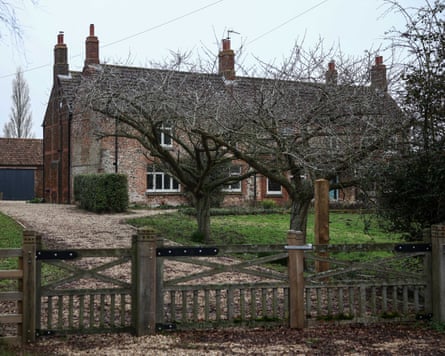
A Whitehall source said: “We recently consulted on reforms to the energy performance of buildings regime and will update in due course.
“Some buildings, such as historic or mixed tenure, may not be able to upgrade to the new standard and some limited exemptions are in place on this basis. About 48% of privately rented properties are already at a current EPC C standard. We will consider further guidance for mixed-use buildings, ahead of the new standards coming into force.”
The royal estates are less energy efficient than most privately rented homes because they are mainly older rural properties, often heated by oil, coal or wood.
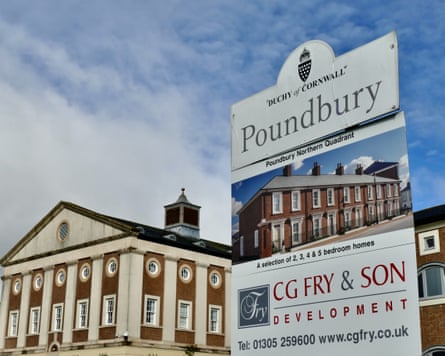
Only the Duchy of Cornwall’s newer builds at Poundbury, in Dorset, and Nansledan, in Cornwall, consistently meet the new planned targets for efficiency. However, of more than 300 Duchy of Cornwall EPCs the Guardian examined, just 11% were rated B and 8% rated C.
The rest were D or lower, and if this is typical of the rest of the Duchy of Cornwall’s 600 or more rental properties, then the total improvement bill could reach up to £5m – or about one quarter of the estate’s annual profits.
On top of a previously announced £500m investment over the next decade, the Duchy of Cornwall said that “an additional £50m is planned for improving the condition and efficiency of our existing properties”.
The Duchy of Cornwall said it had a “unique portfolio, including many historic buildings located in isolated rural and island locations”.
“While this confers a special character, it also brings some unique challenges which we have started to address systematically through our retrofit programme,” a spokesperson said.
“We recognise that these challenges mean work does not always happen as fast as we would like, but we will continue to work closely with our tenants to identify effective and practical energy-efficiency improvements as quickly as possible.”
The duchy added that it had spent £11m on home improvements since 2022, and in the last year had delivered 150 “modern, energy-efficient homes, all of which are EPC A or B”.
However, in response to follow-up questions from the Guardian, it confirmed that only six of the new properties were duchy private rents, with most having been sold.
The Duchy of Lancaster’s annual report states that it operates more than 300 domestic rental properties, but the precise figure is not known.
The Guardian found more than 200 properties on the estate that have domestic EPCs. More than 90% of them have ratings of lower than C. Nearly half are rated E and over a quarter are rated D. The total potential bill for improvements could top £2m.
The Duchy of Lancaster said it placed “great importance” on “being a responsible landlord”.
“Any tenant with concerns is encouraged to contact us directly and can be assured we will address these issues promptly and constructively,” a spokesperson added.
“Over the last year, the Duchy of Lancaster has invested more than £3m in residential property repairs and upgrades as part of our ongoing commitment to provide well-maintained homes compliant with all legislation.
“While improving the energy efficiency of some historic buildings is challenging, we continue to work to improve their EPC ratings.”
The Guardian has seen EPCs for more than 150 properties on the Sandringham estate, understood to be about half of the total. None were rated A or B, with just one rated C. Almost all could need work to meet the new regulations, with 99% rated from D down to G.
The biggest group – 120 properties, equivalent to 75% of those analysed – are rated E, the minimum EPC rating allowed for rented properties since new rules in 2018.
This includes Marsh Farm, where Andrew Mountbatten-Windsor now lives. It has an EPC produced in 2019, which rated it as a low E, just two points above an F. If our findings reflect the wider Sandringham estate, the total bill for energy-efficiency improvements by 2030 could come to £3m.
A spokesperson said Sandringham has “a mixture of property and tenancy types, which are fully compliant with MEES regulations”.
“We continue to invest significantly in an ongoing programme of maintenance and improvement works on all properties, including those out of scope of the regulations, to upgrade energy efficiency across the estate,” she added.
“While we do not comment on individual cases, these regulations do not apply to every property on the estate, and exemptions are necessary on a small number of properties.”
Jonathan Bean, a spokesperson for campaign group Fuel Poverty Action, said: “The royal duchies should be leading the way in upgrading all their properties to a minimum EPC of C by 2030 to protect people’s health and the environment.
“Instead they are dragging their feet and looking for loopholes. If even the richest landlords are allowed to get away with it, what hope is there of getting the rest to do the right thing?
“The government must act now to close all loopholes and increase enforcement efforts.”
A duchy of Cornwall spokesperson said it was unable to confirm the accuracy of our findings as the Guardian did not provide the estate with a list of properties we had inspected, to protect the tenants who spoke to us on condition of anonymity.